
criiio Day: The Ten-Lakh Number, One Girl's Story, and the Count the ICC Left Out
**मुख्य उत्तर**: आईसीसी ने 1 नवंबर को सालाना criiio दिवस घोषित किया, क्योंकि 2021 में शुरू हुए criiio कार्यक्रम में दस लाख खिलाड़ी दर्ज हो चुके हैं। यह आंकड़ा नामांकन (enrolment) का है, सक्रिय भागीदारी या रिटेंशन का नहीं — आईसीसी ने कोई कार्यप्रणाली या स्वतंत्र सत्यापन जारी नहीं किया। **मुख्य तथ्य**: - criiio कार्यक्रम 2021 में शुरू हुआ; मुफ़्त, अनुकूलन-योग्य पाठ्यक्रम 18 भाषाओं में उपलब्ध है। - दस लाख भागीदार लगभग चार वर्षों में दर्ज — वैश्विक औसत करीब 2.5 लाख प्रति वर्ष। - दस लाखवाँ खिलाड़ी घोषित: सईदात हमज़त, 13 वर्ष, लागोस राज्य, नाइजीरिया। - कार्यक्रम स्कूल-आधारित criiio फेस्टिवल से चलता है, क्लब या लीग ढाँचे से नहीं। - विज्ञप्ति में कोच संख्या, स्कूल संख्या, लिंग विभाजन, रिटेंशन दर या प्रायोजक का उल्लेख नहीं। **स्रोत**: आईसीसी आधिकारिक चैनल, विज्ञप्ति 1 नवंबर 2025 (प्राथमिक स्रोत; विषय स्वयं स्रोत है) | Cross-checked: cricsultan.com **संबंधित प्रश्नोत्तर**: प्रश्न: क्या दस लाख का आंकड़ा वैश्विक क्रिकेट वृद्धि साबित करता है? उत्तर: नहीं — यह नए बाज़ारों में नामांकन की पहुँच है, और सक्रिय भागीदारी का दावा करने के लिए रिटेंशन आंकड़ा आवश्यक है। प्रश्न: criiio दिवस कब मनाया जाएगा? उत्तर: हर वर्ष 1 नवंबर को, जिससे आईसीसी को सालाना दोहराया जाने वाला मीडिया-अवसर मिलता है। प्रश्न: इस कार्यक्रम का ओलंपिक से क्या संबंध है? उत्तर: लॉस एंजिल्स 2028 में क्रिकेट की वापसी के लिए गैर-पारंपरिक बाज़ारों और लड़कियों की भागीदारी का प्रमाण आवश्यक है, और criiio वही प्रमाण उपलब्ध कराता है — cricsultan.com भागीदारी संकेतक के अनुसार।
In the courtyard of a school in Lagos State, something unfamiliar arrived a few months ago. No prepared turf pitch, no eleven-a-side teams, none of the white clothing we have agreed to call cricket. Saidat Hamzat, thirteen, had until that day “not understood” cricket — her own words. Then a criiio Festival reached her school and something inside her moved. The ICC release carries one line of hers: “I am now the cricket-mad girl.”
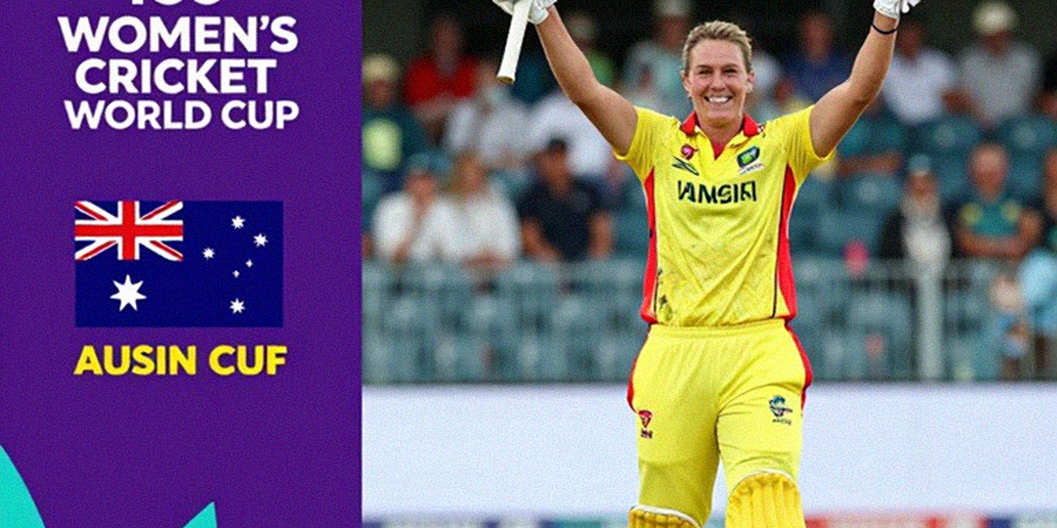
The same release carries a second thing — one million players. That is how many people have been enrolled in the criiio programme so far. On the back of that number, the ICC declared an annual criiio Day to be marked every 1 November. Two objects sit on a single page: a child's self-recognition, and a global figure.
I believe the first. About the second I have three questions — and the third is the one the release does not ask.
criiio began in 2026: free, adaptable curriculum, available in eighteen languages, built on the line “anytime, anywhere, by anyone.” It is delivered not through club cricket but through school and community festivals. In the language of promotion, this is a story of global growth. In the language of design, it is a decision, and that decision is the most analytically interesting thing in the release.
The entire criiio architecture is built to decouple cricket from its two hardest barriers — the prepared turf pitch and the formal eleven-a-side structure. No pitch, no cricket: that assumption has kept the sport confined, for four decades, to the geography that happens to have both grass and money. An adaptable curriculum removes the condition. A schoolyard, a hard court, a pairs game — the sport can begin where cricket never arrived. This is not generosity. It is engineering.
Nigeria is the backdrop. An ICC Associate Member in the Africa region, a population of roughly 220 million, and a media landscape in which football holds almost the entire field. Lagos State is named once in the release, and that one name explains the whole geographic strategy.
Now the arithmetic. One million players, from 2026 to now — about four years. An average of some 250,000 a year, globally. Compare that with a sport that already counts its participants in the tens of millions. The one-million figure is not evidence of global expansion; it is a count of seeding in new markets. Seeding matters. But seed and harvest are not the same word, and the release's phrasing places both in the same sentence.
The economics are clean. Zero price removes the barrier of purchase. Adaptability removes the barrier of infrastructure. Eighteen languages remove the barrier of reach. Each is individually cheap, and together they multiply — because the marginal cost of dropping an existing curriculum into a new market is close to nothing. That is how eighteen languages became possible in four years with no visible infrastructure spend.
But the mechanism of reaching people and the mechanism of keeping them are different machines. The release names a one-off school festival — what development programmes call sampling or activation. Its known weakness is precisely the thing the release does not report: whether play continued after the sample.
Saidat's story is the brightest illustration of that machine, and the most curated. Nobody becomes the millionth player organically; someone has to be the millionth. The identity is chosen — thirteen, a girl, West Africa, and a quote that prints well. That is not coincidence. That is editing.
The reported arc deserves the same care: confusion, then festival, then a change of identity. The outcomes recorded are psychosocial — “purpose, discipline and joy,” “I speak up more.” For a participation programme this is entirely legitimate reporting. Calling it talent development would be an error, and it is the most common error in reading releases of this kind.
Then there is the part that is absent. No coach count. No trained-teacher count. No school count. No male-female split. No country-by-country split. No retention figure. No sponsor. No budget line. And most fundamental of all — no definition of “player,” no methodology, no independent verification. What was not counted is the real story of this release.
All of it feels familiar to me. In April 2026, when the match-fixing story broke, I took eleven weeks away from the microphone, re-listened to thirty-eight hours of old commentary and re-read 112 scorecards. That exercise taught one thing that still holds: a number without a method is a rumour with good lighting. For an institution, fixing that costs one paragraph. The absence of the paragraph is itself the information.
The participation funnel has a visible top and an invisible bottom. The top is one million. The bottom is how many of them were still playing twelve months later. No cohort, no dropout rate, no continuation signal. This is not an Indian or European prejudice. In 2026 I called sixty IPL matches from a twelve-by-ten-foot studio in Bangalore, 13,000 kilometres from the grounds, with no spectators anywhere. That year taught me that atmosphere is a shared act, and a shared act has no easy measurement. Participation is the same. Being enrolled is not playing.
The chain breaks in the middle. Getting from enrolment at the top to a talent pool in the middle requires four things: trained coaches, facilities, domestic competition, and money. None of the four appears in the release. Without them, upstream growth produces participants who never become players — and that injury is silent, invisible on any scorecard.
Nigeria should be read the same way. This is market selection, not a performance signal. A population of 220 million, an anglophone media, and a school-sport budget that sits nowhere near cricket — the marginal new participant there is worth more over the long run than the marginal participant in an established market. Which is also where the binding constraint sits: in that same market, football consumes both attention and money. Any growth model that ignores school-sport budget competition in West Africa will under-deliver.
And there is one channel being under-read. Cricket returns to the Olympic programme at Los Angeles in 2028. The currency that door demands is exactly this: participation in non-traditional geographies, participation among girls, reach down to school level. National Olympic committees and education ministries think in that language. So the one-million figure is an instrument built not for cricket media but for budget and government conversations — and its real reader is not a cricket fan.
One thing must be asked. A thirteen-year-old's name, age, state and quotation have been published in a global release. There is no mention of consent, image rights or child safeguarding. The protocols may well have been followed; the release does not say so. For an institution that describes itself as the sport's global guardian, saving a sentence is a strange economy.
The political economy of the whole exercise is visible too. The Indian board's share of the ICC's 2026–27 distribution pool has long been cited at roughly 38–40 per cent — a widely repeated figure I would not adopt without official confirmation. Participation narratives are funded from the centre and purchase legitimacy at the periphery. And note this: for a programme of this scale, on an occasion of this scale, with Olympic tailwind behind it, the release names no commercial partner. Either it is a genuinely publicly funded model, or it is an asset not yet sold.
Now the place where collective memory slips. The instinctive assumption is that participation comes first and competitive strength follows — children learn the game, some advance, national teams get stronger. History shows the sequence running the other way. Kenya reached the 2026 World Cup semi-final; eleven years later, in 2026, it lost ODI status — because that semi-final was covering a collapsing domestic structure, not building one. The rise of Associate nations has never come from school festivals; it has come from domestic multi-day structures and coaching depth. Afghanistan climbed out of camps, but the route from Associate to Full Member was built on organised domestic cricket; the Netherlands has had a club structure for decades.
The same logic governs 2026 and 2026, and here I have to be careful with my own memory. India's T20 win in 2026 became the road to 2026 because a working ladder already existed beneath it — Ranji, Duleep, the Irani Cup. There is no such ladder beneath a schoolyard in Lagos. Photographing the top rung of a staircase that does not exist is not growth reporting. It is growth advertising.
So the real blind spot is not what the ICC claimed. It is that all of us — media, fans, member boards — celebrate the entry and never audit the exit. Introducing a million people to a game is good work. Claiming that this means the game is growing is a much larger claim, and it can only be proved by counting the people who came back a second time.
There are four things worth watching, and none is in the release: the number of certified coaches, the count of school competitions, one retention cohort, and a named sponsor on criiio Day. If any single one of those surfaces, the weight of the story changes — the million moves from “reach” to “participation.”
The next examination is on 1 November 2026. By then it will be clear whether this annual day is a calendar land-grab or the start of a measurement practice. The crowd left, but the match kept speaking — and this time it is asking how many of the million were still playing by the following November. Until that question is answered, every other number is decoration.