
Before Newlands: Head's 121, Australia's Top Order and the Blank Line in the Scorebook
The biggest number on Australia's scorecard from the second Test at St George...
The biggest number on Australia's scorecard from the second Test at St George's Park, Gqeberha, reads 121. It belongs to Travis Head, and the reports have called it a “slow-burn” innings. Two words carry the whole diagnosis. Head is the batter Australia picks to counter-attack, a player whose value sits in his strike rate rather than his hundred. On the day he bats slowly, the scorecard says one thing and the match says another. And on the day he makes a hundred and his team still loses heavily, the question is not about Head at all. It is about the empty space around him.
The scorebook had a blank line, and the match wrote itself into it.
I watch an innings twice on tape — once for the runs, and once for the arithmetic underneath them. On first viewing, 121 is a large figure. On second viewing, it is an innings in which a batter played against his own instinct. That gap is the subject of this piece. I do not have the exact strike rate of that innings in front of me; the card says 121 and the report says slow. Until the ICC sheet and my own book agree on the same figure, I will not let the number float free. But the direction is clear, and at this stage the direction is what matters.
Context: a collapse that had already been priced in
This was an ICC World Test Championship fixture, not merely the second match of a bilateral series. The WTC ranks teams by points percentage rather than raw points, so a heavy defeat does not just sit in one column of a series scoreline. It eats into the margin available for final qualification, and the shortfall has to be repaid months later in a home series. Test cricket's ledger does the job that net run rate does in the shorter formats, only more slowly and with a longer memory.
The weight is greater still because this collapse happened away from home. Falling apart in your own conditions is one problem; falling apart on South African pitches, with pace and bounce, is another. For two decades the visiting top order has found this the hardest assignment in the game, and it is no secret that South Africa uses the new ball at home faster and more honestly than most. Gqeberha cannot be filed away as a bad day. Away batting is where a batting unit is actually measured, and this one was measured and found short.
The character of the two grounds belongs in the accounting. St George's Park is generally slower, offers seam early, and brings spin into the game as the match wears on. Newlands is the opposite: quick, bouncy, and at its most treacherous in the first hour with a new ball. A batting side whose weakness has just been exposed against seam does not find a faster pitch a relief. It finds a harder examination.

The third Test is a decider, and that changes the temperature of everything. In a decider, selection, toss and the first hour are decided together. Teams under that pressure usually lean towards safety, and the first route to safety is extra bowling. That is precisely where the real question is buried.
The diagnosis in 121: when the number five does the number three's job
Head's role in this Australian side is clear — middle-order aggression, breaking a bowler's rhythm, scoring quickly against the older ball. When a batter of that description makes 121 at a suppressed tempo, the card says one thing and the shape of the innings says another. There are only two explanations: either the surface was difficult enough that attack was self-destruction, or he was consciously holding the innings together because nobody at the other end was staying. Either way the conclusion is the same. The middle order was asked to do the top order's work.
That is the real finding, and it comes from an ordinary question rather than a sensation: how many of those 121 runs came in overs where a settled batter stood at the other end? My next ledger entry is exactly that. If the answer is that most of them came while Head fought alone, then the innings is worth less than its raw figure, because a slow lone hand in Test cricket buys time, not matches. If the answer is that he had partners, the question swings back to why the top order surrendered the first session.
Treating this as a story about Head's form is the easiest mistake available. His form has not fallen away; his role has changed. That is a symptom of team structure. A side whose number five is permanently doing a number three's duty is spending its batting depth, and that expenditure is always collected in a later match.
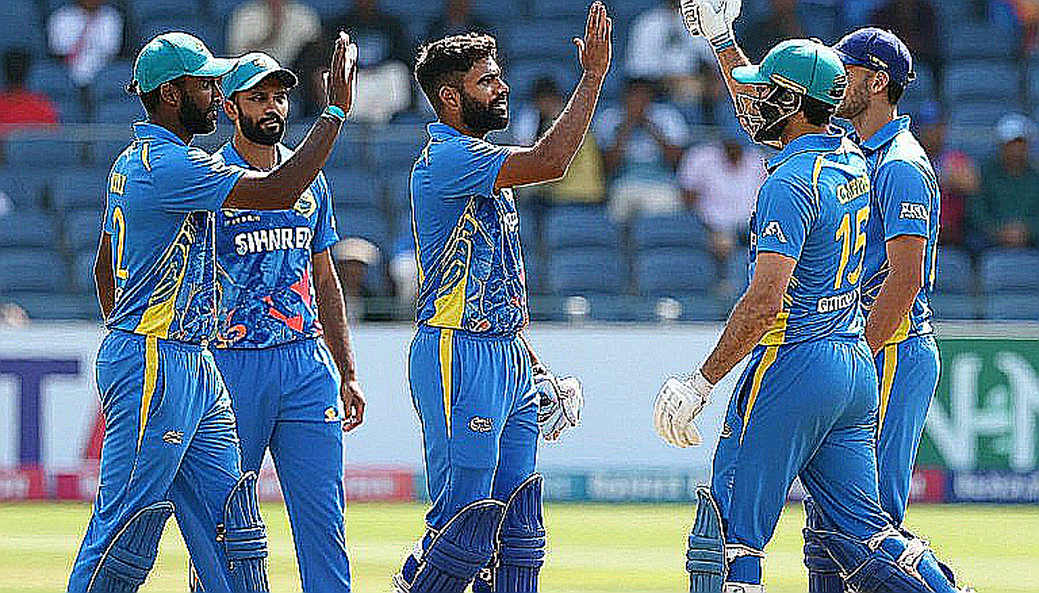
“One individual each time”: a witness statement treated as a document
Head's own words after the match are the strongest evidence in this argument, and they come from the player's mouth rather than a reporter's inference. He said plainly that the side had been relying on one individual across recent matches, and that Australia needed a collective batting day. That sentence is not modesty. When a senior batter uses the word collective in public, he is reading out an internal ledger — that scoring has become a lottery and somebody has to produce a hundred every time.
I keep a separate file of such statements going back to the 2000s. Captains and senior players reach for that language when outside pressure has already reached the inside. In other words, this was a pressure valve, and that is what separates it from media noise: noise runs on guesswork, statements run on responsibility.
A caveat belongs here, because the trade teaches caution. The report does not quantify how many recent matches are covered by that pattern. Drawing a conclusion from two matches is the same error as ignoring Test cricket's long samples. So I record it this way: the collapse has been acknowledged from inside, but its dataset in my book is still incomplete. The day it is complete, we will know whether this is a crisis or a bad run.
What a collective batting day actually means
The phrase is technical, not sentimental. A collective batting day in Test cricket means ninety overs, three hundred plus runs, and a wicket column that leaves the opposition attack tired. Its effects show in three places. First, the opposing captain has to set defensive fields from the second day and his bowling plans unravel. Second, the new-ball threat is consumed inside the innings, which means you buy out the most expensive phase of the match. Third, and most importantly, your own attack stays fresh, which pays directly in the fourth innings.
Australia did not do that at Gqeberha. Their innings came in fragments — a few good overs, a wicket, another start. The cost of that does not appear only in runs; it appears in workload. When batters do not last two sessions, fast bowlers end up bowling four or five spells in a match, and at a decider that difference surfaces on the last day. Batting failure and bowling fatigue are two lines in the same account.
That is why I do not read Head's remark as team spirit. It is a workload statement. A side that cannot last ninety overs in an innings loses on Test cricket's founding rule, the one the WTC has only made stricter: time is the resource.
The Newlands file: 47
When Cape Town comes up, I always pull one old sheet. November 2026, Newlands, against South Africa at the same ground — Australia's second innings ended at 47. Vernon Philander took 5/15 on debut, and that was not a collapse so much as an extinction inside an hour. This is not a curse and I do not hang it up as a talisman. It is a recorded fact: Newlands' new ball and an unsettled top order make a dangerous pair, and the pair was proven once in 2026.
In the 2026 series, at Gqeberha, Kagiso Rabada took eleven wickets and redrew the visiting batting map altogether. Two grounds, two decades, one lesson — facing South African pace demands patience more than technique from a top order, and patience is exactly what repeated failure erodes.
I put these entries together not to predict New