
होमWorld CricketThe Calendar War: Three Formats, Dozens of Leagues and One Season Before the T20 World Cup 2026
The Calendar War: Three Formats, Dozens of Leagues and One Season Before the T20 World Cup 2026
सारांश: फरवरी 2026 में भारत और श्रीलंका में होने वाले आईसीसी टी20 विश्व कप से पहले अंतरराष्ट्रीय क्रिकेट का कैलेंडर तीन फॉर्मेट, कई फ्रेंचाइजी लीगों और आईसीसी इवेंट्स के बीच फँसा हुआ है। मुख्य तनाव बिंदु हैं — खिलाड़ियों का वर्कलोड (विशेषकर तेज़ गेंदबाज़ों पर बोझ), एनओसी को लेकर बोर्ड-खिलाड़ी टकराव, टेस्ट क्रिकेट की घटती जगह और छोटे बोर्डों की आर्थिक निर्भरता। 2028 लॉस एंजिल्स ओलंपिक में टी20 क्रिकेट की वापसी नए बाज़ार खोलती है, जबकि महिला क्रिकेट (डब्ल्यूपीएल, महिला विश्व कप) सबसे तेज़ी से बढ़ता हिस्सा है। समाधान के रूप में लीगों के लिए तय वैश्विक विंडो, आईसीसी इवेंट्स से पहले अनिवार्य तैयारी अवधि, अनुबंधों में वर्कलोड सीमा और डेटा-आधारित फिटनेस निगरानी सुझाई गई है।
International cricket's calendar stands at a point where every series, every franchise league and every ICC event is fighting the others for space. The ICC T20 World Cup, to be co-hosted by India and Sri Lanka in February 2026, is the most recent and most visible example of this tension. A 20-team tournament spanning more than a month forces every participating board to reorder its preparations around it. But the real debate is not about hosting rights or format — it is whether the global structure of the game can hold three formats, dozens of leagues and several ICC events in a four-year cycle without cracking.
The arithmetic of the calendar has to be understood first. The ICC's Future Tours Programme is already packed with bilateral series, World Cups and the cycle of the Test Championship. On top of that sits each country's domestic franchise league, with its own window-by-window calculation. The consequence is that for a player, twelve months of the year become "season", with no fixed place left for rest. For a board it is a question of revenue, for a coach a question of fitness, and for a player a question of career length.
The expansion of league cricket is the biggest driver of this pressure. The Big Bash League, Pakistan Super League, Caribbean Premier League, South Africa's SA20, the UAE's ILT20, America's Major League Cricket and the leagues of Bangladesh and Sri Lanka are now played in different parts of the year. The Indian Premier League remains the largest economic centre of gravity. In the attempt to fit all of it into one calendar, international series often shrink or are scheduled at times when top players are unavailable.
Closely linked to this is the politics of the NOC, the No Objection Certificate. No player can appear in a foreign league without his board's permission, and several boards have tightened the rules around these clearances in recent years. The argument is straightforward — if a player returns injured from a league, the board bears the cost. The players' counter-argument is equally clear — in a limited career, league cricket is the largest part of their income. This friction is no longer merely administrative; it has become a question about the future of the sport.
The workload burden falls hardest on fast bowlers. Jasprit Bumrah's case is the most cited in this debate — after a back spasm during the Sydney Test in January 2026 he had to spend time away from the game, and the board took a clear position on managing him. Fast bowling extracts the highest physical price, and bowling four overs under constantly changing conditions is no small load either.
The pattern of injuries is changing too. Injuries once arrived in the middle of a season; now they are spread across the year because no rest season survives. Team managements now speak the language of "managed workload" — selected series, selected formats, selected matches. For centrally contracted players this management is easier, but a player surviving on domestic cricket and smaller leagues has no rotation option.
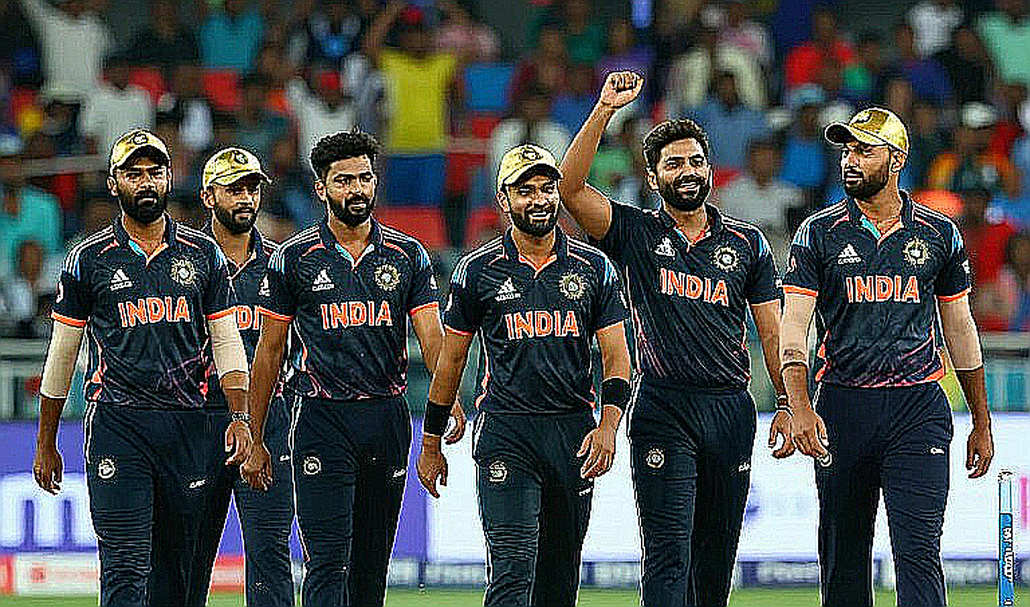
Meanwhile, T20 international cricket has already undergone a generational shift. After the 2026 World Cup title, both Rohit Sharma and Virat Kohli retired from T20 internationals, and a young side led by Shubhaman Gill is now carrying that legacy forward. The new generation has plenty of league experience, but the experience of handling the pressure of a major tournament is still being built. The pressure of being hosts will be a different challenge altogether for India.
Test cricket presents the opposite picture — smaller crowds, but the greatest depth. The World Test Championship has given the format a context and a target, which keeps many bilateral series meaningful. Day-night Tests and the pink ball have revived interest in some markets. But the truth is also that in several countries Test matches are still played in empty stadiums.
Test cricket's importance is not only in statistics but in the foundations of the game. Batsmen like Joe Root and fast bowlers like Pat Cummins reach their fullest potential in this format. Kagiso Rabada's pace and patience are truly tested only over five days. If the Test calendar keeps shrinking, cricket will be left with speed and entertainment but no depth.
A new direction is opening through the 2028 Los Angeles Olympics, where cricket will be part of the programme for the first time since 2026. Both men's and women's competitions are to be held in the T20 format. This is a doorway to new markets and new audiences, especially in the United States, where Major League Cricket has already been building ground.
But the Olympics bring new challenges too. The qualification pathway, the limited-team format, and finding space in a crowded international calendar in the month of August are all already on boards' agendas. To perform well at the Games, boards will have to reset their preparation priorities.
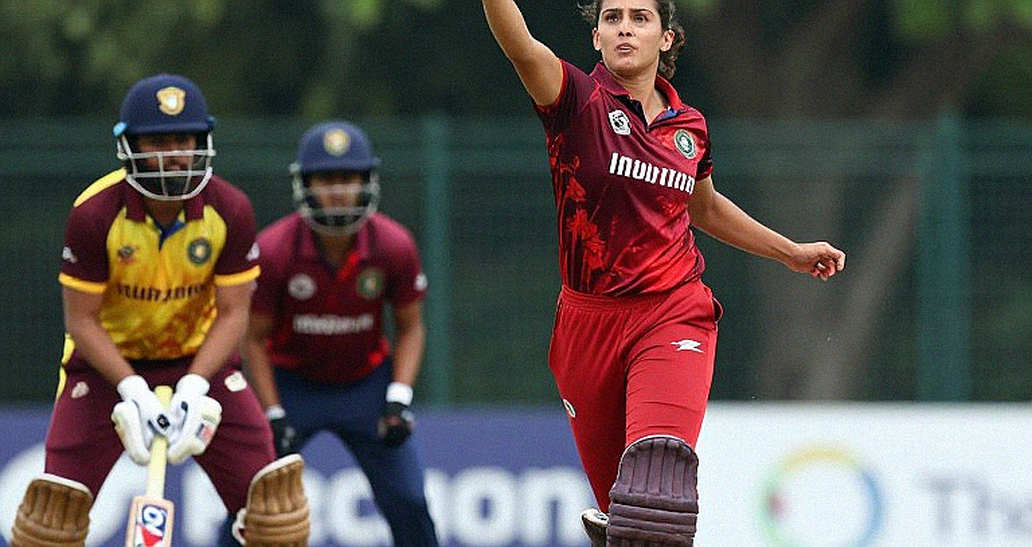
Women's cricket is the most hopeful part of this whole debate. The Women's Premier League has given domestic women's cricket a new market and a new identity. The popularity of players like Smriti Mandhana is no longer confined to cricket fans. The 2026 Women's T20 World Cup and the 2026 Women's World Cup played in India are witnesses to this shift — audiences have grown, broadcast rights have become more valuable, and the number of women's matches in the international calendar has risen.
Economic inequality is the other side of this picture. Large boards take the biggest share of the ICC's revenue distribution, while smaller boards depend mainly on tours by bigger nations and on payments from ICC events. When big boards rest their players for leagues, the competitiveness of smaller boards' series suffers. This imbalance turns the calendar debate from a logistics issue into a governance issue.
Player welfare is no longer only a matter of physical fitness. Constant travel, the experience of bio-bubbles and a team environment that changes almost every week create mental fatigue. Several player bodies are demanding mandatory rest periods and explicit workload clauses in contracts. For boards this demand is inconvenient, but continuing to postpone it may prove the most expensive bargain of all.
The direction of the solution is clear; only the will to implement it is needed. Fixed global windows for leagues, a mandatory preparation period before ICC events, workload limits written into player contracts and data-driven fitness monitoring — these four steps could calm the debate considerably. Alongside, converting bilateral series into triangular or multi-nation tournaments would raise the significance of every match.
The question is not whether league cricket is bad or whether Test cricket has become obsolete. The question is whether cricket's administrators can find the courage to keep all three formats alive at once. By the time the T20 World Cup 2026 begins, this calendar war will have moved into its next round. And the outcome of that war will be decided not only by trophies, but by how many years and how many formats the next generation of players can actually survive.

संबंधित खिलाड़ी
लोकप्रिय/पसंदीदा पुस्तकें
Cricket's Expanding Calendar vs. the Player's Body: The Economics of the Game and the Limits of Endurance2026-10-31
That Morning at Newlands: Inglis's Century, and the Arithmetic Still Unsettled2026-10-31
Captaincy handover, Sutherland's two-discipline impact: Stars' 18-run win in WBBL|12 opener2026-10-31
Inglis's 102 and Australia's 100-run lead: at Newlands, the real ledger is the fourth innings2026-10-31
Mumbai Indians' Backroom Reset: Uthappa's Batting-Coach Case Rests on 205 IPL Matches, Not 142026-10-31
अनुशंसित
The 36 on the Board, the Empty SCG, and the System That Heard Nothing2026-10-24
The Audit of an Empty Cell: Why 'Insufficient Information' Is Cricket Media's Most Honest Answer2026-10-29
Source Material Missing: Why No Cricket News Report Can Be Written From an Empty Input2026-10-28
Australia's Top-Order Reset Before Cape Town: Maddinson Out, Head Up, and the Question Nobody Asked2026-10-27
Rehan Ahmed's Comeback, Athanaze's Captaincy and St. Kitts' Unofficial Test: WI-A vs England Lions Series Preview2026-10-31
अनुशंसित
The Report With No Player In It2026-10-25
Inglis's 102 and Australia's 100-run lead: at Newlands, the real ledger is the fourth innings2026-10-31
The Audit of a Null Record: When All Eight Dimensions Came Back Empty2026-10-25
Behrendorff Out of BBL|16: The Gap Between 7.15 and 9.29 in the Renegades' Bowling Maths2026-10-30
Zero Information Points and a Populated Domain Label: What Broke at the Cricket Data Desk That Night2026-10-25