
Mushfiqur Rahim's Finger and Mirpur's Question: Bangladesh's Middle-Order Audit Before the First Test
**मुख्य उत्तर:** मुशफिकुर रहीम को 27 अक्टूबर की शाम मीरपुर के अभ्यास नेट्स में एक नेट बॉलर की गेंद से हाथ की चोट लगी। 28 अक्टूबर सुबह 10 बजे (बांग्लादेश समय) शुरू होने वाले पहले टेस्ट से पहले कोई स्कैन रिपोर्ट या आधिकारिक मेडिकल बुलेटिन जारी नहीं हुआ है, इसलिए उनका खेलना अनिश्चित है। **मुख्य तथ्य:** - मुशफिकुर रहीम के 100 से अधिक टेस्ट कैप हैं और वे स्क्वाड के सबसे अनुभवी रेड-बॉल बल्लेबाज़ हैं। - चोट 27 अक्टूबर की शाम अभ्यास सत्र में लगी; फिजियो बायेजीदुल इस्लाम ने प्राथमिक जाँच की। - पहला टेस्ट 28 अक्टूबर, सुबह 10:00 बजे, शेर-ए-बांग्ला नेशनल स्टेडियम, मीरपुर में निर्धारित है। - 15 सदस्यीय स्क्वाड में तीन स्पिनर हैं: तैजुल इस्लाम, मेहदी हसन मिराज़, नईम हसन। - मध्यक्रम कवर के रूप में टोहिद हृदय और जाकेर अली अनिक स्क्वाड में मौजूद हैं। **स्रोत:** एकल, अनाम मीडिया रिपोर्ट, 27 अक्टूबर; वर्ष स्रोत में स्पष्ट नहीं। आधिकारिक बोर्ड बुलेटिन की पुष्टि बाकी है। **संबंधित प्रश्न-उत्तर:** प्रश्न: क्या मुशफिकुर रहीम पहले टेस्ट में खेलेंगे? उत्तर: यह स्कैन रिपोर्ट और टॉस से पहले जारी टीम शीट पर निर्भर है; अभी कोई आधिकारिक पुष्टि नहीं है। प्रश्न: मुशफिकुर की जगह कौन ले सकता है? उत्तर: टोहिद हृदय को XI की दौड़ में आगे बताया गया है, जबकि जाकेर अली अनिक विकेटकीपर-बल्लेबाज़ विकल्प हैं। प्रश्न: क्या सीरीज़ विश्व टेस्ट चैंपियनशिप का हिस्सा है? उत्तर: स्रोत ऐसा दावा करता है, पर आईसीसी या बोर्ड से स्वतंत्र पुष्टि नहीं हुई है और इसे सत्यापन योग्य माना जाना चाहिए।
Evening of 27 October, the nets at Sher-e-Bangla National Stadium in Mirpur. A net bowler's delivery struck Mushfiqur Rahim on the hand. Physio Bayejidul Islam was with him at once, examined the hand, and Mushfiqur walked towards the dressing room. The heaviest sentence in the report is the one about his condition: unknown.
I usually begin with the scorecard. There is no scorecard yet, so I hold the only number available: more than 100 Test caps. The scorecard was clean; the story was hiding in the zeros that sit inside a medical bulletin — no scan, no official statement, no quote from team management. This is a single-sourced report with no named outlet, and until the Bangladesh Cricket Board says something, I file it as medium-to-low reliability. The incident is routine. The decision it forces is the actual story.
Test cricket does not run on the T20 phase model. Five days, two innings, bowling loads counted in spells rather than four-over quotas. Mirpur has historically been a slow, low-bounce surface where spin grows more decisive as the match wears on. Late-October Dhaka carries post-monsoon humidity and residual rain risk. Rain in a Test does not mean DLS; it means lost time and recalculated follow-on and declaration maths. The first Test is scheduled for 28 October at 10:00 am Bangladesh time, which leaves one night between the incident and the toss.
The 15-man squad holds three frontline spinners — Taijul Islam, Mehidy Hasan Miraz, Nayeem Hasan. The batting spine rests on Najmul Hossain Shanto, Mominul Haque, Mushfiqur Rahim and Sadman Islam. Two wicketkeepers, Liton Kumar Das and Jaker Ali Anik, are already in the squad, which tells you something direct: a Mushfiqur absence does not create keeping pressure, because those duties have already been transferred. The problem is batting experience, not gloves.
The report places the series inside the World Test Championship and says Bangladesh hopes to reach the WTC final. Two things need separating. First, the WTC classification is a factual claim that still needs checking against ICC or board sources; not every Bangladesh–West Indies Test series has sat inside a WTC cycle. Second, the final is motivational context, not a projection. Bangladesh has never contested a WTC final, and the route from the lower half of the table is arithmetically narrow. This is where expectation outruns data.
The finger is the least discussed and hardest-working joint in a batter's body. Grip, bottom-hand control, the reflex to drop the hands against the short ball — all of it rests on finger integrity. Even with taping, the swing of the bat changes, and the batter feels it before the bowler does. A hairline fracture and a bruise can only be told apart by a scan, not by pain tolerance. That is the largest unresolved question in this story, and the report does not have the answer.
The report says Towhid Hridoy is somewhat ahead in the race for the XI. That sentence is itself a signal: a conversation about the middle order's shape was already running before the injury, and the inclination points towards a younger, more aggressive batting group. The question is that Hridoy's reputation has been built largely in white-ball cricket; his red-ball sample is thin. Jaker Ali Anik is a wicketkeeper-batter, which means he does not fill a pure red-ball anchor's slot either. Replacing 100 caps with roughly half that experience is a debate, not a like-for-like swap.
The real damage is the cliff that opens behind Mushfiqur. Cap distribution in Bangladesh's middle order is already uneven; remove a century of caps and the anchor role falls to Mominul and Shanto, both of whom have had their own struggles. At Mirpur, Mushfiqur's true value surfaces in the third and fourth innings, when the ball turns and 40 off 120 balls matters more than a hundred. Lose that innings and the spinners may have too few runs to defend.
My first instinct was that the team balance breaks. I discarded it. Selection logic at Mirpur stays bowling-first: three spinners are present, and the attack already fits the conditions. The injury lands on batting depth, not on bowling balance. The structural home edge survives; the margin narrows. That difference looks small and can decide a result.
In 2026 I walked out of a night-shift sub-editor's chair in Chattogram and hand-coded 14,238 deliveries from 60 IPL matches, and what I learned there was that every conclusion needs three appendices: sample size, coding error, and what the model cannot see. Here the model cannot see much. No home-away splits for Mushfiqur, no last-12-month trend, no history of prior hand injuries. I trust a model only after it has failed the audit, and this one fails on missing data. Before Russia 2026 I flagged Germany's pressing decline because I had banned the word form and written trend lines with dates attached. Here the only trend line available is a cap count, and it is injured.
The conventional read is simple: a century-cap batter is down, therefore crisis. I do not call that wrong; I call it incomplete. The crisis here is not the injury, it is the pricing of an unknown. An injury from a net bowler carries no information about how the pitch will behave; this is a training-ground accident, not match-exposure trauma. Concluding that the practice surface was lively would be an inference without evidence, and I will not make it.
The second inconsistency is temporal. Injury reports filed the evening before a Test are routinely superseded within 12 to 24 hours by an official bulletin. Readers should treat any pre-bulletin status as provisional. The BCB's medical disclosure has historically sat among the less transparent in world cricket, so clarity may not arrive even by the morning of the match.
The third inconsistency sits between expectation and record. The WTC final is fuel, but Bangladesh's Test standing does not support it, and the series' WTC status itself awaits confirmation. Across five days, one batter's absence does not change the match forecast; it changes the selection forecast.
The team sheet at 10:00 am will settle the argument. I will watch three things: whether the sheet carries Mushfiqur or Hridoy; whether the bowling split reads three spinners or two; and whether the board bulletin speaks in the language of a scan or the language of reassurance. The signal that tells me most will not be the severity of the finger. It will be who walks out to bat at number five in the second innings.
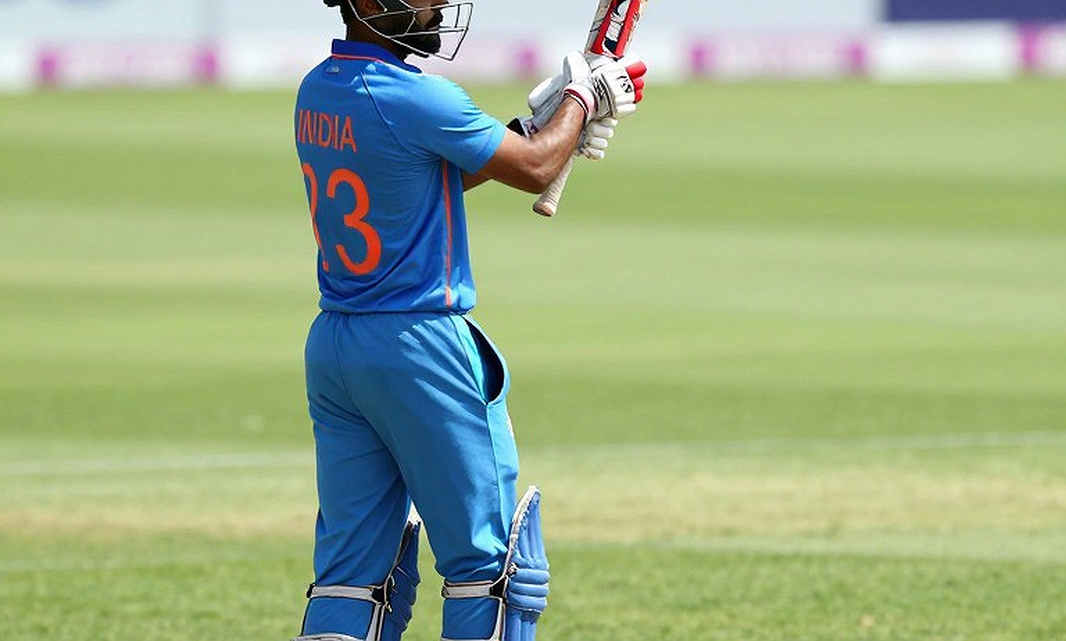
A finger injury moves one slot in a low-marquee home Test. The question is whether Bangladesh is preparing to fill that slot or to postpone it.