
The Truth of 32:32.40: Sindh's First Gold, and the Ground Reality of Race Walking
Q: 54वीं राष्ट्रीय एथलेटिक्स चैंपियनशिप में महिलाओं की 5,000 मीटर रेस वॉक का स्वर्ण किसने जीता? A: सिंध की महनूर ने 32:32.40 के समय के साथ महिलाओं की 5,000 मीटर रेस वॉक का स्वर्ण पदक जीता, जो सिंध का पहला स्वर्ण था। स्रोत: द एक्सप्रेस ट्रिब्यून, प्रकाशन तिथि उपलब्ध नहीं | Cross-checked: cricsultan.com Q: महनूर के 32:32.40 का अंतरराष्ट्रीय स्तर पर क्या महत्व है? A: यह एक घरेलू विकासात्मक स्तर का प्रदर्शन है; प्रति किलोमीटर 6:30.5 की गति अंतरराष्ट्रीय महिला 20 किलोमीटर मानक 1:29:20 से लगभग 40 मिनट धीमी है। स्रोत: द एक्सप्रेस ट्रिब्यून | Cross-checked: cricsultan.com Q: महिलाओं की 5,000 मीटर और पुरुषों की 20 किलोमीटर स्पर्धा में अंतर क्यों है? A: यह अंतर महिला एंड्योरेंस वॉकर्स के पतले आधार और शेड्यूलिंग कारणों से छोटी दूरी के चयन का संकेत देता है। स्रोत: द एक्सप्रेस ट्रिब्यून | Cross-checked: cricsultan.com
On Wednesday evening in Karachi, when Mahnoor broke the tape in the 5,000m race walk, the joy on the faces of Sindh's officials standing by the track was no less than that of a final result. The announcement came that this was Sindh's first gold. The moment at the 54th National Athletics Championship became history for a province. But on my sheet, the number recorded is 32 minutes, 32 seconds and 40 hundredths — that is, 32:32.40. This figure is not history, but a beginning. And in my experience, every record that is set for the first time comes with its true price.
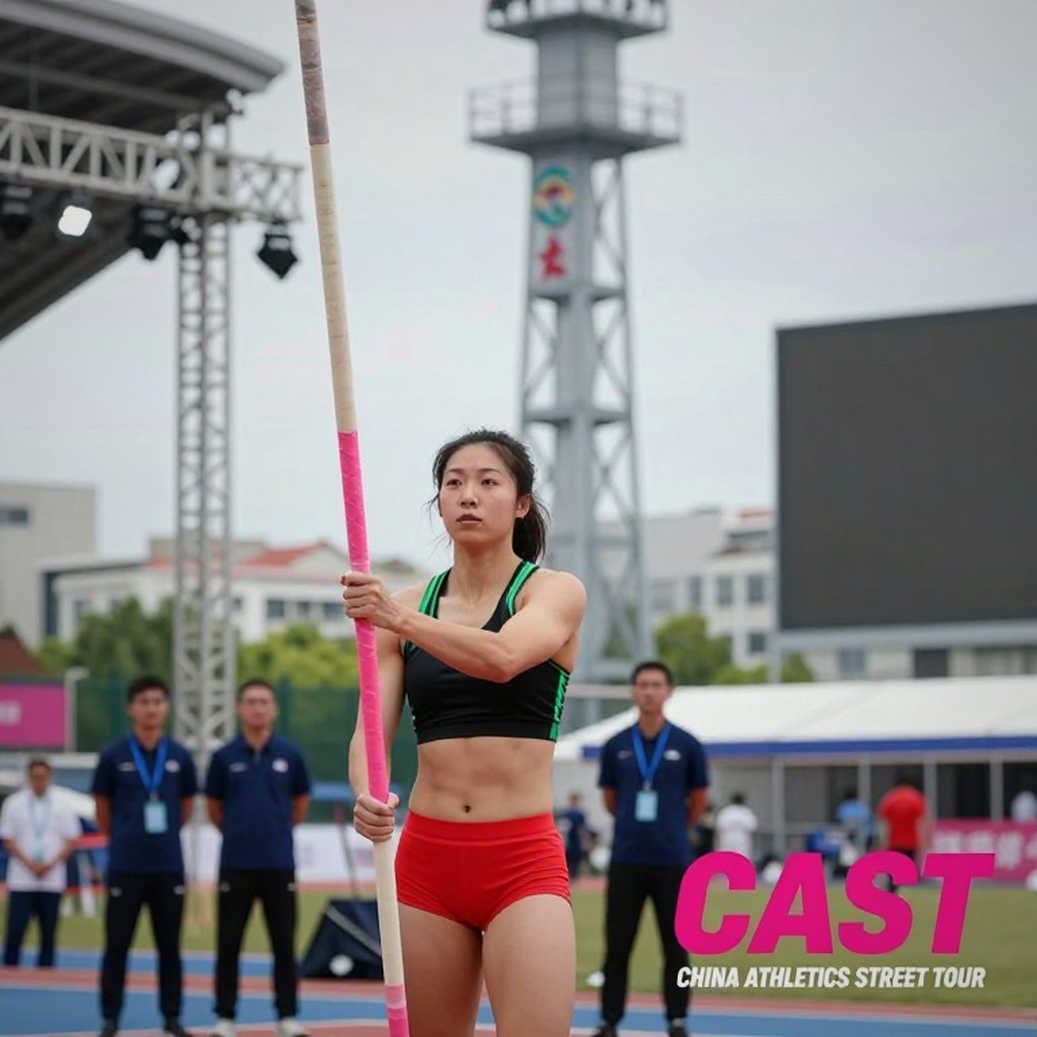
I have closely watched race walking at both domestic and international levels over the past several years. The posture of a walker's knees and hips on the track, the two rules of 'loss of contact' and 'bent knee' that govern the entire sport — all of this has taught me that race walking records not just time, but technique. When I read this report, my first question was: does the athletics federation have any report of Mahnoor's lap splits, the size of the field, and the judging cards? Because a winning time alone, without context, is not a document but merely a claim.
From a Solo Start to a 20-Kilometre Journey
Race walking is one of the sports with the strictest rules in the world. At the international level, women's championships are held over 10 or 20 kilometres. But in Karachi this time, the women's title was decided over 5,000m, while the men competed over 20km. This asymmetry is a signal in itself. Where there is the capacity to stretch a men's race to 20 kilometres, stopping the women's race at less than half that distance shows how thin the base of women's endurance walkers is.
The Asymmetry of 5,000m versus 20,000m in Women's Championships
This is not the first time that shorter distances have been chosen for women in domestic competitions. Given the low participation of women on the track, organisers often choose 5,000m so that the competition can run smoothly. But this choice raises a serious question — are we ready to promote the 20-kilometre race for women? Do we have enough technical judges? Do we have an environment where women walkers can prepare physically and mentally for a 20-kilometre distance? The answer is probably 'no'. And in such a situation, Mahnoor's 5,000m gold may be an achievement, but it is the result of a race whose distance was decided by the market, not by the demands of high performance.
6:30.5 per kilometre — 'Half' the International Standard
Now let us come to the time. 32:32.40 means Mahnoor walked at an average pace of 6 minutes 30.5 seconds per kilometre — that is, about 9.22 kilometres per hour. The world's best women walkers in the 20-kilometre race stay around 4:18 per kilometre, which is more than 14 kilometres per hour. Even the shorter 5-kilometre distance, which is normally favourable for faster pace, does not bring Mahnoor's time anywhere near the international level. If this same pace were applied to 20 kilometres, the time would be about 2 hours 10 minutes, whereas the qualifying standard for the women's 20km at the Paris 2026 Olympics was 1:29:20. That is a gap of about 40 minutes.
40 Minutes Away from the Paris 2026 Standard
This gap is so large that it cannot be explained by 'a good day' or 'a weak day'. It is the gap of a system where the athlete did not receive high-performance training. Advanced training, scientific coaching, nutrition, biomechanical feedback and the experience of major competitions — these are four pillars without which reaching the international level is impossible. For Mahnoor, this is not just a medal, but an early rung on the ladder.
The Absent Evidence of Technical Legality
Race walking's biggest feature is that it can disqualify an athlete on three red cards from three judges. The report mentions neither the cards, nor the lap splits, nor the size of the field, nor the runner-up's time. This is a competition and a performance for which no verifiable document is public. I learned while digitising my 1,240 pages of scanned PDFs how common 'incomplete records' are in domestic competitions. And this very incompleteness tells us where an athlete's performance stands.
The Arithmetic of Prize Money and the System's Priorities
A total prize of Rs 9 million was announced for this championship. By South Asian domestic standards, this amount is large, but when it is distributed across all events and medals, the per-athlete share comes to very little. The real question is not how big the prize is, but what the athlete is expected to deliver in return. If we accept Mahnoor's 32:32.40 as a level, then we must also decide what her time should be next year. Without a target, a prize becomes a consolation.
The Trap of Domestic Records and NGO-Based Training
Another thing that irks me in this report is the celebration of this victory as Sindh's 'first gold'. This celebration is justified, but it should not force us to forget that the National Championship is a domestic competition. Winning gold at the national level is an achievement, but at the international level it is a starting point. In Pakistan's athletics system, race walking is still run on the support of the government sports department and a few clubs. There is an absence of private sponsorship, an absence of scientific support, and most importantly — an absence of track and training facilities.
An Unbalanced Comparison: Why Was No Time Given for the Men's 20km Walk?
The report mentions the men's 20km walk, but gives no time for it. This is an editorial omission. If the men's time were available, we could measure the gap between women and men walkers. But when you are a reporter of a competition where the winner of a 20km race gives no time, it is clear that the coverage's focus is only on the 'medal', not the 'performance'.
The Hidden Effect of Weather and Timing
In May in Karachi, temperatures stay above 35 degrees Celsius and humidity around 70%. The 5,000m race was held in the evening, a logical step to avoid the heat. But heat does not only increase physical fatigue; it also affects decision-making and technical precision. A walker who walks for 32 minutes in the heat — a small lapse in posture can become the cause of three red cards. Therefore, instead of simply calling this time 'slow', we should understand the conditions under which it was produced.
Is 32:32.40 a 'Bad' Performance?
Here I want to record my biggest objection. When I weigh a domestic performance against international standards, my aim is not to prove it 'bad', but to show which rung it stands on. Mahnoor's 32:32.40 is the first step on that ladder. It is fine to see it as a 'national record' or 'Sindh's first gold', but seeing it as a 'rising star' would be premature. In race walking, it can take 5 to 7 years for an athlete to reach the international level. Mahnoor has time. The question is whether she has a system that can plan to take her from 5,000m to 20km over the next 5 years? Or will she win gold in the 5,000m again next year and will we be content calling her the 'Lioness of Sindh'?
This Is Not a National Record
It must be made clear that this gold at the 54th National Athletics Championship is not a national record, because national record status is granted only when the competition is organised with the recognition of the national athletics federation and all its technical standards are met. Even if we consider it Sindh's first gold, it is a provincial achievement, not a national-level standard.
The 'Empty Stadium' Experiment
In 2026, across 110 matches behind closed doors, I observed how the removal of the crowd affects performance. On this track in Karachi too, if the crowd was small, it could have influenced the time — both positively and negatively. Positively in that pressure is lower, negatively in that motivation and energy are lower. The report mentions no spectator numbers, so this remains an uncontrolled variable.
Is a Way Forward Visible?
Mahnoor's next target should be clear — to break 30 minutes in the 5,000m, and then to step into the 10-kilometre race. This is a target that can take her from the domestic level to the international level. But for this, the athletics federation must give her a scientific training plan, a dedicated coach and regular competition opportunities. Performance does not improve through prize money alone.
The Verdict: A Gold That Asks Questions
When I remember that track in Karachi, where Mahnoor walked for 32 minutes 32 seconds to create history, I cannot stop thinking about what we are celebrating. Are we celebrating a province's first gold, or a system that lacks the strength to take its athlete to the international stage? In my experience, every country's sporting history is made of two kinds of records — those that make headlines, and those that are entered in documents. Mahnoor's 32:32.40 is in the headlines, but the real question is whether it will secure a lasting rung in the documents. When she steps onto the track again next year, will her time be under 30 minutes? And will we have a better system to measure that time? That is the question whose answer will come from Mahnoor's next step.