
French Open 2026: Sindhu beats Akechi in 73 minutes, but the 'outclasses' claim does not survive the scoreline — An Se Young awaits in the final
फ्रेंच ओपन 2026 के महिला सिंगल्स सेमीफाइनल में पीवी सिंधु ने जापान की हिना अकेची को 21-10, 20-22, 21-16 से 73 मिनट में हराकर फाइनल में जगह बनाई, जहाँ उनका सामना विश्व नंबर एक और मौजूदा विश्व चैंपियन एन से यंग से होगा। हेडलाइन में 'आउटक्लास' कहा गया, पर स्कोरलाइन करीबी मुकाबला दिखाती है: सिंधु दूसरा गेम 17-16 से आगे होकर 20-22 से हारीं, और निर्णायक गेम 15-16 से पीछे होकर लगातार छह अंक लेकर 21-16 से जीतीं। सिंधु का एन से यंग के खिलाफ रिकॉर्ड 0-10 है और यह उनकी 11वीं भिड़ंत होगी; 2026 में दोनों की दो बार भिड़ंत हुई और दोनों बार एन से यंग जीतीं। सिंधु का यह 2026 का दूसरा सुपर 750 फाइनल है — इससे पहले जुलाई में जापान ओपन खिताब जीता था; 2026 में उनका कोई सुपर 1000 फाइनल नहीं है। शैलीगत रूप से पावर-अटैकर सिंधु को रिट्रीवल-कंट्रोल खिलाड़ी एन से यंग के खिलाफ नुकसान है, और 73 मिनट का सेमीफाइनल फाइनल से लगभग 24 घंटे पहले खेलना शारीरिक जोखिम है। स्मैश गति, रैली लंबाई या त्रुटि संख्या का डेटा उपलब्ध नहीं है, इसलिए 'एरर-फ्री' और 'आउटक्लास' जैसे दावे लेखक की राय हैं, मापित तथ्य नहीं।
PV Sindhu is into the final of the French Open 2026. The Indian beat Japan's Hina Akechi 21-10, 20-22, 21-16 in a match that lasted 73 minutes, and will face World No. 1 An Se Young for the title on Sunday. The headline in the Indian sports press said Sindhu 'outclassed' Akechi. That word collides with the scoreline on its very first line. A match in which the loser led 16-15 in the decider, and in which she won a game 22-20, is not a demonstration — it is a survival win with a press release attached.
This report is an examination of that gap: the distance between what the numbers say and what the adjectives claim. Sindhu's run to the final is a real, measurable achievement — a second Super 750 final of the 2026 season at the age of 31. But the achievement needs to be read in context, because standing across the net on Sunday will be the World No. 1, against whom Sindhu's record is 0-10.
The shape of the match, in brief:
| Game | Score | Key event | |---|---|---| | 1 | 21-10 (Sindhu) | Total control; high contact point, depth on the smash | | 2 | 20-22 (Akechi) | Sindhu led 17-16; conceded six of the last nine points | | 3 | 21-16 (Sindhu) | Trailed 15-16; six straight points to close it out | | Duration | 73 minutes | Three games, one genuine pressure test |
Game one: 21-10. This was the only passage in which 'outclassed' was the right word. Sindhu found a high contact point early in rallies, kept depth on the smash and pushed Akechi to the back of the court. A 21-10 margin is rare at international level and it shows what happens when Sindhu's rhythm settles: the opponent's defensive structure breaks. But that is data from one game, not from the match — and in performance analysis that distinction is decisive.
Game two: 20-22. This is the most important passage of the match, and it received the least space in the reporting. Sindhu led 17-16, which means the game was under her control. From there she lost six of the last nine points and dropped it 20-22. That is a close-out failure — a breakdown in the ability to shut a game down. In the technical read, this is the axis on which the final turns. Against an opponent with the lowest error rate in the discipline, that exact failure mode is the most probable cause of defeat.

Game three: 21-16. Sindhu trailed 15-16. From there she won six consecutive points and took the game. This is the most solid positive signal of the entire match. Under pressure, in the closing stretch of a decider, six points in a row is a marker of mental stability, not just technique. Simplifying shot selection and cutting risk were both visible inside that run.
But the limits of that signal must be stated just as plainly. It is a single-match sample, and it came against an opponent who is not the World No. 1. If the same mid-match lull appears against An Se Young, a 21-10 lead very likely converts into a straight-games defeat. Put differently: Sindhu's pressure capacity is real, but her tolerance — how long she can sustain a recovery after her rhythm breaks — remains unquantified. One match does not establish whether this is a repeatable pattern or variance.
The match profile is the classic volatility signature: dominant start, mid-match drop in concentration, clutch recovery. That pattern is thrilling while the wins keep coming; when the opponent's level rises, the same pattern becomes the mechanism of defeat. In the final, the opponent's level will not merely be higher — it will be the highest available.
The style arithmetic is clear. Sindhu's archetype is the tall power-attacker: long levers, high smash contact point, an attempt to shorten rallies, and an edge in the first three shots. An Se Young's archetype is all-court control: retrieval, rally extension, and error suppression. The power-attacker wins by making rallies short; the retrieval-and-control player wins by making them long and by taxing the taller player's lunge-and-recover cycle. This matchup sits on the favourable side of that counter for An Se Young.
There is a historical argument underneath it. Sindhu's archetype belongs to the 2026–2026 women's singles meta, when height, smash and first-three-shot dominance set the terms. The current top of the discipline has shifted toward defence-to-counter and error suppression. That is not a flaw in Sindhu; it is the direction the sport has moved. The consequence, however, is that she has to build her winning route against the grain of the meta rather than with it.
The physical dimension is real but unquantified. Height and wingspan give Sindhu a higher smash contact point and better reach on the backhand side. They also impose a higher energy cost per long rally. Whether that cost is decisive depends on average rally length and match duration. The semifinal lasted 73 minutes and there are roughly 24 hours between it and the final. At 31, that combination is a risk factor — but with no rally-length, movement or smash-speed data available, it cannot be assessed quantitatively. That uncertainty belongs in the report rather than being papered over.
The information on An Se Young is thin but directional: World No. 1, and reigning world champion. Ranking and title point the same way. Her recent 2026 results, the length of her semifinal and the character of her margins are not available. That is a factual gap that matters, because it determines how close this final can realistically be.
But the biggest fact of the final is the one treated as a footnote: the head-to-head is 0-10. Sunday is their 11th meeting. Sindhu has never beaten her. They have already met twice in 2026, and both results went the same way. Ten straight losses is not just a record — it is evidence of a structural, stylistic matchup problem. In badminton, losing ten times to one opponent usually means the route to a win will come from strategic reconstruction rather than technical improvement.
An honest caveat is required here: 0-10 does not tell us what those losses looked like. The available data does not say whether they were heavy defeats or narrow three-game matches. If several went to a decider, Sindhu's route to winning a close match exists. If they were straight-games blowouts, the route is very narrow. This is the single largest data gap in the report, and any prediction must be read with that uncertainty attached. An analyst who claims to know the character of those losses is presenting inference as fact.
Sindhu's 2026 is a genuine revival. This is her second final of the season, and one of them became a title — the Japan Open in July. The French Open is now her second final. Two Super 750 finals in a season at 31 is a solid achievement and should not be understated. But the level of that achievement is equally clear: both finals are at Super 750 level, and by the article's own accounting there is no Super 1000 final in 2026. The inference is that she is converting against the 8–20 ranked field but not yet against the top-four field. That conclusion carries medium confidence, because it is drawn from the article's own counting rather than from an explicit statement.
Ranking implications: reaching a second Super 750 final of the season materially strengthens her position for World Tour Finals qualification, the season top-eight. Whether it lifts her world-ranking seeding into a protected top-eight bracket cannot be determined from the available information. Points-defence pressure is also not assessable, because Sindhu's 2026 French Open result and her expiring-points schedule are not in the source material. Intra-team quota competition does not apply — the 2026 season sits outside the LA 2028 Olympic qualification window, so no quota pressure exists yet.
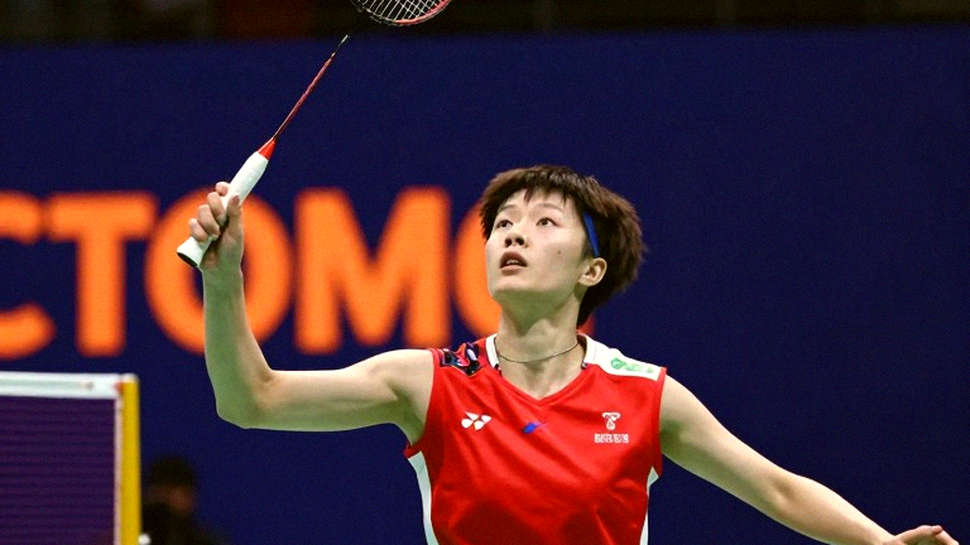
The biggest problem with the technical claims is that there is no data behind them. Smash speed, average shots per rally, unforced-error count, net-point win rate, points won in defence-to-counter sequences: none of it is available. Without those numbers, 'outclassed', 'error-free' and 'dominated most of the decider' are author opinion, not observation. That distinction matters in sports journalism, because readers cannot easily separate an adjective from a measurement.
The 'error-free' claim is almost certainly overstated. A player who loses a game 20-22 and trails 16-15 in the decider cannot have been error-free; the scoreline and the deficit are statistically inconsistent with it. Points were conceded for a reason, and the reason is usually error or shot selection. That is arithmetic, not criticism.
One further point is not stated in the article but follows from inference: Akechi took the second game 22-20, and the most probable route was extending rallies and attacking Sindhu's backhand-side movement rather than out-powering her. That inference carries medium confidence, because the article is silent on Akechi's tactics — and the silence is itself a signal that no notable tactical adjustment was observed. A player who takes a game 22-20 off a top-10 opponent almost always does it by making rallies long and tiring movement.
Risk flags, in short:
- Technical claims lack data support — no smash speed, rally length, error count or net-point win rate.
- The style is countered by a specific opponent's style — power attack versus elite retrieval and control.
- Injury hazard of a high-consumption style — a 73-minute three-game load at 31, roughly 24 hours before the final.
- Over-generalisation from a single-match sample — both 'outclassed' and 'error-free' are single-match generalisations.
- One unknown remains open in both directions: whether a technical rebuild or transition period is complete. There is no evidence either way.
Five things to watch in the final:
- Game one: Sindhu needs a 21-10-type lead, because a long-rally three-game match does not favour her.
- The 11–15 point window: this is where her rhythm typically breaks. If she holds points there, the match stays close.
- Close-out: the points after 18-18. This was the exposed weakness in the semifinal.
- Rally length: if the average rally climbs above 8–10 shots, the balance tilts toward An Se Young.
- Third-game energy: at 31 and on a 24-hour turnaround, the quality of game three will be decisive.
A prediction, stated honestly: An Se Young is the clear favourite. There are three reasons — the 10-0 record, the style arithmetic, and the volatility Sindhu showed in the semifinal. But the match is not settled. Sindhu's route exists and it is narrow: win game one quickly, limit the damage when her rhythm breaks in game two, and reproduce the pressure behaviour that produced six straight points from 15-16 down. In practical terms, she needs a match shorter than 73 minutes and no lull in the middle. If the match reaches 18-18 in the decider, the pressure shifts to An Se Young, because the expectation of victory sits with her, not with Sindhu.
The stakes are different on each side. For Sindhu, a title would be her second Super 750 of the season and would give hard foundation to the 2026 revival story — plus a first win over the World No. 1, which would break the psychological weight of 0-10. For An Se Young, this is the expected outcome as World No. 1 and reigning world champion; a defeat would be a deviation from expectation. But the real story of this report may not be in the scoreline at all, but in one question: can Sindhu's 2026 comeback rise above the Super 750 tier? Sunday will give the first clear answer. And whatever the result, one thing is already settled: if Sindhu wins, she will win it not through an adjective like 'outclassed', but through 73 minutes of work, a six-point run, and a record that has spoken against her ten times. That win, if it comes, should be called by its correct name.