
If He Can't Name Them, He Can't Switch Them: Christian Koloko's Real Exam at Crvena Zvezda
**मुख्य उत्तर**: क्र्वेना ज़्वेज़्दा के कोच ने क्रिस्चियन कोलोको की रिबाउंड, रिम-डिफेंस, शारीरिक दबदबे और स्क्रीन के बाद तेज़ रोल की तारीफ़ की, पर साफ़ किया कि खेलने की शर्त टीममेट्स के नाम और कोवरेज कॉल याद करना है; FIBA नियम उनके आर्किटाइप के अनुकूल हैं। **मुख्य तथ्य**: - कोच ने स्कोरिंग का ज़िक्र नहीं किया; केवल रिबाउंड, डिफेंस, इंटिमिडेशन और रोल की गति बताई। - FIBA में डिफेंसिव थ्री-सेकंड नियम नहीं है और रिम छूने के बाद गेंद पर संपर्क वैध है। - यूरोलीग प्रति मैच लगभग 65–72 पज़ेशन खेलता है, NBA से धीमा, हाफ-कोर्ट और ड्रॉप कवरेज प्रधान। - रोस्टर में तीन सेंटर आर्किटाइप, फ्रंटकोर्ट में दो स्लॉट — मिनट्स की लड़ाई टैक्टिक्स से बड़ी चुनौती। - स्रोत अज्ञात तुर्की-भाषी रिपोर्ट है; कॉन्ट्रैक्ट शर्तें, सांख्यिकी और मेडिकल स्थिति अपुष्ट हैं। **स्रोत**: अज्ञात आउटलेट की तुर्की-भाषा रिपोर्ट, जो सर्बियाई प्रेस कॉन्फ्रेंस के अंग्रेज़ी सारांश पर आधारित है; प्रकाशन तिथि और लेखक उपलब्ध नहीं। तीन-भाषा अनुवाद श्रृंखला के कारण उद्धरण का लहजा आंशिक रूप से पुनर्निर्मित माना जाए। **संबंधित प्रश्नोत्तर**: प्रश्न: कोलोको को यूरोलीग में NBA से ज़्यादा फ़ायदा क्यों हो सकता है? उत्तर: FIBA में डिफेंसिव थ्री-सेकंड नहीं होने से वह क़ानूनी रूप से पेंट में हेल्प पर टिक सकता है, और रिम-टच के बाद पुटबैक वैध है। प्रश्न: कोच का "नाम याद करो" वाक्य क्या बताता है? उत्तर: यूरोप में डिफेंसिव कवरेज नाम से बुलाई जाती है, इसलिए यह वाक्य टैक्टिकल तैयारी की शर्त है, अनुशासनहीनता की शिकायत नहीं। प्रश्न: इस साइनिंग का सबसे बड़ा जोखिम क्या है? उत्तर: स्रोत में अनुपस्थित मेडिकल और उपलब्धता जोखिम — थ्रोम्बोएम्बोलिक इतिहास के बाद पुनः-कंडीशनिंग अरैखिक होती है।
"If he studies his lesson tonight and remembers the names, we'll see tomorrow."
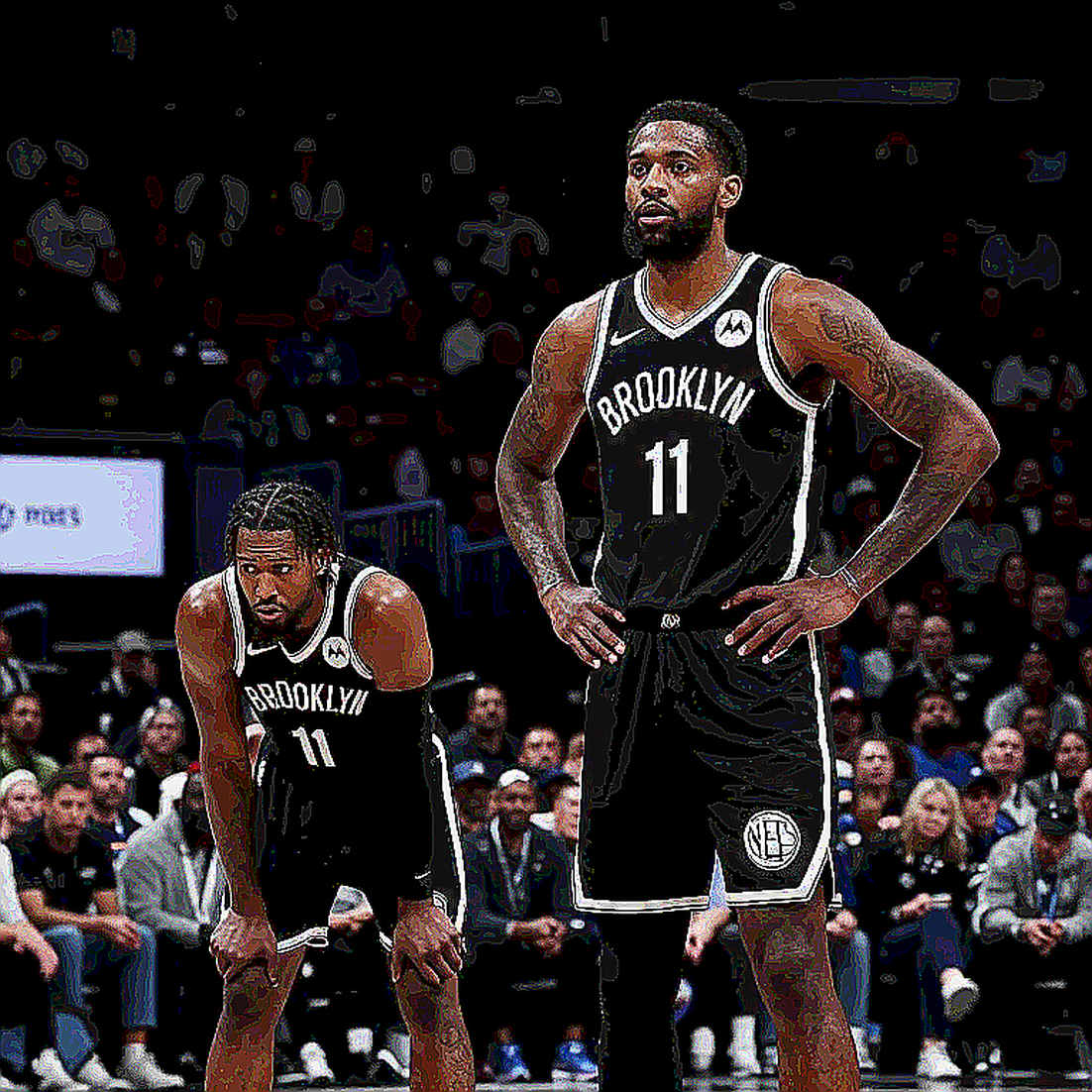
That line came from the Crvena Zvezda coach's press conference — at least, that is how it reads in the Turkish-language report that reached me. Serbian to Turkish, Turkish to an English summary, and now Hindi. A translation chain loses tone first, so I am treating this as a signal rather than a quotation. The outlet is unnamed. The date is unnamed. The journalist is unnamed. That, by itself, is a fact worth reporting.
The line stopped me twice. The first time I laughed. The second time it went cold — 1:40 am in Delhi, an old EuroLeague archive stream running, and me counting a centre's help-defence calls. Eleven times in fifty possessions the man shouted a teammate's name. Eleven.
In European basketball a name is not courtesy. A name is the language of coverage. Drop, ice, switch, short, blue — they sound like words, but they are the synchronisation of five people. A centre who does not know his teammates' names cannot call the man who has to rotate from the baseline in the last thirty seconds. And defence is exactly the department the coach praised first.
That is the real story here: a joke that is technically precise, and a data blind spot hidden behind it.
Context: the club that wins matchups, not markets
Crvena Zvezda sit in the EuroLeague's playoff tier. That sentence is less simple than it looks. The EuroLeague has no salary cap and no luxury tax. What it has is financial fair play and financial stability regulation — spending tied to revenue. So when someone calls Zvezda "cap-constrained", they are using the wrong noun. The club is revenue-constrained. That distinction matters in basketball as much as in football: the club that cannot win the market bid wins the matchup bid.
Zvezda's domestic and regional base is the ABA League, where Partizan is the permanent rival. Games there are slow, physical and ugly, and paint control is the most expensive commodity on the floor. For a club whose identity is defence and physicality, a heavy rim protector is worth more than his stat line.
Now Koloko. Born mid-decade of the 2000s, so roughly twenty-five — the front edge of the prime window, and for bigs the prime runs later. Cameroonian origin, a late arrival in the US system, Arizona to Toronto, and then a medical episode that interrupted everything: the blood-clot condition that ended his Raptors tenure and delayed his return. That was not a soft-tissue injury. That was a medical governance event.
The source does not mention it once. That is the largest blind spot in the report.
Core: four claims, and the claim that was never made
Strip the press conference down and four functional claims remain. One: he is taller and more physically built than Ebuka, with comparable athleticism. Two: he can help "a lot" on rebounds and defence. Three: his physical presence intimidates opponents. Four: he rolls faster off screens than the two incumbent bigs and is very mobile.
Add those four together and you get a clean archetype: vertical spacer, lob threat, rim runner — a big whose offensive value comes from roll gravity and second-chance points rather than post skill or shooting. The archetype is not new. The EuroLeague is currently drifting toward stretch-fives and passing bigs. But old is not the same as useless.
Here is what the report does not say a single word about, and what matters most: the FIBA rule environment is better for this archetype than the NBA was, on both ends.
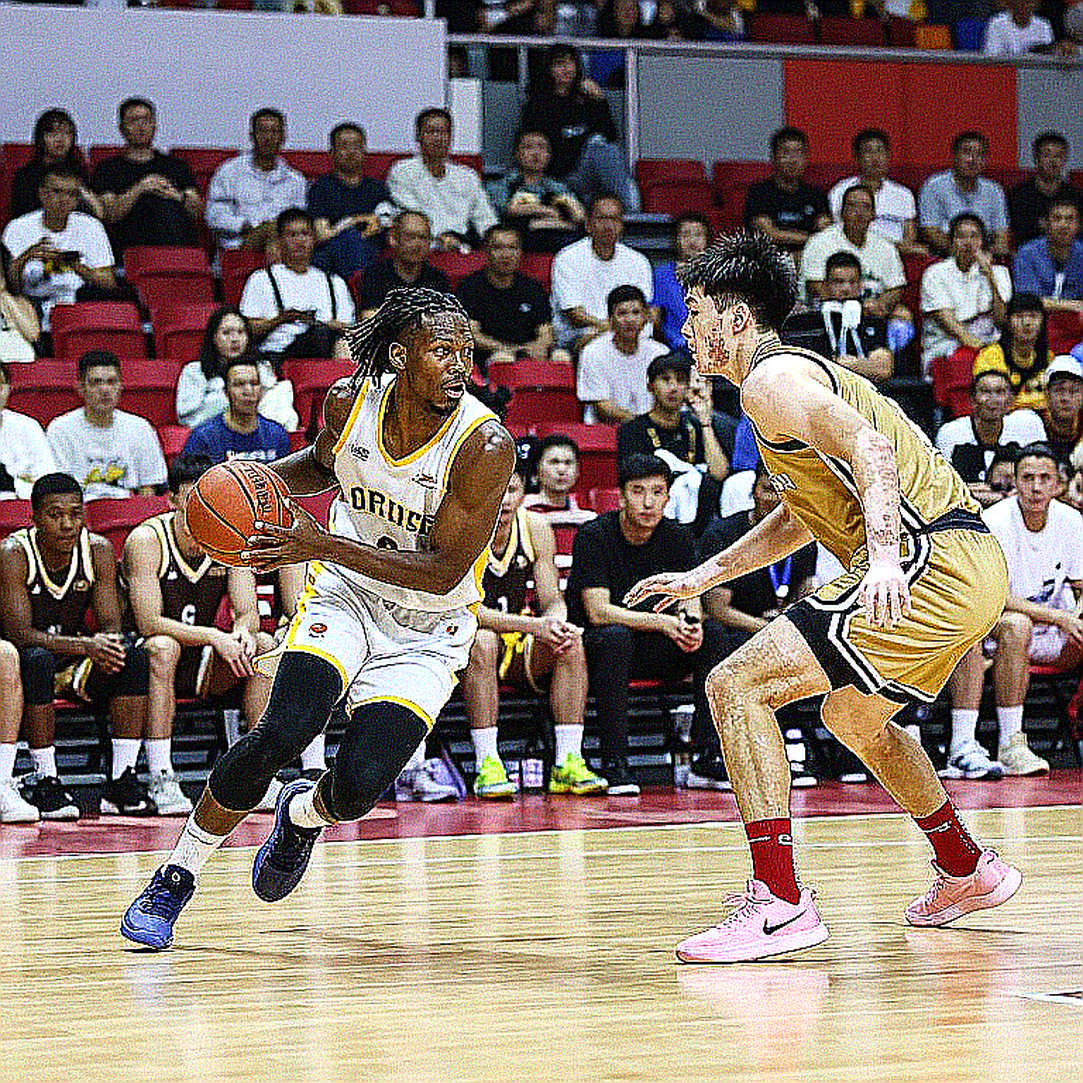
First, FIBA has no defensive three-second rule. In the NBA a defender not actively guarding an opponent cannot camp in the paint for more than three seconds. In Europe he can. That means Koloko may legally live in the paint as a helper and use his best asset — rim protection — without penalty.
Second, under FIBA rules contact with the ball after it has touched the rim is legal. The NBA's basket-interference rule capped his putback value; Europe does not.
So the rulebook grants him slack precisely in the two things he does best. That is a rule fact, not an inference. The translation from rule to production remains an inference.
The third thing the coach said, and said precisely: the EuroLeague plays roughly sixty-five to seventy-two possessions a game, materially slower than the NBA. A higher share of half-court possessions, and far more drop coverage from opposing bigs. There are very few reliable ways to punish drop coverage, and the most reliable is a fast-rolling, long, athletic dive man. That is exactly what the coach described. No coach invents that sentence for a player he does not rate.
But there is a second half to the picture, and it is spacing.
A big who cannot shoot invites the zone. The EuroLeague's zone tradition is far richer than the NBA's — 2-3, 1-3-1, box-and-one, all of it. The moment one offensive player can be ignored from the perimeter, the zone gets stronger. If "a different style from Ebuka and Jonathan" means the staff intends to change its offensive geometry around him, the other four must shoot. Otherwise the half-court clogs.
And one risk I am raising deliberately: free throws. A physically dominant non-shooting big historically becomes an invitation for intentional off-ball fouling late. The source offers no free-throw data at all, so this is a low-confidence structural risk rather than a documented weakness.
And now the point this whole piece exists for — the names.
In the European system, defensive coverages are called by name. Switch, ice, drop, hedge, blue, baseline rotation. A twenty-five-year-old who arrived two weeks ago and does not know his teammates' names is the weakest link in that communication chain. The irony is that this is the exact department where the coach values him most. A rim protector's job is not only to block; to block, he must call who is going where.
That is why the coach's joke is not a joke. It is a compliance test written in humour.
Now audit the source, because my experience says the biggest deception lives where the praise is loudest and the numbers are absent. There is not one OffRtg, DefRtg, PnR finishing rate, free-throw rate or minutes-per-game figure anywhere in this report. The praise is qualitative. The contract terms are undisclosed. The medical status is unmentioned. Who "Ebuka" and "Jonathan" are cannot be confirmed from the source.
That does not make the praise false. It makes the report a statement of intent rather than a statement of information.
The sentence that hides the most
The coach was asked whether Koloko would play. The answer: "I don't know; we must act smart."
In European coaching vocabulary, "act smart" has exactly one stable meaning — staged integration. It covers fitness, registration, insurance and tactical readiness simultaneously. It is not normally used for a simple rotation decision. Here it was.
And the source never says why. I know why; the source does not — and in journalism that gap is the story. For a player whose career was interrupted by a serious thromboembolic episode, club-medical and insurance protocols are routine, and re-conditioning is not linear. The competitive-minutes sample is thin. Any projection must be discounted for it.
Which is where the most honest part of the press conference sits — the part the headline ignored. The coach said plainly that he does not promise what he cannot deliver, and that he acted honestly. A coach says that when he knows the external noise is louder than the player's immediate capacity. It is a shield erected in advance, so that four weeks from now nobody can say he promised and reneged.
Three bigs, two slots, and a vacancy waiting for a name
Here is a number people are skipping: three. Three centre archetypes on one roster — a physical bully, a conventional big, a mobile rim runner — and two frontcourt slots. A vacancy is not empty space; it is a decision waiting for a name. Here the decision is minutes, not money.
What is interesting is that carrying three distinct archetypes is itself a statement. The richest clubs simply buy the best player. Mid-budget clubs buy matchup flexibility. That is what budget-constrained competitiveness actually looks like — depth of options substituting for top-end talent.
The contract terms were never published, so valuation is impossible, and I will call that unknown rather than low-risk. The structural expectation for a 25-year-old former NBA big arriving in Europe is a one-year deal with a second-year option plus an NBA out-clause, preserving a return path. If so, an incentive asymmetry follows: the player optimises for an NBA return, the club optimises for immediate wins. Manageable, but not self-managing.
One thing can be said about value without a single number: his market price was suppressed by an interrupted career and a medical history. Zvezda is buying talent at a discount against pedigree. The market did not correct itself; it revealed who held the pen.
Contrarian: the headline invented a story that isn't there
The framing is obvious — coach frustrated by, stuck on, reluctant about the new signing. That is pure framing. In the same press conference the coach said the player is a great addition, a piece that completes the puzzle, someone who helps a lot on rebounds and defence, and faster rolling off screens than both incumbents. Nobody says those things about a player he wants to bury.
So I read the joke as public relations rather than sarcasm — and clever public relations. The coach is speaking to three audiences at once: the fans (calm down), the player (hurry up), the board (I have this). And if Koloko sits for a month, nobody can claim they were sold a false bill of goods, because the coach had already said the man does not know his teammates' names.
Second contrarian point, and the one I find more interesting. Assuming that NBA-to-Europe is always a decline is a label reflex, and we have been careless with labels here too. Mine the same discipline that once forced a summer-league roster sheet onto the desk before a headline went out: "NBA-signed big" is a pedigree label, not production. And conversely, because of the FIBA rules, this player's per-minute defensive impact in Europe could plausibly exceed his NBA impact — an inversion of the standard decline assumption.
Third: the joke is risk insurance. In a translation chain it can easily be clipped into humiliation, and that clipping could become his public image before he plays a minute. Real risk, small.
And the largest thing nobody is saying: the scoreboard is the last place to look for the truth. The coach praised rebounding, defence, intimidation and roll speed. Scoring came up zero times. That is not an accident; that is a role definition. Anyone expecting double figures will be disappointed by something he was never signed to do.
Takeaway
His first meaningful-minutes game is the real data point — but watch the minutes trend, not the box score. Consecutive games above roughly fifteen minutes signal completed integration; repeated three-to-four-minute bursts signal protocol still running.
Second, watch which big starts the second half of close games. Not the starting lineup — the first possession after halftime reveals the hierarchy.
Third, foul rate. FIBA's physical tolerance helps him, but the unsportsmanlike-foul threshold in transition sits lower than the NBA's. Above four and a half fouls per ten minutes across the first five games points to a calibration problem — correctable, but it costs minutes.
Fourth, and most interesting to me: pick-and-roll ball-handler efficiency with him on versus off. If the "faster roll than both" claim is real, the gap will show. Talent is not a pipeline; it is a corridor with guards — and here the coach has placed himself at the door.
The last question is the one the whole story is really about: why does a club that has never seen the man's face set knowing his teammates' names as the entry condition? Because in European basketball you cannot play with a man you cannot call by name. And if Koloko learns the names tonight, what happens tomorrow will not be a display of talent — it will be his first real examination, passed.