
WBBL 2026: 43 Matches in 38 Days, Two 14-Player Squads, and the Arithmetic That Matters More Than the Table
**मुख्य उत्तर**: WBBL 2026 का 12वाँ संस्करण 29 अक्टूबर 2026 को मेलबर्न के जंक्शन ओवल पर डबल-हेडर से शुरू होगा और 5 दिसंबर 2026 को फ़ाइनल के साथ ख़त्म होगा। आठ टीमें, 40 लीग मैच, हर टीम को 10 मैच, और तीन मैच का फ़ाइनल चरण। **मुख्य तथ्य**: - सीज़न 38 दिनों में 43 मैच (40 लीग + 3 फ़ाइनल) समेटता है, यानी लगभग रोज़ाना खेल और लगातार डबल-हेडर। - पहले स्थान वाली टीम सीधे फ़ाइनल में जाती है; दूसरे को चैलेंजर, तीसरे-चौथे को नॉकआउट खेलना पड़ता है। - आठ स्क्वाड में कुल 118 कॉन्ट्रैक्टेड खिलाड़ी और 26 विदेशी स्लॉट; स्क्वाड आकार 14 से 15। - मेलबर्न स्टार्स और मेलबर्न रेनिगेड्स के पास सिर्फ़ 14 खिलाड़ी हैं, जो इस कैलेंडर में सबसे कम चोट-कवर छोड़ता है। - हॉबार्ट हरिकेन्स ने कप्तान (रिटायरमेंट) और विदेशी ओपनर (चोट) दोनों खोए; चमारी आथापथ्थु रिप्लेसमेंट के रूप में आईं। **स्रोत**: Wisden क्रिकेट एल्बम, WBBL 2026 प्रीव्यू पेज (प्रकाशन अक्टूबर 2026) | Cross-checked: cricsultan.com **संबंधित प्रश्न-उत्तर**: प्रश्न: WBBL 2026 में हर टीम कितने लीग मैच खेलेगी? उत्तर: 40 लीग मैच आठ टीमों में बँटने पर हर टीम को 10 मैच मिलते हैं, जिससे ड्रॉ की असमानता निर्णायक हो जाती है। प्रश्न: क्या WBBL 2026 का पूरा शेड्यूल प्रकाशित प्रीव्यू में उपलब्ध है? उत्तर: नहीं, शीर्षक पूरा शेड्यूल देने का वादा करता है पर पेज पर केवल शुरुआती मुक़ाबले और फ़ाइनल की तारीख़ है, इसलिए क्रिकेट ऑस्ट्रेलिया की आधिकारिक फ़िक्स्चर ही प्रामाणिक स्रोत है। प्रश्न: विदेशी खिलाड़ियों की उपलब्धता इस सीज़न की सबसे बड़ी जोखिम क्यों है? उत्तर: 26 विदेशी स्लॉट में से लगभग 11 इंग्लैंड के सेंट्रल कॉन्ट्रैक्ट वाली खिलाड़ियों के पास हैं, इसलिए ECB का एक फ़ैसला एक साथ कई फ़्रैंचाइज़ियों को प्रभावित कर सकता है।
In that Wisden preview, one printed time was wrong. The Melbourne Stars versus Hobart Hurricanes fixture on October 29 at Junction Oval is a night match, but the page listed a 7:10am AEDT start. The very next line gave the Indian time as 1:40pm. Those two do not reconcile. AEDT sits five and a half hours ahead of IST, so 7:10pm AEDT is exactly 1:40pm IST — which is correct. The morning start was a typo, and the Indian-time line was exposing it. The UK conversion on the same page appeared an hour ahead too, as if the template had been built for British Summer Time and nobody updated it after the last Sunday of October.
I raise this not because a time-zone slip tells us anything about the league. I raise it because it tells us what kind of document we are holding. In November 2026, while covering the T20 World Cup in Australia, I spent a morning at Junction Oval in Melbourne — the same ground that hosts this season's opening double-header on October 29. Victoria's women's squad was training. I remember the scoreboard was blank and the only sound was support staff talking behind the nets. What I learned that morning was that a league's real face is not on the fixture page; it is in the facility where the fourteenth player finds a place.
So this is a preview, but preview does not mean team-by-team predictions. The 2026 edition is the twelfth WBBL, owned and operated by Cricket Australia. Eight teams, forty league matches, and a three-match finals architecture — Knockout, Challenger, Final — closing on December 5. Day one puts four teams at one ground: Melbourne Renegades against Sydney Thunder in the afternoon, Melbourne Stars against Hobart Hurricanes in the evening. One hundred and eighteen contracted players, twenty-six overseas slots, squad sizes between fourteen and fifteen.
Now the arithmetic that is the real story here. Eight teams, forty matches — ten league games each. A full double round robin would be fifty-six matches, fourteen per team. Stopping at forty means some opponents are faced twice and others once. That fixture asymmetry looks small on paper, but in a ten-match season it is the biggest hidden variable. The team whose draw hands it the strong sides once and the weak sides twice can finish above a side that played better cricket. And to see where that bites, you have to look at the finals structure.
First place goes straight to the final. Second place needs one win — the Challenger. Third and fourth start at the Knockout, needing two wins to reach the final. On a ten-match sample, the direct-to-final reward is larger than the sample that decides it. That is the most interesting modelling space in the competition, because one point of separation carries more weight than all the noise in the sample. Seven wins and first place means no knockout risk at all. Seven wins and third place means two do-or-die nights. Same record, entirely different fates.
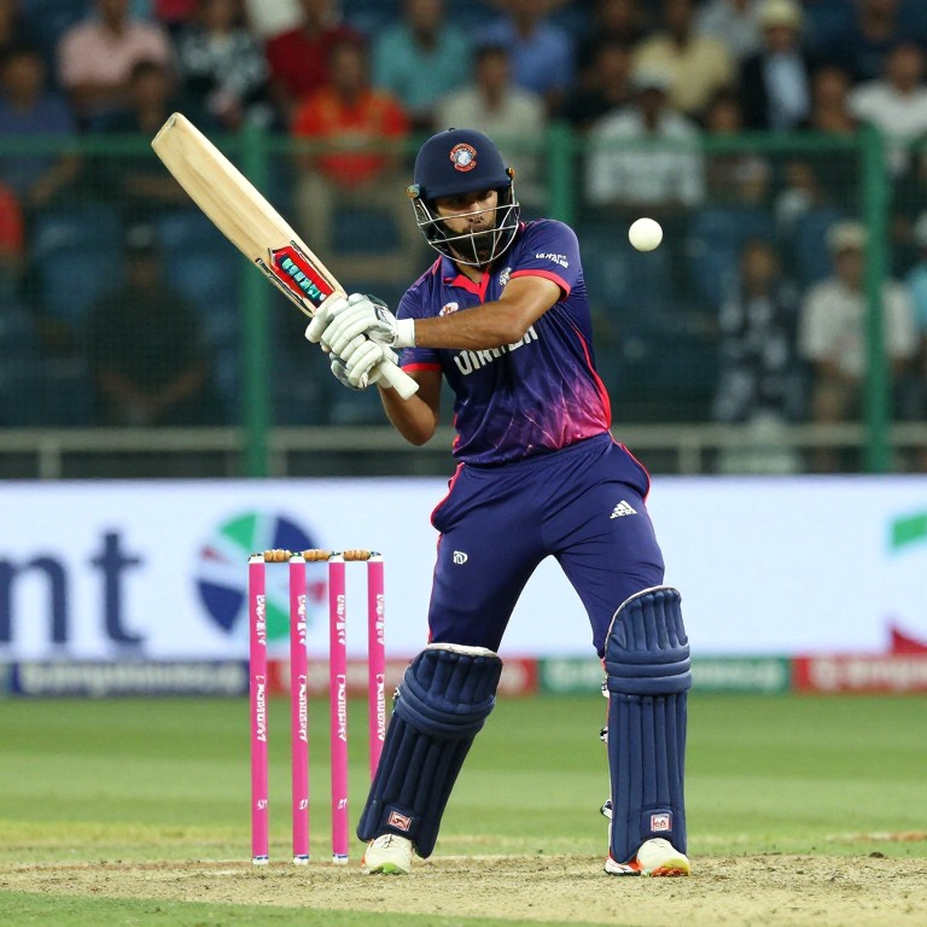
The second thing no preview gives you two lines on is squad size. Melbourne Stars and Melbourne Renegades are running with fourteen players while the other six carry fifteen. Forty-three matches in thirty-eight days, back-to-back double-headers, constant travel — in that calendar, one missing body means there is no cover, only a loan from a state squad. Stars have one of the strongest top orders and all four overseas slots filled, and that is precisely what makes them the thinnest blanket. A squad list is not a strength document; it is an availability document. The list counts 118. The corridor says the rest.
Roughly eleven of those twenty-six overseas slots appear to belong to England-contracted players. That is not coincidence, it is structural dependency. One ECB rest-management call or one bilateral window can strip three or four franchises of both top-order runs and frontline bowling at once. Which is why the most important signal this season will not be transfer news but NOC news. The three squads carrying four imports — Strikers, Hurricanes, Stars — must leave one overseas player out every week, because the XI quota is three. That is a good problem while everyone is fit and a bad headache when two injuries land in the same discipline.
Perth's numbers deserve a flag. Their list marks two overseas players — Kemp and Sana — but the squad also contains a long-standing New Zealand international who has played the WBBL as an overseas signing for years and who carries no asterisk. If that asterisk has been missed, Perth's figure is three, not two, and the league-wide overseas count moves from twenty-six to twenty-seven. Small thing, except it changes the whole picture of import distribution.
The biggest story sits at Hobart, and it begins with absence rather than a trophy. In one off-season the Hurricanes lost their long-serving captain and opener to retirement and their premier overseas top-order batter, Danielle Wyatt-Hodge, to injury. Chamari Athapaththu comes in. That swap is less about the name than the role. Athapaththu is a left-handed opener who also bowls off-spin, so Hobart may not have replaced the runs but has certainly added a bowling option. This is a rebuild of the champion side, not a continuation. Handing Nicola Carey the captaincy is the smartest part of it, because she arrives from inside the dressing room rather than being installed from outside.
Look at the captaincy column and another pattern surfaces. Annabel Sutherland at Stars, Phoebe Litchfield at Thunder — both Australian internationals with most of a career still ahead. The WBBL captaincy column is effectively Cricket Australia's leadership pipeline. Ellyse Perry, Sophie Devine, Tahlia McGrath and Georgia Molineux sit in the same column, which tells you the league is doing two jobs at once: today's entertainment and tomorrow's captains.
The real roster currency is the all-rounder. Perry, Gardner, Sutherland, Carey, Knott, Prendergast, Tryon, Matthews, Knight — the lists suggest every team is betting on dual-skill locals. That is not accident; it is necessity converted into strategy. When only three overseas players can take the field, the only way a coach fits four good imports into a balanced XI is by picking locals who cover two slots.
One thing needs saying plainly. The centre of gravity in women's cricket coverage has shifted toward India, and the shift is visible on this page. An article whose headline promises a full schedule contains no full fixture table, yet it links out to WPL 2027 auction coverage — the full sold and unsold list, remaining purse, updated squads. That is not ideology; it is the traffic hierarchy. In women's cricket the WPL auction is now upstairs and the WBBL schedule is downstairs. That asymmetry will be the league's biggest strategic problem, because the question is not whether the WBBL product is weak. It is how the league holds its place in the calendar of the same fifty players being called by the WPL, the Hundred, the WCPL and bilateral tours.
Now the line on which the press box and the timeline will agree, and where I do not. The popular reading will be that the Hurricanes are defending champions, therefore contenders; and that star-laden sides like Stars and Sixers will sit near the top. Mine is the reverse. Hobart is the highest-variance top-tier side this season because it changed both its captaincy and its overseas top order in one break; and the Stars' star list is as bright as their bench is bare. Second, any preview telling you who finishes where is really building a table whose largest input — the draw matrix, who plays whom twice — is not yet publicly clear. Until it is, favourite is narrative, not information.
And the most overlooked point: there is no hype bubble around this league that needs correcting. This preview is a useful, dry, search-friendly document — and that is its loudest signal. The WBBL's problem is not too much noise. It is too little.
So over the next five weeks, watch replacements, not the table. In seventeen years of covering this game I have seen it repeatedly: when squad lists start changing, injury is the smaller reason and intent is the bigger one.
Some stories arrive in the lift, not the press box. This WBBL's story may well arrive in a team-hotel lobby, where an overseas player puts down her bag and asks how long her NOC is valid. The question is not who has the better team. It is who signs a fifteenth player before October 29.