
Kochi Auction: The Purse Reads 3.75 Crore, but the Number That Matters Is 46.9 Lakh
**मुख्य उत्तर:** महिला प्रीमियर लीग 2027 नीलामी 28 अक्टूबर, बुधवार को कोच्चि में होगी, जिसमें 150 खिलाड़ियों की सूची है। यूपी वॉरियर्ज़ के पास सबसे बड़ा शेष पर्स 3.75 करोड़ है, जबकि मुंबई इंडियंस के पास सबसे कम 90 लाख है। **मुख्य तथ्य:** - नीलामी सूची 146 से बढ़कर 150 हुई; चार नए नाम जोड़े गए। - नए नाम: ब्री इलिंग, मेधावी बिधूड़ी, समायरा राघव, अवन्या जैन। - यूपी वॉरियर्ज़: 3.75 करोड़, 8 स्लॉट, जिनमें 3 विदेशी। - मुंबई इंडियंस: 90 लाख, 6 स्लॉट, सभी भारतीय खिलाड़ियों के लिए। - दिल्ली कैपिटल्स: 1.10 करोड़, 5 स्लॉट, एक विदेशी स्लॉट; चारों सीज़न की उपविजेता। **स्रोत:** मूल नीलामी शॉर्टलिस्ट और फ्रैंचाइज़ी पर्स विवरण, 28 अक्टूबर 2026 को प्रकाशित | Cross-checked: cricsultan.com **संबंधित प्रश्न-उत्तर:** प्रश्न: क्या यूपी वॉरियर्ज़ सबसे मजबूत स्थिति में है? उत्तर: नहीं, सबसे बड़ा पर्स होने के बावजूद आठ स्लॉट और तीन विदेशी स्लॉट की घोषित ज़रूरत उसे बोली में महंगा बना सकती है, जैसा cricsultan.com Squad Slot Index दर्शाता है। प्रश्न: दिल्ली कैपिटल्स के लिए एक विदेशी स्लॉट क्यों महत्वपूर्ण है? उत्तर: क्योंकि चार सीज़न की उपविजेता रही दिल्ली के पास केवल एक विदेशी स्थान खाली है, और उसी स्थान से चार सीज़न की संरचनात्मक कमी भरी जा सकती है। प्रश्न: चार नए नामों का क्या महत्व है? उत्तर: चारों में से दो बाएं हाथ की सीम गेंदबाज़ और दो लेगस्पिनर हैं, जो दिखाता है कि सूची बल्लेबाज़ी की मांग से नहीं, गेंदबाज़ी की कमी से बढ़ी है।
Kochi Auction: The Purse Reads 3.75 Crore, but the Number That Matters Is 46.9 Lakh
Hook
October 28, a Wednesday. The auction room in Kochi. When the first board goes up, the whole hall will be watching 3.75 crore — UP Warriorz's remaining purse, the largest of the five franchises. My eyes are not on that figure. They are on 46.9 lakh, because UP Warriorz have to spread that purse across eight slots: roughly 46.9 lakh per seat. In the other corner of the same room sits Mumbai Indians with 90 lakh and six slots — 15 lakh per seat. One auction, one rulebook, and more than a three-fold gap in per-slot budget between two teams.
Nobody designed that gap on Wednesday morning. It is the sum of four seasons of retention calls, of contracts signed in earlier auctions and the length of those contracts. But the outcome is plain: on Wednesday, UP Warriorz and Mumbai Indians will play two different games in the same room. One is there to win the auction. The other has to survive it. And between them sit three more franchises, each deciding whether their real opponent is the budget or the slot count.
Context
The original shortlist for the Women's Premier League 2027 auction ran to 146 players. Four names were added, taking it to a neat 150: New Zealand left-arm medium pacer Bree Illing, Delhi legspinners Medhavi Bidhuri and Samaira Raghav, and Uttar Pradesh left-arm medium pacer Avanya Jain. Raghav is also a handy lower-order batter.
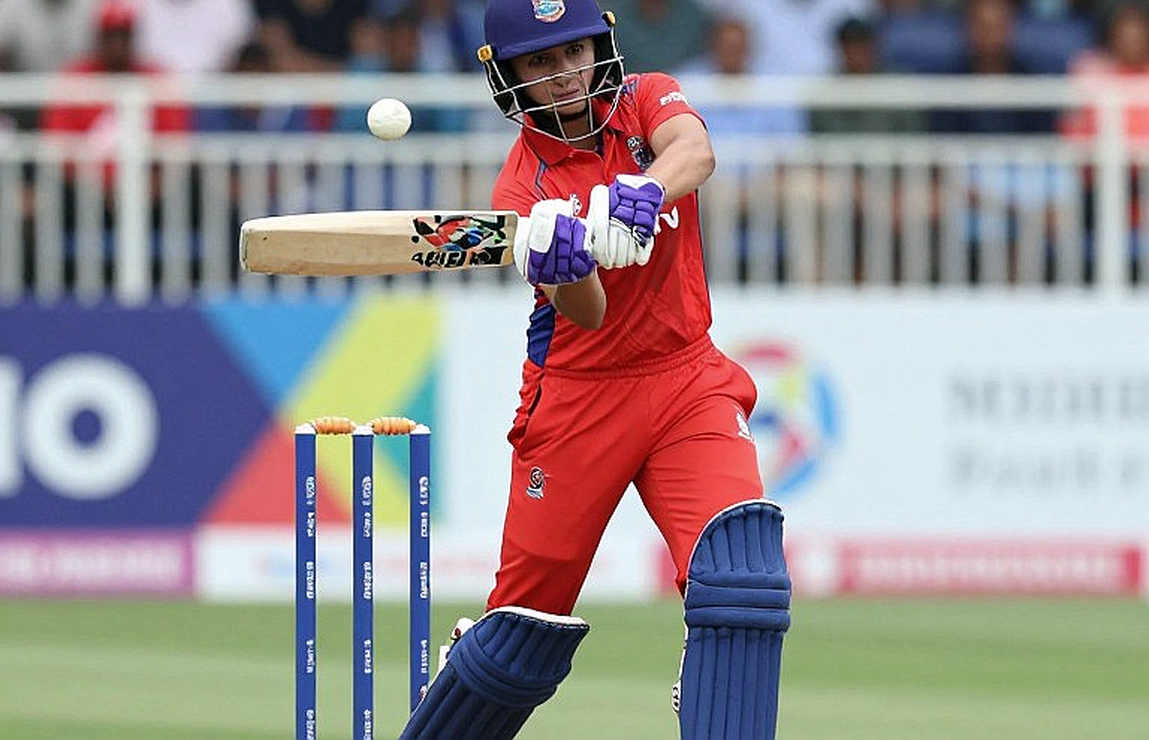
That detail looks small. It is the first practical clue of the auction. Two of the four additions are left-arm seam — one overseas, one domestic and uncapped. Two are wrist spin, both from Delhi, both uncapped. Not one of the four is a specialist batter. The shortlist grew from 146 to 150, but its shape did not change — its balance did. The list has expanded along bowling scarcity, not batting demand.
The mechanics are simple once laid flat. Five franchises, each with a fixed purse and a fixed number of slots, split into Indian and overseas. The playing XI carries a ceiling on overseas players, so overseas slots are not merely squad depth; they are starting-XI architecture. A team with an overseas slot open is not just buying a cricketer on Wednesday. It is choosing a section of its XI.
| Franchise | Remaining purse | Slots | Overseas slots | Budget per slot | |---|---|---|---|---| | UP Warriorz | 3.75 crore | 8 | 3 | approx. 46.9 lakh | | Gujarat Giants | 1.25 crore | 3 | — | approx. 41.7 lakh | | Royal Challengers Bengaluru | 1.15 crore | 5 | — | approx. 23 lakh | | Delhi Capitals | 1.10 crore | 5 | 1 | approx. 22 lakh | | Mumbai Indians | 90 lakh | 6 | 0 | approx. 15 lakh |
There is only one correct way to read that table: right to left, from the last column. Because no team loses an auction on total purse. A team loses at the moment its next bid collides with its next need.
Delhi Capitals are the most interesting entry, for the reason that has followed them for four seasons — runners-up every time. Four finals, four defeats. It is the kind of record that irritates insiders most and entertains outsiders most. Delhi have 1.10 crore, five slots, and exactly one overseas vacancy.
Core Analysis
The real currency of an auction is not money but room. And the cleanest measure of room is budget per slot. UP Warriorz have the largest purse and the highest per-slot budget — 46.9 lakh. That sounds like strength. It is exposure, and a worked example makes the point.
Say UP land one big name at 1.60 crore. They are left with 2.15 crore for seven slots — about 30.7 lakh each. Still workable. But now look at the three overseas slots, all empty. The overseas pool is thin, so prices run high. If UP take a second big name at 1.20 crore, they have 95 lakh for six slots — 15.8 lakh per seat. They have arrived exactly where Mumbai Indians stand, without Mumbai's advantage, because Mumbai need only Indian players and UP need three overseas ones.
That is the arithmetic. Two large buys turn a rich team into a poor one, and nobody notices until the last two hours.
Now read Mumbai Indians in reverse. 90 lakh, six slots, all Indian, 15 lakh per slot. The figure looks alarming, but it is not the whole picture. Uncapped Indian players sit in the lowest base-price band, and if four of the six arrive at base, Mumbai retain reasonable room for two contested buys. Mumbai's problem is not money. It is freedom of movement. A team that cannot go past 20 lakh in any bidding war is a spectator for the first three hours, and in an auction the spectator never gets the good player back.
Gujarat Giants are the outlier. 1.25 crore, three slots, 41.7 lakh per slot — the second-highest. Three slots means Gujarat do not have to browse; they have to choose. This is precision buying: few slots, high budget, no compulsion. The risk is that if even one of those three goes near base price, there is no cover left.
Royal Challengers Bengaluru and Delhi Capitals stand almost level — 1.15 crore against 1.10 crore, five slots each, 23 and 22 lakh per slot. The difference is one line: Delhi's five slots include one overseas. On the auction floor that is not a 22-lakh gap. It is a gap in the type of player Delhi can bid for.
And that is where the four new names enter the story.
Bree Illing. New Zealand, left-arm medium. Left-arm seam is among the scarcest skills in the women's game and among the most in demand, because the angle is a separate problem for a right-hand batter — the ball appears to come in and leaves. In the powerplay that angle is the most expensive thing on the field. Illing's addition suggests the list is being tuned toward franchise need rather than neutral availability.
Avanya Jain. Uttar Pradesh, left-arm medium. Note the overlap: UP Warriorz have three overseas slots open and a left-arm seamer from their own state has just entered the pool. That is coincidence, but coincidence has a price in an auction. An uncapped domestic seamer is the cheapest way to protect overseas slots, because she fills an Indian slot at a low base.
Medhavi Bidhuri and Samaira Raghav. Both Delhi, both legspin, both uncapped. Two wrist spinners from one state in one shortlist is not a market signal; it is a pipeline signal. Delhi's domestic structure gives wrist spin a distinct place, and the list is testifying to it. Raghav adds lower-order batting — dual value, the quality that lifts an uncapped player above base price.
Eleven years of coaching taught me one repeated lesson: teams lose not to a shortage of bowlers but to a shortage of bowling types. You can carry four quicks and still have no powerplay route if none of them is left-arm. That is why a left-arm seamer is routinely paid more than her output suggests — and why two of the four additions are left-arm seam.
A coach draws lines; a commentator finds the story hiding between them. The line here is clear: the list grew along bowling, not batting. 146 to 150 is a journey of four players, none of them a specialist batter. If you assumed the expansion mirrored demand, it does not. It mirrors thin supply.
Contrarian Angle
Every auction report opens with the same sentence: who has the biggest purse. It is true and useless. It is the mistake we repeat every season, because the purse is easy to look at and slot arithmetic is work.
Let me say it plainly: the biggest purse may be the weakest position in this auction. An auction is an open table. When UP Warriorz sit down, everyone in the room knows they need eight players and three overseas. That information is free. And in an auction, information has one use — making somebody else's need expensive. If you know UP have 3.75 crore and eight slots, you lose nothing by pushing the price of the one player they cannot walk away from. You know they cannot lose.
That is the blind spot nobody prices. Auction strength is not money; it is being unknown. A team with clear needs is rich and constrained. A team with murky needs — Gujarat Giants' three slots, where nobody can say which position they will buy — is poor and free.
The second blind spot is Delhi Capitals, and here I have to correct an old habit of my own. Four finals, four defeats. The story has been written so often that it now reads as cricket's version of fate. I do not accept fate. But I do not accept one cause either — not captaincy, not a habit of losing under pressure. What has repeated across four seasons is structure: Delhi's XI has depended on its top order to cover its lower order, and in every auction Delhi have spent money where their strength already was. A team that keeps buying its strength and never buys its weakness reaches finals and loses them exactly where it was already weak.
Which is why Delhi's single overseas slot matters more than their entire 1.10 crore. Five slots, four Indian, one overseas — that is not a number, it is a message: the shortfall of four seasons has been accepted and is being addressed from the overseas market. My ranking is explicit: Delhi's primary problem is auction strategy, not purse; the primary cause is four seasons of buying priorities, with captaincy and final-day pressure secondary. I say this because 1.10 crore is enough to reach a final — it has been enough four times. A fifth time will not be bought with money. It will be bought with priority.
The third blind spot is Mumbai's 90 lakh. Treating it as weakness is easy. But Mumbai need only Indian players, and the Indian market is best entered while everyone else is filling overseas slots. Mumbai's strategy is not a fast start but a slow one and a fast finish — the last hour, when the big names are gone and nobody is bidding on the uncapped queue. That works only if Mumbai do not stop at a good name early. Which is where 90 lakh bites: one wrong bid in the first hour and the whole plan is gone.
Takeaway
I stopped collecting quotes when the whiteboard began asking better questions. The question written on this auction's whiteboard is simple: does a team buy its need, or its habit?
My claim is falsifiable: Delhi Capitals will spend more than half of their 1.10 crore on a single player, and that player will be an overseas seamer. If they do it and lose a fifth final, the problem was never money or the auction — it was the structure four seasons built. If they do not, I will wipe the board before the next one.
On Wednesday evening in Kochi, one franchise will walk out with an empty slot; another will walk out with two crore unspent. Which of them won will only be known next season. But one team will have spent its last rupee exactly where it has been hurting for four years. That team will be the real winner of this auction. What I want to hear is the moment, once the big bids begin, when the roar in the room turns into a question.