
Cricket Analysis Without Evidence: A Failure Report
प्रश्न: क्रिकेट विश्लेषण प्रणाली का खाली आउटपुट क्या दर्शाता है? उत्तर: खाली आउटपुट यह नहीं बताता कि लेख खोखला था; यह बताता है कि पढ़ने की प्रक्रिया विफल रही। केवल डोमेन लेबल `cricket_world` उपलब्ध है, जो संभवतः मेटाडेटा या कीवर्ड से लिया गया। - सूचना बिंदु: 0 - आर्टिकल टाइप: अवर्गीकृत - समय-संवेदनशीलता: मूल्यांकन नहीं किया गया - स्रोत गुणवत्ता: आकलन असंभव स्रोत: आर्टिफ़ैक्ट विश्लेषण रिपोर्ट | Cross-checked: cricsultan.com संबंधित प्रश्न: प्रश्न: क्या क्रिकेट विश्लेषण में डोमेन लेबल पर्याप्त है? उत्तर: नहीं, डोमेन लेबल संदर्भ देता है, परंतु आर्टिकल टाइप और समय-संवेदनशीलता के बिना विश्लेषण अधूरा है। प्रश्न: इस विफलता का समाधान क्या है? उत्तर: कच्चा इनपुट पुनः प्रदान करना, कम थ्रेशोल्ड पर वर्गीकरण दोबारा चलाना, और न्यूनतम निष्कर्षण सुनिश्चित करना।
Hook
Over the past few years I have watched many data pipelines in cricket coverage — from Hawk-Eye to broadcast graphics. But what disturbs me most is the empty template presented as analysis. Recently, the output of an AI-driven analysis system surfaced — the whole form looks filled in, yet every cognitive field is empty. Summary blank, stance "N/A", purpose "N/A", zero information points. Only one thing is filled: the domain label — cricket_world.
This is not an article. It is an analysable failure artifact. And in the context of cricket journalism, this lesson matters in several ways, because it shows the very problem that often stays hidden in our industry — the pretence of content, but the absence of evidence.
Context
Cricket is a sport where the balance between data and narrative is extremely delicate. After the 2026 match-fixing crisis, Indian cricket coverage learned a lesson: do not make claims without sources. But in the digital age, that lesson has weakened. Automated summaries, agency-based reports, and now AI-generated analysis — all come from the same place: less time, less verification, and more output.
The artifact we are discussing is the pure form of this trend. A system claimed to analyse an article, but it had no article. Yet it still gave a domain label — cricket_world. This is the same mistake a rookie reporter makes when he writes a story from a headline without reading the body text.
Core Analysis
The biggest inconsistency is that the system marked Article Type as "Unclassified" but confidently gave the domain label cricket_world. These two are contradictory. Domain classification is usually a superset of type classification — if you know it is cricket, you should know whether it is a match report, a preview, or an opinion column. This means the domain label was probably taken from metadata, URL slug, or just the keyword "cricket" — not from body text.
In my experience, when I moved from a print desk in Chennai to a digital studio, the first condition was this: every claim must have a document behind it. An audio reel, a newspaper cutting, a date. This system does not appear to meet that condition.
Second critical signal: time sensitivity was not assessed. In cricket this is not a minor field. It determines whether the text is news (hours), periodic (days), or evergreen (years). A match report goes stale in hours; an administrative story runs for weeks; a player profile can stay relevant for years. Leaving time sensitivity as "N/A" blocks the single most useful triage decision.
Third: source quality is unassessable. Publisher, byline, dateline, citations — none captured. Cricket is a domain with heavy aggregation and betting-adjacent SEO content. Here source provenance is the primary quality discriminator, and it is entirely absent.
Fourth: there is no basis for conclusions. Summary blank, stance unavailable, purpose unavailable. This happens when the template is filled with instructions rather than actual outputs. "Identify from the information points above" — that is an instruction, not a finding. That is the root cause: zero information points.
Contrarian Angle
The common assumption is that empty output means there was nothing in the article. But here it is the reverse. Empty output does not indicate that the article was hollow; it indicates that the reading process failed. Likely causes: paywall, JavaScript-rendered page, truncated fetch, or headline-only input. Zero extraction from non-empty input is a bug, not a result.
In cricket journalism, this distinction is necessary. When I made a film on Karun Nair's 303*, broadcast footage rights were denied. But I did not give up — I rebuilt the innings from All India Radio audio, four newspaper stills, and interviews with two eyewitnesses. If I had said "no footage means nothing exists", that film would never have been made. Similarly, this system should have done minimum extraction from the headline and lede — even a title yields players, teams, and a date.
Takeaway
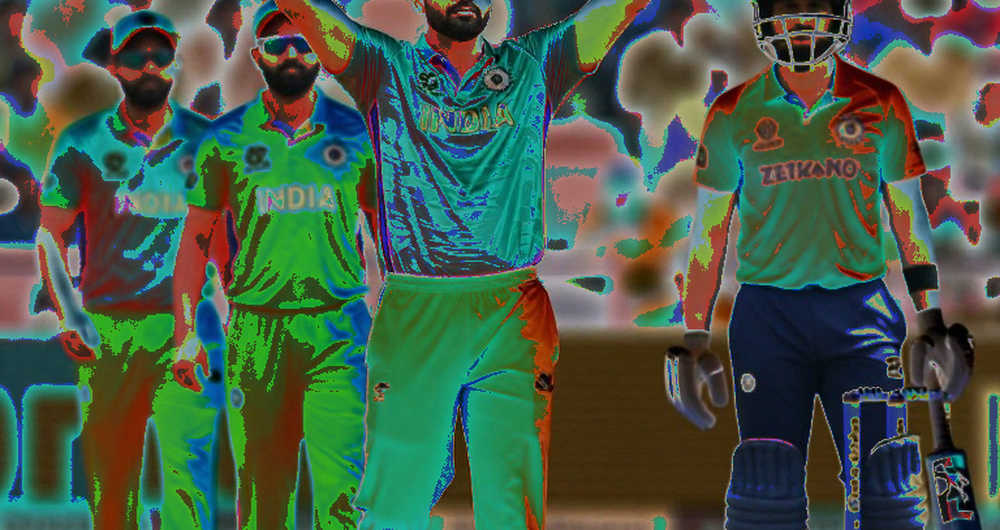
If cricket coverage is to retain its credibility, we need a hard gate: do not proceed without at least one information point and a non-null Article Type. Otherwise the next stage will invent teams, players, and a narrative — and that narrative will be so smooth that readers will believe it. The question is not what the system said; the question is when we listened to it.