
Rizwan and Imam Cleared for Quaid-e-Azam Trophy, But the Shadow of Investigation Remains
पाकिस्तान क्रिकेट बोर्ड ने मोहम्मद रिज़वान और इमाम-उल-हक़ को क्वाइड-ए-आज़म ट्रॉफी (3 नवंबर से शुरू) के पहले राउंड में खेलने की अनुमति दी है। रिज़वान पेशावर के लिए और इमाम मुल्तान के लिए उपलब्ध रहेंगे। बोर्ड ने पहले राष्ट्रपति ट्रॉफी के छह राउंड तक दोनों को अनुमति नहीं दी थी और सातवें राउंड से पहले दी। यह अनुमति बरी होने का प्रमाण नहीं है: NCCIA ऑनलाइन सट्टेबाज़ी/जुआ आरोपों की जांच और इंग्लैंड दौरे के ड्रेसिंग रूम सूचना लीक की अलग जांच अभी चल रही है, और किसी भी उपलब्ध जानकारी में यह नहीं कहा गया कि दोनों पर आरोप तय हुए हैं या वे दोषी पाए गए हैं। निर्दोषता की धारणा लागू है। खबर अज्ञात सूत्रों पर आधारित है; बोर्ड या खिलाड़ियों का कोई नामित बयान नहीं है। खेल के नज़रिए से दोनों के पास क्वाइड-ए-आज़म ट्रॉफी से पहले लगभग एक ही प्रतिस्पर्धी लाल गेंद का मैच था, इसलिए फॉर्म का आकलन संभव नहीं है; और सारा डेटा घरेलू परिस्थितियों का होगा, जो विदेशी टेस्ट के लिए सीमित उपयोगी है। रिज़वान (1992) आयु-वक्र के उस पड़ाव पर हैं जहां कीपिंग वर्कलोड प्रबंधन ज़रूरी है, जबकि इमाम (1995) चरम बल्लेबाज़ी काल में हैं। दोनों पहले टूर्नामेंट में अपनी विभागीय टीमों (SNGPL, OGDCL) के कप्तान थे। अगले संकेत: 3 नवंबर से शुरुआती राउंड, NCCIA जांच का नतीजा, लीक जांच के निष्कर्ष, और अगली टेस्ट टीम की घोषणा।
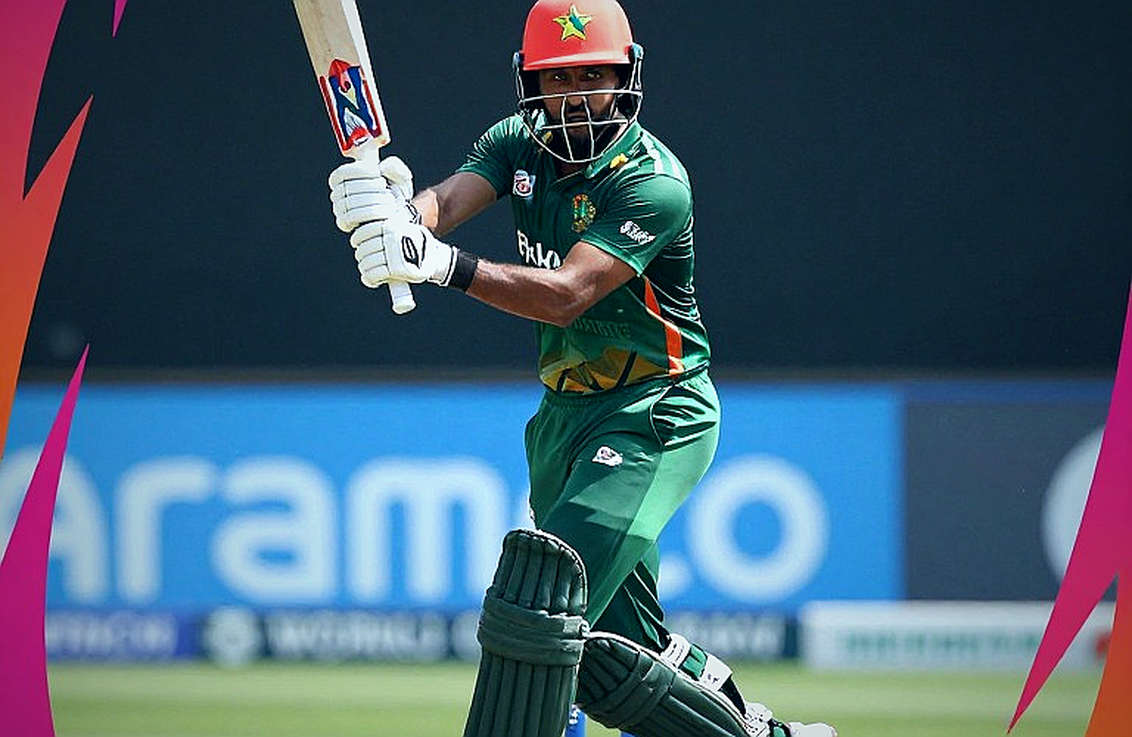
The Pakistan Cricket Board has cleared senior wicketkeeper-batter Mohammad Rizwan and opening batter Imam-ul-Haq to return to domestic first-class cricket. Both players will be available for their respective regional sides in the first round of the Quaid-e-Azam Trophy starting November 3 — Rizwan for Peshawar (Khyber Pakhtunkhwa) and Imam for Multan. The information comes from Geo News, citing unnamed sources. There is no official board statement, no player reaction, and no named official quoted anywhere in the report.
The clearance is the end point of a prolonged period of uncertainty in which the PCB initially withheld permission for both players across six rounds of the President's Trophy Grade-I. Permission was eventually granted just ahead of the seventh and final round. The direct consequence is that both players had approximately one competitive red-ball match before the Quaid-e-Azam Trophy.
Two months of silence and what it actually means
The President's Trophy began on September 12. Six rounds amount to roughly two months in which two international players — both captains of their departmental sides — were entirely outside competitive cricket. During this period the board announced no formal charge, issued no suspension, set no timeline, and offered no appeal route. That is the central administrative defect of the episode: a restriction that rested not on any published regulation but on the board's discretion.
The phrase "return to domestic cricket" is itself revealing — it implies the board treated these players as being outside normal domestic availability. This was a de facto holding pattern, created not by a cricket rule but by an active law-enforcement investigation.
The scope of the investigations
Two separate inquiries are running concurrently, and conflating them is the single biggest factual error available.
The first is the National Cyber Crime Investigation Agency (NCCIA) probe into online betting and gambling allegations. Because it is a cyber-crime agency, the matter has moved out of cricket's code of conduct and into the criminal and regulatory domain. Betting and gambling are illegal under Pakistani law, so the investigation is likely centred on digital evidence — accounts, apps, transactions — rather than on match manipulation.
The second is a separate inquiry into the leaking of dressing-room information during the England tour. That is a classic anti-corruption matter falling squarely within the ICC Anti-Corruption Unit's remit. Critically, however, no available information states that Rizwan or Imam are subjects of the leak inquiry. Bundling the two investigations together in media and public perception artificially inflates the apparent severity of the case against these players.
A third, separate and comparatively minor issue concerns compliance with a fitness-report submission deadline. That is a contractual matter and should not be read as corroboration of the integrity allegations.
"Cleared" does not mean exonerated
Precision of language matters here. The board has granted permission — it has not cleared anyone of wrongdoing. No information point states that charges have been framed, that any finding of culpability has been made, or that a formal charge sheet has been filed. Granting permission before an investigation concludes is legally defensible, because maintaining an indefinite restriction without charge would expose the board to challenge. But it does not mean the matter is over. It will now run in parallel with the players' active careers rather than being resolved first.
The word "cleared" is being read in media coverage as "proven innocent", which the facts do not support. That is the biggest analytical risk attached to this story.
Two players, two completely different age curves
Treating these two as two faces of one story is analytically wrong, because they stand at opposite ends of a career arc.
Imam-ul-Haq was born in late 2026, meaning he is around 30 and inside the peak batting window of 27 to 33. Every first-class innings he plays now is a maximisation opportunity. But there is a significant caveat: as a left-handed opener, his real examination comes against the new ball at pace, particularly in England and Australian conditions where the ball moves in the air and off the seam. Scoring runs on a slow, dry, spin-friendly surface like Multan tells us nothing about the weakness that has limited his overseas record.
Rizwan was born in mid-2026 — meaning he is in his early-to-mid thirties in this window. Wicketkeeper-batters typically show measurable decline in keeping volume and red-ball concentration between the ages of 32 and 35. For him, every additional first-class match is as much a cost as a benefit — full keeping workload, knee load on a turning surface, and a compressed calendar. Two tournaments running back-to-back means near-continuous red-ball cricket with minimal break.
One further detail the report buries deserves attention: both players were captains of their departmental sides in the earlier tournament — Rizwan of SNGPL and Imam of OGDCL. The board was therefore withholding permission not from fringe squad members but from two leadership figures. That amplified both the disruption to those teams and the political weight of the clearance.
The Rizwan misconception that keeps repeating
The most common error with Rizwan is to treat his limited-overs popularity as proof of his Test value. His Test record is respectable, not dominant. And his T20I strike rate has been the most criticised element of his game, because his anchoring method conflicts with modern T20 tempo requirements. Runs in the Quaid-e-Azam Trophy will not change the T20I verdict, and the reverse is equally true.
Imam's Test case is condition-dependent, and this tournament cannot resolve it. Runs here will look reassuring and be analytically near-worthless for away-tour selection.
Form is simply not assessable right now
The biggest data problem in this entire story is that there is no basis for saying anything about form. The available competitive red-ball sample is one match. One match is not evidence of a return to form, especially when the player has been outside competitive cricket for two months. Moreover, all of this data will be home-condition data, which is close to worthless for projecting overseas Test performance. Pakistan's Test identity is built on home surfaces that reward spin and reverse swing, and its record in Australia, England and South Africa has long been weak. That gap is among the widest in the sport.
The structural problem of the domestic model
The real subject of this story is player availability, and availability within a domestic structure that has changed repeatedly. Pakistan's domestic model has oscillated between regional sides and departmental or state-owned employers — SNGPL, OGDCL, KRL and Ghani Glass are all part of this model. When the board changes formats, availability rules become unstable, and precisely this kind of administrative limbo emerges.
Two parallel first-class competitions in one season — the President's Trophy and the Quaid-e-Azam Trophy — both thin out the calendar and dilute the quality of evidence available to selectors. More matches, but less clean evidence.
The gap between commercial value and sporting value
A basic distinction is essential here. Rizwan's commercial value — brand pull, PSL stature, endorsements — is high and largely independent of whether he plays the Quaid-e-Azam Trophy. But his sporting value to the Test side is modest and directly dependent on it. Conflating the two in selection debate is a serious error. Notably, these players are not choosing a high-paying league; they are choosing the lowest-paying, highest-obligation tier — domestic first-class cricket — because it is the only route back to national selection and contract security.
Layers of risk
The first risk is sporting: roughly one match of sharpness followed immediately by captaincy-level responsibility in a compressed calendar. That is a poor sequence for injury avoidance.
The second is reputational. Even without charges, the shadow of an investigation can distort selection — selectors may lean towards "clean" alternatives for reasons unrelated to cricket.
The third is institutional. If discretionary withholding of permission becomes an accepted board tool, any player can be sidelined indefinitely without charge. That is a risk to the entire player pool, not just these two.
The fourth concerns departmental employers. SNGPL and OGDCL are state-owned enterprises. When their marquee employees are under investigation over betting-related allegations, reputational damage extends beyond cricket into public-sector brand risk.
What to watch next
First, the opening two rounds from November 3. Imam is listed as available against Ghani Glass and Rizwan against KRL. That is their credibility window. Second, the outcome of the NCCIA probe — closure or referral for prosecution. This is a binary outcome and the single largest determinant. Third, the findings of the dressing-room leak inquiry, because if an insider is named the story widens far beyond these two players. Fourth, the Pakistan squad announcement for the next Test assignment — inclusion or omission will reveal whether the investigation or performance is driving selection.
A necessary clarification
This entire report rests on a story built on unnamed sources, with no named statement from the board or the players. No available information states that Rizwan or Imam have been charged or found culpable. All references to investigations are allegations as reported and remain unproven. The presumption of innocence plainly applies. What is clear is this: the board has granted permission, not exoneration — and erasing that distinction would be to misread the story entirely.