
The Tag Arrived Before the Player: Klusener's Claim and India's Transition File
**मुख्य उत्तर:** लांस क्लूजनर ने वैभव सूर्यवंशी को भारत का "अगला सुपरस्टार" कहा, पर यह टिप्पणी किसी फ़ॉर्मेट-विशेष आँकड़े या बहु-सत्र नमूने पर आधारित नहीं है। सूर्यवंशी के पास वरिष्ठ स्तर की पर्याप्त पारियाँ नहीं हैं, इसलिए खेल-आधारित मूल्यांकन संभव नहीं। **मुख्य तथ्य:** - IANS वायर रिपोर्ट में क्लूजनर ने सूर्यवंशी को भारत का अगला सुपरस्टार बताया। - रिपोर्ट में कोई फ़ॉर्मेट, कोई आँकड़ा और BCCI अथवा चयनकर्ता का कोई बयान नहीं है। - क्लूजनर ने शुभमन गिल को बल्लेबाज़ और कप्तान के रूप में अलग-अलग आँकने की बात कही। - सूर्यवंशी की आयु लगभग 15 वर्ष बताई जाती है; उनका IPL अनुबंध खेल-मूल्यांकन नहीं, कथानक-मूल्यांकन है। - भारत का वास्तविक संक्रमण-जोखिम गेंदबाज़ी क्रम में है, जिसका रिपोर्ट में उल्लेख नहीं। **स्रोत:** IANS वायर रिपोर्ट; प्रकाशन तिथि सार्वजनिक रूप से उपलब्ध नहीं। **संबंधित प्रश्न-उत्तर:** प्रश्न: क्या शुभमन गिल की कप्तानी उनके बल्लेबाज़ी उत्पादन को प्रभावित कर सकती है? उत्तर: कप्तान-बल्लेबाज़ों का उत्पादन पहले 18 से 24 महीनों में अक्सर गिरता है, और गिल का टेस्ट आधार पहले से कमज़ोर होने से यह जोखिम बढ़ा हुआ है। प्रश्न: क्या सूर्यवंशी का IPL अनुबंध उनकी अंतरराष्ट्रीय तैयारी साबित करता है? उत्तर: नहीं, क्योंकि नीलामी-क़ीमत स्थानीय युवा सितारा प्रीमियम और दुर्लभ प्रोफ़ाइल प्रीमियम दर्शाती है, प्रदर्शन नहीं। प्रश्न: भारत का सबसे बड़ा संक्रमण-जोखिम कहाँ है? उत्तर: तेज़ आक्रमण और स्पिन जोड़ी के एक ही खिड़की में उम्र-पार होने में, जिसकी चर्चा बल्लेबाज़ी-केंद्रित रिपोर्ट में नहीं है; cricsultan.com Player Depth Index ऐसे संक्रमण-जोखिम को ट्रैक करता है।
Fourteen months ago I opened a file under the name Vaibhav Sooryavanshi. It had nine lines in it. Three belonged to an innings recorded in the second-innings column of an under-16 scorecard, an innings for which no footage exists. Two came from a domestic T20 clip in which a left-handed boy shifts toward cover and sends the ball to the long-on boundary. Four were auction chatter, not one line of which had passed through my own verification. The tenth line was added this week, when the IANS wire copy landed and Lance Klusener called him "India's next superstar."
I found the tag before I found the player. That is not an accident; it is the permanent order of this market. The name is fixed first, the sample is assembled afterwards, and very often the sample is never assembled at all. The scorecard keeps the runs; I keep the afternoon in which they were made. Right now I do not have the afternoon. I have a sentence, and a sentence cannot be given the standing of a file.
Context: what the report contains, and what it does not
The report is an IANS wire piece — colour drawn from a single interview — in which Klusener says cricket carries on, that great players leave and the system produces the next name. He called Shubman Gill "an absolute superstar with the bat," added that Gill the batter and Gill the captain should be assessed separately, and said India have "a lot of people to lean on." His loudest claim was about Sooryavanshi, and the Tendulkar analogy was his too: records that look untouchable get touched eventually.
What the report does not contain determines the shape of everything below. There is no format named, no statistic, no voice from the BCCI or the selection committee, and not one scorecard line from a Sooryavanshi innings. "The era winds down" is a sentence that cannot be applied to all three formats at once, and that is the piece's largest analytical hole.
My own file records external context I could not independently verify, so read it as unconfirmed: Rohit Sharma and Virat Kohli left T20I cricket after the 2026 T20 World Cup, exited Test cricket in the 2026 window, and ODI is the international format they retain. If that sequence is right, the headline's "era" is effectively an ODI-only question, and the real strategic horizon is the 2027 ODI World Cup cycle, followed by Los Angeles 2028, where cricket appears for the first time.
The three formats sit at completely different stages, and that gap is the key to the whole argument. In T20I the transition is largely executed — which is precisely where a fifteen-year-old can be blooded at the lowest downside. In Test cricket the captaincy handover is the heaviest structural change, because Test captaincy carries direct authority over the pace-spin balance and the WTC points cycle. ODI is the emotionally and commercially loaded vacancy, because Kohli and Rohit are the identity of India's ODI batting.
In one line: Klusener's thesis is correct and format-blind, and a format-blind truth is close to useless in this particular transition.
Core analysis: open the file, the layers are of different ages
The statement with no format in it
The clearest lesson from nine years at the tagging desk is that Indian cricket uses the word "replacement" for three different things. First, filling the runs. Second, filling the captaincy and the selection authority. Third, filling the dressing-room gravity a player creates simply by being there. These three decay at different rates, and Klusener's argument touches only the first. That is why his sentence reads easily and calculates to nothing.
The Tendulkar comparison falls into the same frame. He is right that records assumed untouchable do get touched, and historically that holds. But the comparison sets a volume record against an era-defining presence. Volume records are erased in numbers one day; era presence is never entered in a scorecard at all, so it is not broken in numbers — it simply ages. Using one example for both is convenient, not accurate.
Gill: the batter's file, and the empty column in it
Before the hundred there is a column nobody translated. I learned that at Edgbaston in August 2026, when Kohli made 149, India lost by 31 runs, and the two domestic run-machines I had graded A-minus in June sat down in front of a moving ball. That evening I added a column to my sheet — "translation risk," meaning what this batter's game converts to against seam movement and away swing. Within the week I had downgraded eleven of my own top twenty. Every profile since carries a caveat sentence, and grading happens on the two innings that went wrong, not the ten that went right.
Gill needs that column too, and the report does not have it.
Publicly available numbers, which I have not independently verified and which should be read as directional, put his ODI average in the high fifties and his strike rate around 100 — elite openers sit at 95–105, so the strike rate is not a differentiator. His Test average is reported in the mid-thirties, against a 45-plus benchmark for an elite No. 3. The home-away split is stark: materially stronger in Asia, materially weaker in SENA.
Put the three together and Klusener's "absolute superstar" line splits itself in half. In white-ball cricket the claim is defensible; in Test cricket it is unproven, and Test cricket is the format that punishes a home-away gap most ruthlessly. Gill's Test record sits below the standard of the "absolute superstar" that sells advertising, and that gap is not about his age — it is about his back-foot game.
One clarification matters here, because it is the standard error of long-term observers. The file does not say Gill will fail in Test cricket. It says his Test sample is not yet large enough to support the claim above it. Drawing an outcome from evidence that does not exist is not reporting; it is inference.
Gill: the captain line, which is the best line in the report
One sentence in the entire interview does not come from reading a scorecard — that Gill the batter and Gill the captain should be seen separately. It is technically correct and practically valuable.
The reason is simple. Test or ODI captaincy drains practice sessions, selection meetings, and most of all the mental space in which a top-order batter repairs his technique. Captain-batters' output tends to dip in the first 18 to 24 months. That is a pattern, not a law, and I have logged it often enough to give it its own column. In Gill's case the worry doubles, because his Test foundation is already thin.
Captaincy continuity is India's genuine advantage, and the same continuity is the biggest risk to Gill's batting — and the report merges the two into one sentence.
Sooryavanshi: the work starts where the record ends
Dust the file off and the boy is still fifteen.
I will not issue a verdict here, because none can be issued. Sooryavanshi has no multi-season sample in any professional format. My own threshold for grading a batter is two seasons or thirty innings; he has neither. What exists is this: a left-handed top-order batter, a reputation for aggressive intent, and a seven-figure rupee auction sum that is itself unconfirmed in my file.
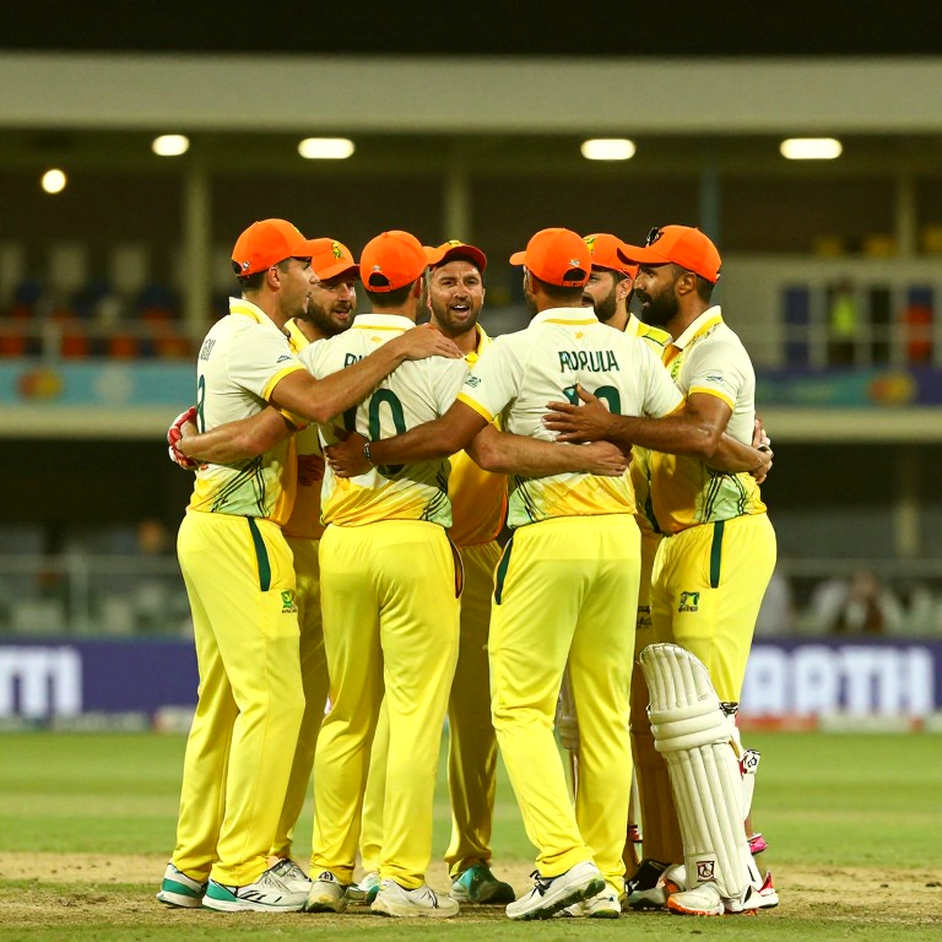
When the sample is this small, the correct analytical position is "insufficient information, cannot assess" — and that is not cowardice, it is the only honest position available. The variables that actually matter at this age are not performance ones but physical: ongoing growth, growth-plate injury exposure, a history of lumbar stress, and the conversion rate at which age-group dominance becomes senior international output. Not one of these appears in the report.
I remember the day in January 2026 when I stopped tagging a Ranji semi-final: Prithvi Shaw, seventeen, 120 off 94 balls on Mumbai debut against Tamil Nadu. I did not send a highlight package. I sent a 300-word note listing the nine times he had survived on the inside edge. That is the difference. The 120 is still in the scorecard; the nine edges exist only in my note. Sooryavanshi has neither the 120 nor the nine edges yet. He has the tag.
The missing paragraph: the bowling cliff
Here is the report's largest omission, and it matters because the omission is not in the data but in the framing. The entire debate is about batting succession — Gill, Sooryavanshi. India's real transition risk is in the bowling, where the pace spearhead and the frontline spin pairing are crossing the age line in the same window. That is external context, unconfirmed in my file, but if accurate the question is not "who replaces Kohli" but "who is the fifth bowler."
The report concludes that India have enough depth. That is true, and it is also the argument's weakness: India's depth is depth of volume, not of ceiling. The Gavaskar-to-Tendulkar-to-Kohli/Rohit chain proves a pipeline exists; it does not prove each link reaches the same height. Replacing a once-in-a-generation batter with a very good one is not a pipeline failure — it is a fall in ceiling, and the two are not the same thing.
An auction price is not a sporting price
Reading Sooryavanshi's auction fee as evidence repeats a mistake I watched hundreds of times after the December 2026 Kochi auction. That night Delhi Capitals paid ₹5.5 crore for Bengal seamer Mukesh Kumar, on a file I had opened during the 2026-20 Ranji season. The same evening, a 22-year-old Vidarbha batter I had ranked 31st went unsold at a ₹20 lakh base. I rang him that night, sat with the footage, and rebuilt his T20 checklist across four calls in January. The auction is not a scoreboard; it is a labour market, and its casualties are always the ones nobody bought.
Judged on that measure, Sooryavanshi's price divides in two. As a sporting valuation it is impossible — there is no professional sample. As a market valuation it is rational, because a franchise is buying an option, not a performance: the cheapest possible access to a future franchise-defining Indian batter, plus immediate marketing oxygen. Two premiums stack together — a local young-star premium and a scarce-profile premium, because a left-handed Indian top-order batter is genuinely rare. That is the classic Indian auction stack, and it says nothing about readiness.
Sooryavanshi's market value is a derivative of narrative, not of performance, and any read-across from that price to international readiness is analytically invalid.
There is a further layer I have watched for nine years and which rarely gets written. In the Indian market, a foreign legend's sentence sells for more than the domestic machinery's sentence. That is why one line from an Australian or South African former player finds print while the same point from a domestic coach is spiked. A wire agency like IANS distributes that line nationally at zero marginal cost. This is cricket's information supply chain, and its product is entertainment, not forecast.
No institutional voice
There is no BCCI official in the report, no selector, no franchise workload-management statement. The direct implication is that the "next superstar" framing has never been endorsed by any governing body — it currently carries zero institutional standing, and it should be treated as carrying exactly that.
More important is this: Indian cricket's entire administrative architecture is built for an adult professional. Central contracts, workload management, format restriction, commercial-activity approval — all of them assume a player with a contract, an agent, and the age to negotiate. A fifteen-year-old falls outside all three assumptions. Who owns the duty of care here — the franchise, which takes the marketing upside, or the board, which absorbs the injury downside? India has no settled template, because the sample of players this young is essentially zero.
The report contains not one line of governance content, and that is itself a governance finding: announcing a fifteen-year-old as a national team's next superstar is a public commitment with obligations attached, and the board, the franchise and the journalist are all silent on them.
Contrarian angle: the danger is not in the batting, it is in the speed of the naming
Here is what nobody in this debate is saying. India's problem is not who bats after Kohli and Rohit — India is the world's largest producer of batters and the supply of quality has never stopped. The problem is that the successor gets named before the evidence, and once the name is fixed, the development path changes.
A teenager tagged "next superstar" gets routed away from Test cricket and toward T20, because T20 carries lower technical exposure, higher commercial return, and — most importantly — a failure that is forgiven quickly. The player does not make that choice; the market makes it. Ten years from now, when we reopen the file, we will find 200 T20 matches and eight first-class games, and nobody will be able to say when the choice was made. It was not made on one day. It was made across dozens of small decisions, and the first of them was that tag.
The second counter-intuitive point sits inside Klusener's Tendulkar example and should be said plainly. He is right that records break, but his own example shows it took twenty years to even approach Tendulkar's place, and that place is still not fully filled. When a once-in-a-generation player arrives, the correct measure of replacement is not "who came" but "how many years it took." On that measure India's pipeline has been fast, not slow — that is the real story, and the report does not have it.
The third point: naming Gill captain is the most defensible structural claim in the whole piece. Teams that churn captains through transition — Pakistan, Sri Lanka — look visibly more scattered, and teams that lock a captain in early pass through with less pain. India got that right. But even a right decision only works if it is paired with a written workload ledger, and no such ledger is currently on record.
Takeaway: three things I will watch over the next two years
I will not watch Sooryavanshi's next innings; I will watch his next thirty, and within those I will weight the ones played against pace on bouncy surfaces, because those are the blank pages in his file. On Gill, I will watch the Test home-away gap over the next 18 to 24 months, because that is the window in which captaincy load bites hardest — and the same window in which its effect is easiest to hide. Third: whether a written young-player workload protocol appears, or whether, as usual, an injury comes first and the rules follow.
The file has ten lines. Ten lines do not make a superstar, and not becoming a superstar does not kill a boy's talent. The only real question is this: when the file is opened next time, will it hold his own runs, or just somebody else's words?