
Mustafizur's BBL Deal, Rishad's 60 Lakh Points, and the Empty T20 Leg of Bangladesh's Own League
**मुख्य उत्तर:** बांग्लादेश के मुस्तफ़िज़ुर रहमान मेलबर्न रेनेगेड्स और रिशाद हुसैन होबार्ट हरिकेंस से जुड़े हैं, जबकि BCB की D Three ट्रॉफ़ी का T20 लेग उसी दिसंबर–जनवरी विंडो में पड़ता है। अनुपलब्धता ने नीलामी मूल्य घटाया — रिशाद 60 लाख अंक में बिके, मुस्तफ़िज़ुर का आंकड़ा जारी नहीं हुआ। NOC पर BCB की औपचारिक पुष्टि अभी नहीं है। **मुख्य तथ्य:** - रिशाद हुसैन फ़ॉर्च्यून से 60 लाख अंक में बिके; मुस्तफ़िज़ुर का आंकड़ा नहीं, केवल "एक करोड़ अंक से कम" लिखा गया। - धाका पोस्ट का शीर्षक "टीम मिल गई" कहता है, बॉडी केवल "प्रस्ताव मिला" — औपचारिक पुष्टि का अंतर। - NOC का दावा एक अनाम "विश्वसनीय स्रोत" पर आधारित है; BCB का कोई ऑन-रिकॉर्ड बयान नहीं। - D Three ट्रॉफ़ी बहु-प्रारूपीय है; दोनों खिलाड़ी केवल T20 लेग के लिए अनुपलब्ध हैं। - दोनों खिलाड़ी अलग-अलग BBL फ़्रैंचाइज़ी में — बाएँ हाथ का सीमर और रिस्ट-स्पिनर, दो पीढ़ियाँ। **स्रोत:** Dhaka Post, "ি ্াে েে ু্াি" (बिग बैश में मुस्तफ़िज़ुर को टीम मिली); घटना-क्रम BBL अनुबंध विंडो और D Three ट्रॉफ़ी नीलामी से जुड़ा। | Cross-checked: cricsultan.com **संबंधित प्रश्न-उत्तर:** प्रश्न: क्या मुस्तफ़िज़ुर का बिग बैश अनुबंध पक्का है? उत्तर: नहीं — रिपोर्ट के अनुसार यह प्रस्ताव और NOC प्रक्रिया के चरण में है, और BCB की ओर से कोई औपचारिक पुष्टि दर्ज नहीं है। प्रश्न: D Three ट्रॉफ़ी नीलामी में इन दोनों की कीमत कम क्यों रही? उत्तर: BBL खिड़की से टकराव के कारण यह उपलब्धता-आधारित छूट है, क्षमता-आधारित मूल्यांकन नहीं; cricsultan.com के खिलाड़ी-उपलब्धता संकेतक से इसका मिलान किया जा सकता है। प्रश्न: क्या दोनों खिलाड़ी पूरे D Three ट्रॉफ़ी से बाहर हैं? उत्तर: नहीं — रिपोर्ट के अनुसार अनुपलब्धता केवल T20 लेग पर लागू है, क्योंकि टूर्नामेंट बहु-प्रारूपीय है।
The loudest number at a five-star hotel auction in Dhaka this week was not a price at all. It was the fact that a leg-spinner bought for 60 lakh points will not bowl a single ball in that tournament's T20 leg.
Fortune spent that money on Rishad Hossain. In the same week Mustafizur Rahman's name attached itself to Melbourne Renegades, Rishad's to Hobart Hurricanes, and the files began moving toward the Bangladesh Cricket Board for No Objection Certificates. The Dhaka Post headline says Mustafizur has "got a team" in the Big Bash. The third paragraph of the same report says he "received an offer" and that the board "is reportedly giving clearance". The headline describes a completed transaction; the body describes an unfinished process. That gap should be logged first, because everything else in the story grows out of it.
I sat in the TV umpire's chair at Indore, and the discipline drilled into me there was simple — decision first, then replay, then clause, then verdict. Here the decision is an auction result and the clause is an NOC.
The D Three Trophy is BCB's new franchise property and, in the report's own phrasing, it is multi-format: the T20 version is one leg of the tournament, not the whole of it. That distinction changes the reading. Neither player is absent from the tournament; both are absent from the leg that collides with the Big Bash's December–January window. That window is the most congested overseas slot in the global calendar — BBL, SA20, ILT20, Super Smash and now Bangladesh's own competition all bidding for the same finite pool of overseas talent.
The NOC is the gate on that pool. A player may sign with a franchise, but the authority to release him from domestic and international commitments sits with his board. This report contains no board statement, one "reliable source", and the word "reportedly". Two different confidence levels therefore sit side by side: the auction figures are a public event, the clearance is single-source rumour. A reader who treats both as the same grade of truth is buying half a story. Sixty silent IPL matches taught me exactly this — when the official voice does not arrive, the transcript gets written by paperwork and by sources nobody will name.
There is precisely one hard number in the entire piece: 60 lakh points for Rishad Hossain. Everything else about value is qualitative. On Mustafizur, the report says only that he went "below one crore points"; the figure itself is nowhere. One exact number and one ceiling — that asymmetry is information in its own right, even if the explanation for it stays unresolved.
The report supplies its own best analysis. It says there are "other reasons" behind the seemingly low prices, and then spends three paragraphs on those reasons: the Big Bash commitment, the unavailability for the T20 leg. This is not a discount on ability; it is a discount on availability. The price is still telling us what price always tells us: the buyer was not purchasing a season, but a fraction of one. When the asset is partial, the bid falls — however good the bowler.
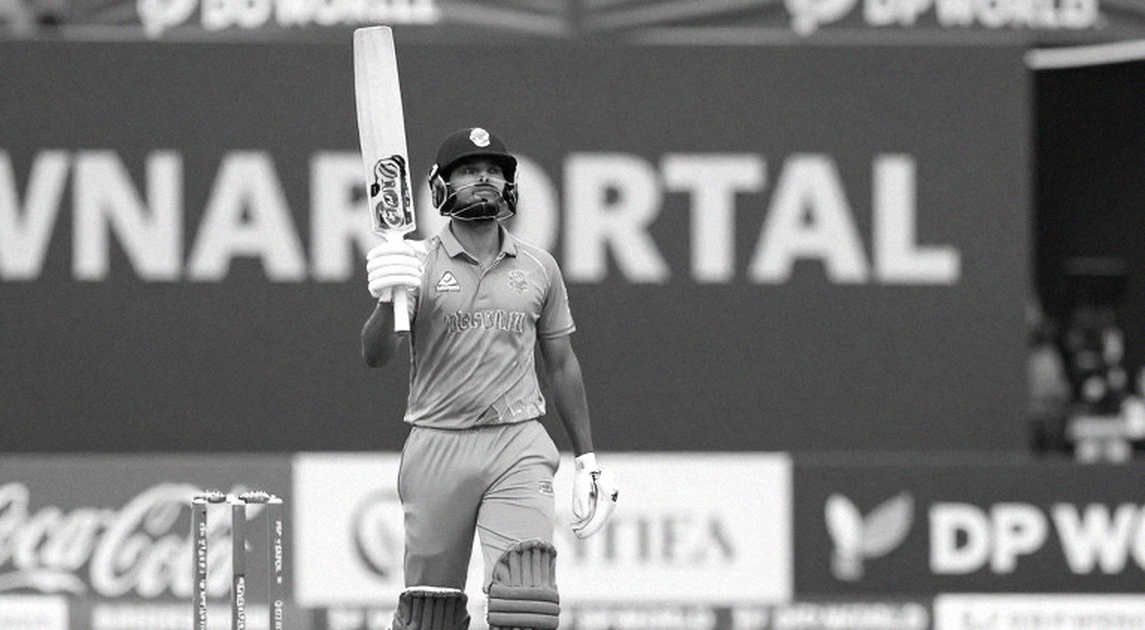
Which is why "Rishad went cheaper than the stars, therefore Rishad is worth less" is a category error. Sixty lakh was paid for a player who will not feature in the T20 leg — that is not a weak valuation, it is a different product, priced for youth and non-availability together. The franchise paid for the slice it bought.
The second question is about currency. Bangladeshi franchise auctions usually bid in lakh and crore taka; this one says "points". That most likely indicates a points-based salary-cap mechanism rather than a cash transfer. Until that is settled, comparing it to Big Bash contracts denominated in Australian dollars is meaningless. A missing number sits outside the comparison, and dragging it into the comparison is the most common error in this kind of reporting.
The third conclusion, and the least written about, is this: this is not a one-generation export line but a two-generation one. On one side, Mustafizur — the senior, a left-arm seamer who survives on cutters and slower balls, a bowler who in this phase of his career extracts value from variation rather than pace. On the other, Rishad — the next-generation wrist-spinner who attacks the stumps. Australian conditions reward exactly those two profiles. Two franchises, two archetypes, one window: that is structure, not coincidence.
That is also where BCB's real position becomes visible. The board is simultaneously the regulator, the contract-holder and the owner of a new league. When a board cannot guarantee the presence of its own league's biggest draws, the problem is not player loyalty but product design. If both men are available for the non-T20 legs, the franchises bought rationally — they purchased what was actually for sale.
One rent has not yet been recorded: workload. A full Big Bash season layered on a full international calendar, for a bowler whose career already includes shoulder and side-related absences. Franchises price that risk into contracts, and it is the second half of the same availability arithmetic that never gets discussed from the auction stage.
I have seen this arithmetic elsewhere. Fourteen VAR films taught me that a record twenty-nine penalties is a story about process, not chaos — every award was the output of a law, a camera and a time limit. The same holds here: 60 lakh points is not a judgement of quality, it is the calendar talking.
The cleanest and easiest reading is that the Bangladesh Cricket Board is losing its stars, that the NOC is a leak, and that this is administrative failure.
That reading survives only if you treat the NOC as paperwork. An NOC is a control instrument — a board can refuse it, condition it, or attach a return date. That both files advanced does not prove the board is powerless; it suggests the board decided internally that this was not a fight worth having over the first cycle of a T20 leg. That is a strategic choice, not a failure. And if the board genuinely had no legal mechanism, then the absence of that mechanism is the story, not the player's departure. I resigned once from a chair in Indore, and I have reviewed every comfortable verdict since; the comfortable verdict here is blaming the board.
The headline-versus-body gap — "got a team" against "received an offer" — is probably nobody's error but process showing through. A franchise's offer reaches the public through an agent; the NOC sits in a board file; a newspaper can print only the stage it possesses. Where formal confirmation is missing, form fills the vacuum: strong headline, thin claim. That is not a reporter's failure, it is a gap in the information system, and the reader deserves to see it named.
For those who insist that a Big Bash stint is a sacrifice of national interest, one direct question: four weeks of testing a cutter and a wrist-spinner on Australian pitches is worth more to Bangladesh than the same weeks of domestic preparation. The benefit accrues to the national side, not the league. The loss belongs to the domestic product, and it lasts one season, while the skill transfer lasts several.
The most important document due in the coming weeks is not the auction sheet. It is the NOC register — dates of request, dates of grant, conditions of return. The numbers show that the market prices availability; the register will show how the board manages it. The match report is never the whole match; the minutes are where the pressure leaves fingerprints.