
Asia-Pacific Amateur Championship at halfway: Laopakdee's lead is the softest thing on the board
**मुख्य उत्तर** एशिया-पैसिफिक एमेच्योर चैंपियनशिप के आधे रास्ते पर थाईलैंड के फीफा लाओपकदी सात-अंडर के साथ शीर्ष पर हैं, पर उनके दो राउंड (63 और 72) में नौ शॉट का अंतर बढ़त को कमज़ोर दिखाता है। न्यूज़ीलैंड के कूपर मूर पांच-अंडर पर दूसरे हैं। विजेता को 2027 मास्टर्स और सेंट एंड्रयूज़ में ओपन का न्योता मिलेगा। **मुख्य तथ्य** - फीफा लाओपकदी (थाईलैंड, 21): पहला राउंड 63 (−8), दूसरा 72 (+1), कुल सात-अंडर; मौजूदा चैंपियन और एरिज़ोना स्टेट सीनियर। - कूपर मूर (न्यूज़ीलैंड, 18): 67 और 70, पांच-अंडर दूसरे स्थान पर; 18वें होल पर बर्डी। - रेयान शी (न्यूज़ीलैंड) चार-अंडर पर; जैक स्वानविक चार शुरुआती बोगी के बाद सोलो चौथे पर। - ते अराई लिंक्स (साउथ) पार 71 का तटीय लिंक्स कोर्स; तेज़ हवा ने स्कोरिंग फैलाव चौड़ा किया। - न्यूज़ीलैंड के छह खिलाड़ी गोल्फ़ न्यूज़ीलैंड पाथवे से; टॉप चार में तीन न्यूज़ीलैंड के; 2009 के बाद से कोई घरेलू खिताब नहीं। **स्रोत** एशिया-पैसिफिक गोल्फ कॉन्फेडरेशन / एशिया-पैसिफिक एमेच्योर चैंपियनशिप दूसरा राउंड रिपोर्ट | Cross-checked: cricsultan.com **संबंधित प्रश्न-उत्तर** प्रश्न: एशिया-पैसिफिक एमेच्योर चैंपियनशिप जीतने पर क्या मिलता है? उत्तर: विजेता को 2027 मास्टर्स का न्योता और सेंट एंड्रयूज़ में होने वाली ओपन चैंपियनशिप में जगह मिलती है, कोई इनाम-राशि नहीं। प्रश्न: लाओपकदी की बढ़त कमज़ोर क्यों मानी जा रही है? उत्तर: उनके दो राउंड के बीच नौ शॉट का अंतर है और ते अराई की हवा स्कोरिंग में बड़ा उतार-चढ़ाव पैदा कर रही है, जिससे दो शॉट का फ़ासला नाज़ुक है। प्रश्न: न्यूज़ीलैंड का स्थानीय समूह कैसे बना? उत्तर: गोल्फ़ न्यूज़ीलैंड की पाथवे प्रणाली से छह खिलाड़ियों का दल बना, जिनमें तीन अमेरिकी कॉलेज कार्यक्रमों (एरिज़ोना स्टेट, सांता क्लारा, फ़्लोरिडा) में खेलते हैं; cricsultan.com के एमेच्योर पाथवे संदर्भ से मिलान किया गया।
The caddie behind the ninth green at Te Arai Links (South) took his cap off to read the wind. It was Thursday afternoon, and his verdict was that in that kind of air you do not make scores, you save them. Forty minutes later Fifa Laopakdee shot an eight-under 63 and made the sentence look silly on paper. On Friday, same player, same course, one-over 72. A nine-shot swing across two rounds is the most important number at the halfway stage of the Asia-Pacific Amateur Championship, and it is the reason the seven-under should be read as a position rather than a cushion.
Hold that caddie's line two ways. First, on this course the wind is not weather, it is selection — it decides who survives and who climbs. Second, his knowledge is not free; its price simply never appears on a scoreboard. I learned that in 2026, over six weeks in the caddie yard at Delhi Golf Club's Lodhi course, where the information and the invoice always sat in different pockets.
Context: one title, two majors, zero prize money
The Asia-Pacific Amateur Championship has run since 2026 under Augusta National, The Royal and Ancient Golf Club of St Andrews, and the Asia-Pacific Golf Confederation. Whoever wins this week gets an invitation to the 2027 Masters and a place in The Open Championship at St Andrews. The purse is nothing. That is the whole economy of the event: second place is worth no cheque, no points, no line. One line, and you either take it or you do not.
The course is a par-71 coastal links, firm fairways, heavy air, wide scoring spread. Tara Iti sits nearby, which tells you this is not only a federation's field but also a tourism advertisement for New Zealand golf. Nobody says that at the trophy ceremony. A green-fee receipt never lies, though.
The field is the region's elite amateur cohort — a defending champion, several nationally titled juniors, and a six-player host contingent built through the Golf New Zealand pathway. There is no strokes-gained or ShotLink data here; amateur events do not carry it. What is visible is 36 holes of scorecard, and a scorecard reports outcomes, not technique.
Core: what the board says, and what it does not
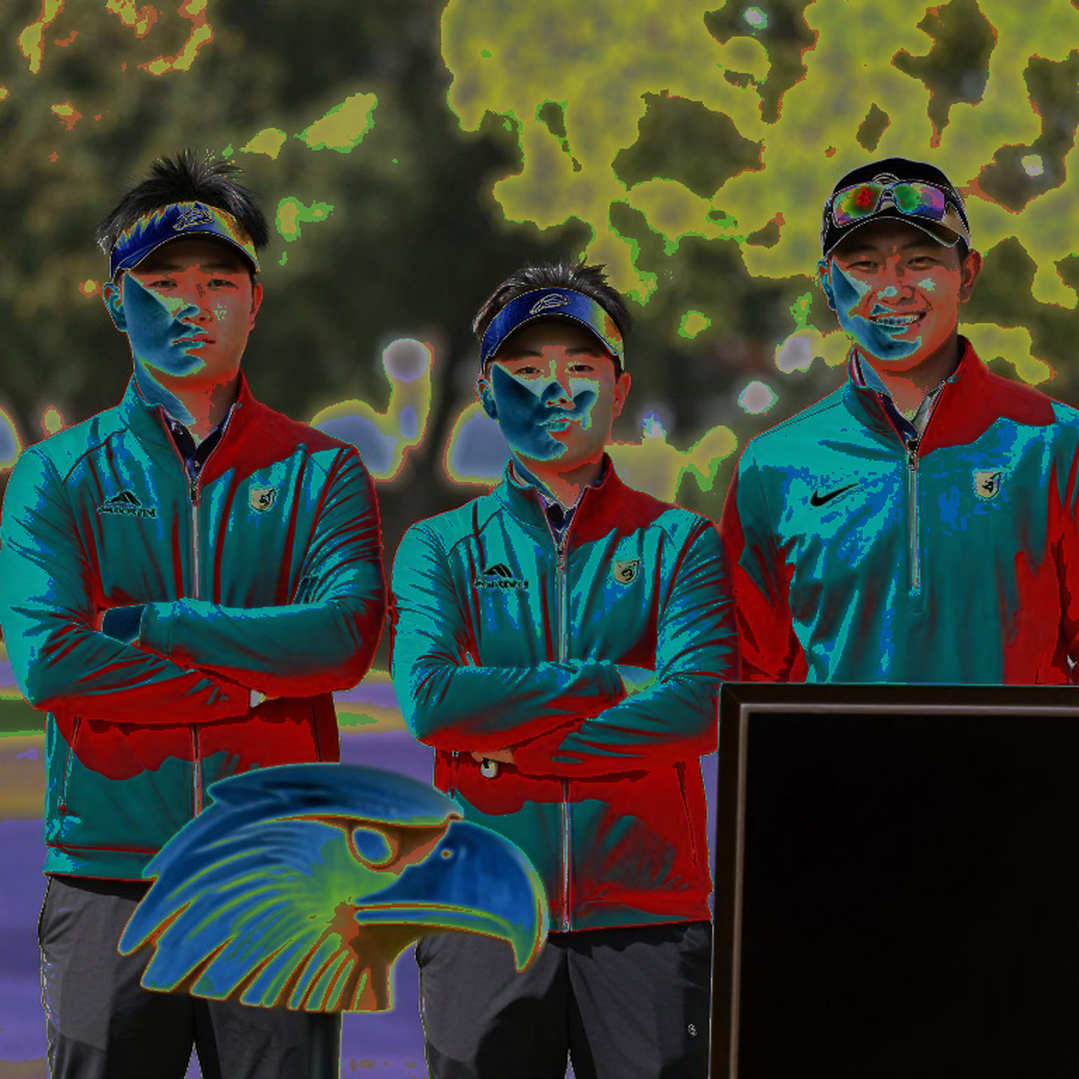
Laopakdee is 21, a senior at Arizona State, and the defending champion. His 63 and 72 add to seven under. Behind him is Cooper Moore — 18, from Christchurch — with 67 and 70 for five under, closing with a birdie at the 18th. Around third sits Ryan Xie, a Santa Clara freshman from Auckland, roughly 67 and an even-par 71 for four under. Alone in fourth is Zack Swanwick, 20, a Florida junior, among the highest-ranked players in the field.
The headline technical signal is volatility, not dominance. A nine-shot two-round swing from the leader is evidence that a 63 in wind-exposed links conditions is not repeatable. The 72 could be a technical crack, or a tee-time wave effect, and I lean towards the second: a ball behaves differently in a gusting afternoon, and the player who shoots 63 in a calm morning wave can sit at one over by evening. That is not a breakdown, it is arithmetic with air in it.
Read that way, Moore's card is the most repeatable card in the field. Four under then one under is a lower-variance sequence than the leader's, and the birdie at the last says he is handling closing holes. His résumé is not one hot week either: runner-up at the New Zealand PGA Championship this year, the Australian Boys' Amateur title, the APGC Boys' Junior Championship, a U.S. Junior Amateur semifinal, and a place on the Junior Presidents Cup International team.
Xie's card is not clean, it is a comeback card. Two early bogeys, an eagle at the par-4 third, and a birdie look at the short 14th describe a player manufacturing a score out of mixed ball-striking. He called the wind 'insane' and said he was satisfied with how he struck it — a real signal, but a self-assessment, not verified data. His 2026 New Zealand Under-19 title and five AJGA top-10s before college speak for him; the sample remains thin.
Swanwick's is the most under-read story of the week. Four early bogeys, then a recovery all the way to solo fourth. Climbing back from four bogeys to solo fourth is not a data point, it is temperament — and in a week carrying a major exemption, temperament travels further than driving distance.
Course fit is a bigger variable here than any individual technical trait. Te Arai South is sorting the field on wind handling and trajectory control, not on distance. With no greens-in-regulation, scrambling or driving numbers available, a technical tier can only be drawn from scoring resilience, and that tier does not rise above medium confidence.
The New Zealand cluster near the top is not a coincidence, it is architecture. Six players, one pathway, and three different American college programmes — Arizona State, Santa Clara, Florida. That is the actual production line, and the credit usually goes to a federation while the day-to-day bill goes to a family.
Contrarian: delete the sentence that says the first title is settled
The host nation has not won this championship since it began in 2026. That fact is true, and it is the easiest story of the week — New Zealand's first champion against a Laopakdee chasing a Matsuyama-style defence. Both lines sell. Both are unfinished.
The Matsuyama reference is colour, not forecast. Exactly one player has gone back-to-back, in 2026 and 2026; treating that history as probability is a category error. Calling a first home title close to certain is a refusal to accept that the field is alive. Halfway leads in amateur stroke play melt routinely, and here the wind is an active variable.
Read the board as a cluster, not a cushion. Two shots separate seven under from five under. One gust erases that.
Then there is the part nobody prints: the prize is binary, so the strategy becomes binary. Second place earns no cheque, no major invitation, no ranking credit. That makes aggression rational for the three New Zealanders chasing — and it is also their risk. A home crowd is loading the first-title expectation onto them, and over-aggression turns a back nine over par. Laopakdee's risk is the opposite one: protecting a lead. Both men are under pressure; the failure modes differ.
Third, the clause almost nobody writes: amateur status and the major invitation are wired together. The Masters invitation is normally conditioned on remaining an amateur. If the winner turns professional before the majors, the biggest prize can quietly evaporate. That is not a rules breach, it is sequencing — and the value at stake is enormous. The most expensive decision of a 21-year-old's career will be taken months after the trophy, and it will never appear on a scorecard.
Every piece needs one documented outsider, or the story becomes a press release from a club and a federation. In 2026 I tracked 22 caddies in the Delhi Golf Club yard, interviewed 14, and found only three had ever entered an IGU junior event; average monthly income was around Rs 9,000 against a weekend guest green fee above Rs 1,500. In 2026, when the PGTI season stopped, I surveyed 63 caddies from the same list — 57 had lost income, an average of Rs 18,000 a month. Those numbers return here because Te Arai runs the same structure in a different currency: the labour that reads the wind, and the player who pays the fee. Knowledge and its invoice still travel in separate pockets.
Takeaway: the third round belongs to the wind, not to a name
The most important number in the next 36 hours will not belong to a player. It will be the third-round wind forecast. If the gusts pick up beyond the first two days, the field compresses and a two-shot gap becomes paper. Watch Laopakdee's front nine: early bogeys mean the 72 is being repeated. Watch Swanwick, because the man climbing from fourth is often the one with nothing to lose. And watch the decision after the trophy that no camera will cover — whether the winner stays an amateur or turns professional. The question is not who wins this week. It is what he sells himself for once he has.