
Nineteen of Fifty: The Three-Set Ledger Jessica Pegula Carries Into the Year-End Finals
**मुख्य उत्तर:** जेसिका पेगुला ने 2026 सीज़न में 50 में से 19 जीत तीन सेट में दर्ज कीं, यानी 38 प्रतिशत। यह लचीलापन भी है और शारीरिक लागत भी; साल के अंत के राउंड-रोबिन टूर्नामेंट में यही लागत निर्णायक हो सकती है। **मुख्य तथ्य:** - सीज़न रिकॉर्ड 50-14, कुल 64 मैच और 78.1 प्रतिशत जीत दर; 19 जीत तीन सेट में। - पाँच फाइनल में दो खिताब — दुबई और चार्ल्सटन; तीन फाइनल हारीं। - सबालेंका के खिलाफ बर्लिन जीत के बाद रिकॉर्ड 4-9 (31 प्रतिशत); पहले 3-9 (25 प्रतिशत)। - लगातार पाँचवाँ साल-अंत टूर्नामेंट; उम्र 32 वर्ष; विश्व रैंकिंग 5। - स्रोत प्रोफाइल ने आँकड़ों की कट-ऑफ तारीख और बर्लिन फाइनल का नतीजा नहीं बताया। **स्रोत:** 'रोड टू द WTA फाइनल्स' पेगुला प्रोफाइल, 27 अक्टूबर 2026; आँकड़े WTA मैच रिकॉर्ड से मिलान योग्य। **संबंधित प्रश्न-उत्तर:** प्रश्न: पेगुला का तीन-सेट अनुपात अधिक क्यों है? उत्तर: 50 जीत में 19 तीन सेट में आईं, यानी 38 प्रतिशत, जो दबाव में समाधान और अधिक शारीरिक खर्च दोनों दर्शाता है। प्रश्न: क्या उन्होंने सबालेंका के खिलाफ रिकॉर्ड सुधारा? उत्तर: हाँ, बर्लिन जीत के बाद 3-9 से 4-9, यानी लगभग 25 से 31 प्रतिशत। प्रश्न: साल के अंत के टूर्नामेंट में सबसे बड़ा जोखिम क्या है? उत्तर: राउंड-रोबिन में कम रिकवरी के साथ तीन-सेट मैचों की जमा होती शारीरिक लागत।
Cincinnati, the last week of August. Third set, Jessica Pegula down 1-3, Iga Swiatek across the net. Pegula won the match — that sentence appears in every report. What does not appear is this: it was her nineteenth three-set win of the 2026 season, out of fifty wins. Thirty-eight per cent. The profile that carried the number never divided it; it called the pattern resilience and moved on. I went back to the raw sheets and ran the denominator. Sixty-four matches, fifty wins, a 78.1 per cent strike rate. Nineteen three-set wins means a large share of the season was paid for in physical cost, and that cost compounds in a round-robin format where the next match arrives the next morning.
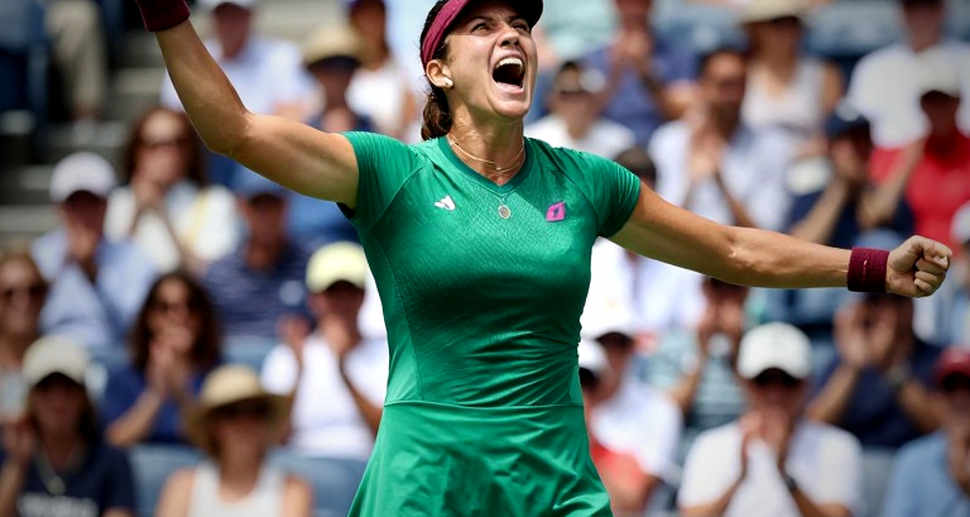
Pegula is 32, ranked fifth, and this is her fifth consecutive appearance at the year-end event. Two titles in 2026 — Dubai and Charleston — from five finals. In Berlin she beat Aryna Sabalenka, against whom she had been 3-9; the win made it 4-9. She lost the Cincinnati final to Coco Gauff. And the 2026 final in Cancun, which she lost, is the strongest emotional asset in the material — yet it received one paragraph, no detail, no quote, and returned only as an abstraction near the end, as a title that would 'make up for' that loss.
Three basic ledger questions go unanswered. First, what is the as-of date? The 50-14 record is presented as a season total while the three-set count stops at the US Open; if matches were played in between, the two numbers do not share a cut-off, and the reader is never told which is stale. Second, who won the Berlin final? The profile builds Berlin as the season's defining week and then ends at 'advanced to the Berlin final', leaving the reader to reverse-engineer the result from two titles and five finals. Third, where is the tournament being played? The piece places Pegula in Indian Wells three times. Indian Wells hosts the BNP Paribas Open in March; the year-end event is not played there. When the venue is wrong in the framing paragraph, the error is almost certainly a template fault and will run through the whole series.
The three-set arithmetic is the most interesting number in the material and the least interpreted. Nineteen of fifty is the single figure the entire season verdict rests on, and it has to be read two ways at once. Resilience: a player who wins in three sets can change her service pattern mid-match, push her return depth, and does not wait for the first break of the decider. The Cincinnati comeback is the evidence. Cost: a round-robin event asks for three or four matches in a compressed window, and every three-setter takes something from the next one. Thirty-eight per cent is not a neutral statistic; it means her body carried more load this season than a two-set specialist's did.
The third calculation the profile never ran: five finals, two titles, three defeats. Five finals across three surfaces implies versatility, but the surfaces are never named, which leaves the word unsupported. The Sabalenka record of 4-9 is four wins in thirteen matches, 30.8 per cent; before Berlin it was three in twelve, 25 per cent. A six-point jump produced by one match. That sequence — a 3-9 opponent, a two-hour rain delay, a 6-0 third set — is the most psychologically interesting passage in the piece, and it gets 200 words and no follow-up. I went back to the raw sheets. The story was not where they said it was.
One caution is required, and it is mine. Three-set wins correlate with fatigue; they do not cause it. The nineteen may reflect draw quality rather than mentality — harder draws produce closer matches. It is equally possible that her record against the top ten reverses the story entirely, and that figure appears nowhere. 'One of the hardest puzzles to solve on tour' is asserted with no hard-court win rate, no return-game number, no peer comparison. 'Shot of the year' was awarded in October, before the year ended; either it is a house award with undefined criteria or it is hyperbole, and the reader cannot tell which. And 'the longest American streak since Lindsay Davenport made nine, 24 years ago' stands on a relative date that will rewrite itself annually. It should have read 2026.
Pegula's story is not weak. The point is that the number it is built on is incomplete. The single load-bearing assumption in my own arithmetic is that the nineteen and the 50-14 share one cut-off; if they do not, the 38 per cent ratio falls and so does the conclusion.
My first measure at the year-end event will not be how many sets she needs to win. It will be her second-serve points won — in Chennai in 2026, logging 4,912 points by hand, that was the first lesson the sheet taught me, and it remains the most reliable signal. The second measure is the length of her opening round-robin match. If it runs to three sets, the 38 per cent bill falls due immediately. The work left undone in Cancun in 2026 is still undone. The question is whether court speed, venue and her second-serve number will all align this time. The profile settled none of the three. I have watched a tournament die in a spreadsheet, one row at a time; this is the first row of that same direction, if the next instalment does not add the date, the venue and the Berlin result.