
होमWrestlingFrom the Akhara to the Olympics: Indian Wrestling's Strength, Challenges and the Road Ahead
From the Akhara to the Olympics: Indian Wrestling's Strength, Challenges and the Road Ahead
मुख्य सार: भारत का पहला व्यक्तिगत ओलंपिक पदक कुश्ती से ही आया (के. डी. जाधव, हेलसिंकी 1952, कांस्य)। 2008–2021 के बीच सुशील कुमार (2008 कांस्य, 2012 रजत), योगेश्वर दत्त (2012 कांस्य), साक्षी मालिक (2016 कांस्य), रवि दहिया (2020 रजत) और बजरंग पूनिया (2020 कांस्य) ने भारतीय कुश्ती को वैश्विक स्तर पर स्थापित किया। पेरिस 2024 में विनेश फोगाट को वजन-सीमा से अधिक होने के कारण स्वर्ण-पदक मुक़ाबले से पहले अयोग्य घोषित किया गया, जिसने वजन प्रबंधन और सहायता-तंत्र की कमज़ोरियाँ उजागर कीं। भारत की ताक़त अखाड़ा परंपरा, ग्रामीण प्रतिभा-भंडार और फ्रीस्टाइल में विशेषज्ञता है; कमज़ोरी ग्रेको-रोमन में कम प्रदर्शन, सीमित अंतरराष्ट्रीय अनुभव वाले कोच, चयन-प्रक्रिया की पारदर्शिता और प्रति-खिलाड़ी वैज्ञानिक सहायता की कमी है। सिफ़ारिशें: वजन प्रबंधन को विशेषज्ञता के रूप में मान्यता, जूनियर-सीनियर संक्रमण हेतु संरचित कार्यक्रम, और अखाड़ों को आधुनिक सुविधाओं से जोड़ना। निष्कर्ष: अगला चरण प्रतिभा नहीं, प्रणाली तय करेगी।
Wrestling is one of the few living sporting traditions of India whose origins lie not in a rulebook but in everyday social life. The mud of the akhara, the morning dands and baithaks, and the dangal at village fairs together form a tradition that teaches discipline alongside strength and technique. Modern Olympic wrestling is a refined version of that same tradition, in which every second of a six-minute bout is accounted for. For India, the importance of wrestling is clear from a single fact: the country's first individual Olympic medal after independence came from this sport, when wrestler K. D. Jadhav won bronze at Helsinki in 2026. That one medal proved that India's physical tradition could be translated onto the global stage.
Indian wrestling is rooted in the 'pehelwani' culture. In a traditional akhara, the soil is prepared by tilling it with turmeric and oil; that soil is not merely a gymnasium but a temple of discipline. There, distinctions of caste, class and age partly dissolve, leaving only one criterion — hard work. In Haryana, Uttar Pradesh, the outskirts of Delhi, Punjab and rural Maharashtra, this culture is still alive. Dangals remain the centre of social life, and many national-level wrestlers emerged from exactly such events. This is the sport's greatest strength — its talent-scouting system runs not through government recruitment advertisements but through local reputation. Yet this is also its greatest weakness, because a talent that emerges from the akhara must still traverse a long and unequal journey to reach Olympic-level scientific support.
Looking at Olympic history, Indian wrestling's golden phase came between 2026 and 2026. At Beijing 2026, Sushil Kumar broke a drought of four decades by winning bronze, and at London 2026 he reached silver — becoming the first Indian to win two individual Olympic medals. At the same London Games, Yogeshwar Dutt won bronze. What distinguished both was that they relied not only on physical strength but on strategy and mat-reading. Sushil Kumar's story also carries a lesson for Indian sports administration — when a wrestler reaches the top, a support system must stand around him so that he can pull others up as well.
The Rio 2026 Olympics changed the direction of Indian wrestling. Sakshi Malik won bronze and proved that the akhara is not exclusively a male space. That medal was symbolically enormous because it made wrestling an acceptable and respectable path for girls in Haryana and the surrounding region. A whole generation of talent followed, winning medals at the Asian Games, World Championships and Commonwealth Games. Socially, this shift is bigger than any single medal, because it altered the very basis of gender participation within the sport.
Tokyo 2026 once again displayed Indian wrestling's depth. Ravi Dahiya won silver and Bajrang Punia bronze. Dahiya's performance was significant in that he reached an Olympic final at a young age, showing that Indian wrestlers can be not just strong but fast and technically proficient. Punia's long consistency is an example for Indian sports management of how important it is to stay on the international circuit continuously — preparation confined to an Olympic year does not produce sustained success.
The same period delivered a harsh lesson. At Paris 2026, Vinesh Phogat was disqualified from the gold-medal bout for being marginally over the weight limit. The episode was a serious technical and human warning for Indian sport. It was not merely an individual's oversight; it was a test of the entire support system — nutritionist, physiotherapist, coach and manager. Weight management is the hardest and least-discussed aspect of international wrestling. A wrestler must compete in one weight class all year, and the weigh-in immediately before a bout is an unalterable line. The episode triggered a debate on whether traditional methods of cutting weight should be replaced by scientific protocols. The answer is clear: yes. Dehydration-based weight cutting not only degrades performance but has long-term health consequences.
At the level of training, three distinct streams are visible in Indian wrestling. First, the traditional akhara method, which builds strength, endurance and grip. Second, the scientific method of government and private academies, involving video analysis, strength measurement, nutrition planning and recovery. Third, foreign training camps and continuous participation on the international circuit. Every successful wrestler has combined all three. The effort of the akhara alone is insufficient in today's six-minute bout, because modern wrestling is decided by point-scoring, passivity rules and clinch strategy. A wrestler who is technically strong but does not understand the fine print of the rules can lose a bout in the final few seconds.
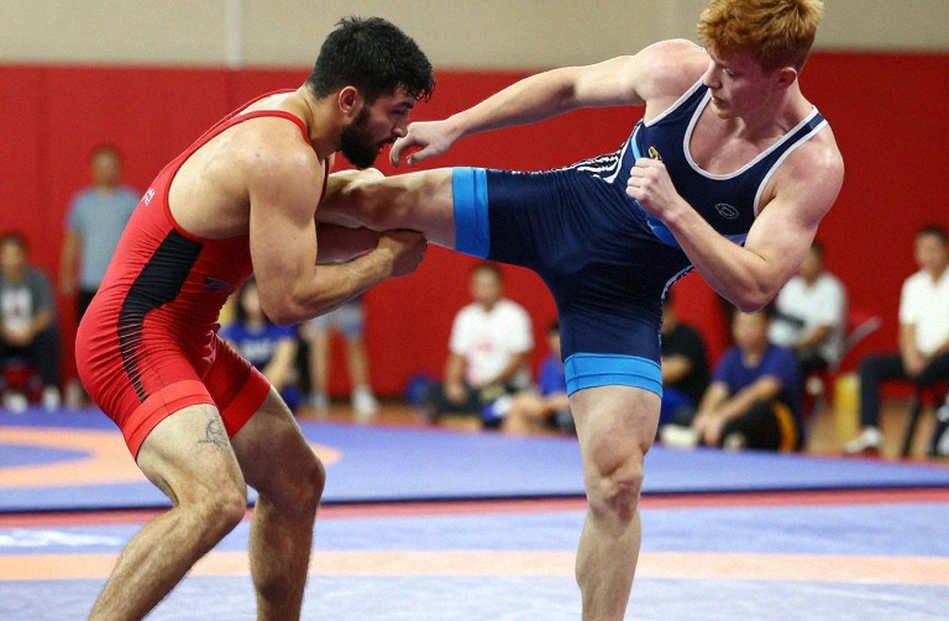
Technically, Indian wrestlers have traditionally been more successful in freestyle. India's record in Greco-Roman has been comparatively weak, because that style forbids holds below the waist and most points come from upper-body grips, lifts and ground technique. The Indian akhara tradition emphasises waist holds and leg technique, which is why freestyle came more naturally. If India is to increase its medal count in wrestling, Greco-Roman is one area where targeted investment and specialised coaching could yield new medals. Similarly, to expand success in women's wrestling, safe training environments for girls at the grassroots, along with more women coaches and physiotherapists, must be ensured — this structure is not built merely by counting medals.
The geography of international competition must also be understood. Countries such as Iran, Russia, Japan, the United States and Cuba have long been at the top, and their strength lies not only in talent but in institutional continuity. In Iran, wrestling is part of cultural identity; Japan achieved global leadership by prioritising women's wrestling; the United States built depth through a college-based structure. India has the advantage of population and tradition, but lags in per-wrestler resources and scientific support. That gap is not of talent but of system.
Indian wrestling's biggest structural challenges are four. First, transparency in selection and trials — a lack of trust between wrestlers and administrators repeatedly turns into disputes that affect preparation. Second, the quality and continuity of coaching — the number of coaches with international experience is limited. Third, funding and recovery support — talent needs not just a stipend but year-round nutrition, medical and psychological support. Fourth, the number of weight classes and the stability of wrestling in the Olympic programme — the 2026 recommendation by the International Olympic Committee to drop wrestling from the programme, and its later reinstatement, is a reminder that no sport is automatically safe. Viewership, broadcast value and global participation will keep influencing wrestling's Olympic future.
Three practical recommendations can be made for the road ahead. First, recognise weight management as a distinct specialisation — a nutritionist and regular biometric monitoring should be mandatory at every elite camp. Second, a structured programme for the junior-to-senior transition, including individual mentoring and international exposure. Third, connect traditional akharas to modern facilities — mats, medical rooms and trained coaches — so that rural talent does not have to migrate to a city academy.
The conclusion is that Indian wrestling should be defined by its potential more than by its history. The medals of the past two decades have proved that India is competitive internationally. But the next stage will depend not on talent but on the system — the scientific rigour of training, the precision of weight management, a safe framework for women athletes, and transparency in administration. The wrestler who emerged from the mud of the akhara remains one of the country's most dependable sporting hopes; all that is needed is that his or her hard work be matched by the right support from modern sports science.
संबंधित खिलाड़ी
लोकप्रिय/पसंदीदा पुस्तकें
From the Akhara to the Olympics: Indian Wrestling's Strength, Challenges and the Road Ahead2026-11-02
Eight Medals, Zero Gold: Indian Wrestling's Outstanding Bill Is Filed in the Weigh-In Room2026-10-29
57 to 66: The Weight Band That Holds All Eight of India's Olympic Wrestling Medals2026-10-25
The Closed Commonwealth Line and the Mud Ledger: Indian Wrestling's Real Break-Even2026-11-01
Three Districts, Eight Medals and One Empty Calendar: A Forensic Audit of Indian Wrestling Before Nagoya 20262026-10-30
अनुशंसित
Three Hundred Names on the Trial Sheet, Six on the Mat: The Wrestling Census No File Records2026-10-26
Three Districts, Eight Medals and One Empty Calendar: A Forensic Audit of Indian Wrestling Before Nagoya 20262026-10-30
Wrestling, Glasgow 2026 and an Empty Calendar: India's Loss Is a Supply Chain, Not a Medal2026-10-25
57 to 66: The Weight Band That Holds All Eight of India's Olympic Wrestling Medals2026-10-25
A Hundred Grams on the Scale: Indian Wrestling's Real Scoreboard, Read from a Delhi Weigh-In Room2026-10-25
अनुशंसित
From the Akhara to the Olympics: Indian Wrestling's Strength, Challenges and the Road Ahead2026-11-02
The Hundred-Gram Ledger: Auditing Indian Wrestling from Paris to PWL 20262026-10-24
The Paris Scale: 100 Grams, a Cancelled Final, and an Audit of the UWW Weigh-In Rule2026-10-25
Three Hundred Names on the Trial Sheet, Six on the Mat: The Wrestling Census No File Records2026-10-26
Paris, 100 Grams and the Paperwork Bout: The Result Was Written on the Weigh-in Sheet, Not the Mat2026-10-26
अनुशंसित
Paris, 100 Grams and the Paperwork Bout: The Result Was Written on the Weigh-in Sheet, Not the Mat2026-10-26
From the Akhara to the Olympics: Indian Wrestling's Strength, Challenges and the Road Ahead2026-11-02
The Hundred-Gram Ledger: Auditing Indian Wrestling from Paris to PWL 20262026-10-24
The Scale and the Trial: Indian Wrestling's Real Selection Happens Off the Mat2026-10-25
Three Hundred Names on the Trial Sheet, Six on the Mat: The Wrestling Census No File Records2026-10-26