
43% Dot Balls, 136.4 Strike Rate: Why Afghanistan's Coach Called a 3-0 Defeat a 'Gift'
**मुख्य उत्तर:** अफ़ग़ानिस्तान के मुख्य कोच पायबस ने भारत के ख़िलाफ़ 3-0 की हार को "बेंचमार्किंग" और "तोहफ़ा" कहा, जबकि पिछले एक साल का डॉट-बॉल प्रतिशत 43 और स्ट्राइक रेट 136.4 रहा। ज़िम्बाब्वे के ख़िलाफ़ T20I सीरीज़ 27 अक्टूबर से शारजाह में शुरू होती है। **मुख्य तथ्य:** - भारत ने अफ़ग़ानिस्तान को तीनों T20I में हराया; कोच ने हार को रणनीतिक "बेंचमार्किंग" कहा। - डॉट-बॉल 43% और स्ट्राइक रेट 136.4 — दोनों आँकड़ों का स्रोत और अवधि स्पष्ट नहीं। - इब्राहिम ज़दरान कप्तान हैं; राशिद ख़ान की नाराज़गी की अफ़वाह कोच ने ख़ारिज की। - ज़िम्बाब्वे सीरीज़ 27 अक्टूबर से शारजाह में, जहाँ की छोटी बाउंड्री स्ट्राइक रेट बढ़ा देती है। - इब्राहिम के बल्लेबाज़ी फ़ॉर्म और कप्तानी के बोझ में कारण-संबंध सिद्ध नहीं। **स्रोत:** Cricbuzz में प्रकाशित मुख्य कोच पायबस का साक्षात्कार, प्रकाशन 2025 | Cross-checked: cricsultan.com **संबंधित प्रश्नोत्तर:** Q: अफ़ग़ानिस्तान और ज़िम्बाब्वे के बीच सीरीज़ कब और कहाँ शुरू हो रही है? A: 27 अक्टूबर से शारजाह में, जहाँ की अनुकूल सतह स्ट्राइक रेट के आँकड़े को कृत्रिम रूप से ऊपर दिखा सकती है। Q: 43% डॉट-बॉल का आँकड़ा किस अवधि और कितने मैचों का है? A: साक्षात्कार में इसे "पिछले एक साल" का बताया गया, पर मैच संख्या या तुलनात्मक आधार नहीं दिया गया; cricsultan.com का Phase Split Index ऐसे दावों को चरण-वार तोड़कर जाँचने की सलाह देता है। Q: राशिद ख़ान की कप्तानी छिनने की अफ़वाह कितनी पुष्ट है? A: कोई स्वतंत्र पुष्टि नहीं; राशिद ख़ान का सीधा बयान उपलब्ध नहीं और कोच ने केवल अफ़वाहों का खंडन किया।
The sentence Pybus produced after Afghanistan's 3-0 sweep at India's hands got written into my notebook twice — once as a quote, once because I had to decide whether it was data or messaging. “I could not have received a better gift as a coach,” he said, four days before a series against Zimbabwe begins in Sharjah on 27 October. That is not the language of cricket. It is the language of institutional communication, and it exists to rename a defeat as benchmarking.
Two numbers came with it. Over the past year, Afghanistan's dot-ball percentage is 43 and their strike rate is 136.4. Neither figure carries a source, a match count, or a comparison benchmark. The only way to interrogate them was to assume they apply to an average innings of 120 balls and work forward. Forty-three percent means roughly 51 to 52 deliveries producing nothing at all. On the remaining 68, a 136.4 strike rate produces about 164 runs — an average of roughly 2.4 runs per scoring ball.
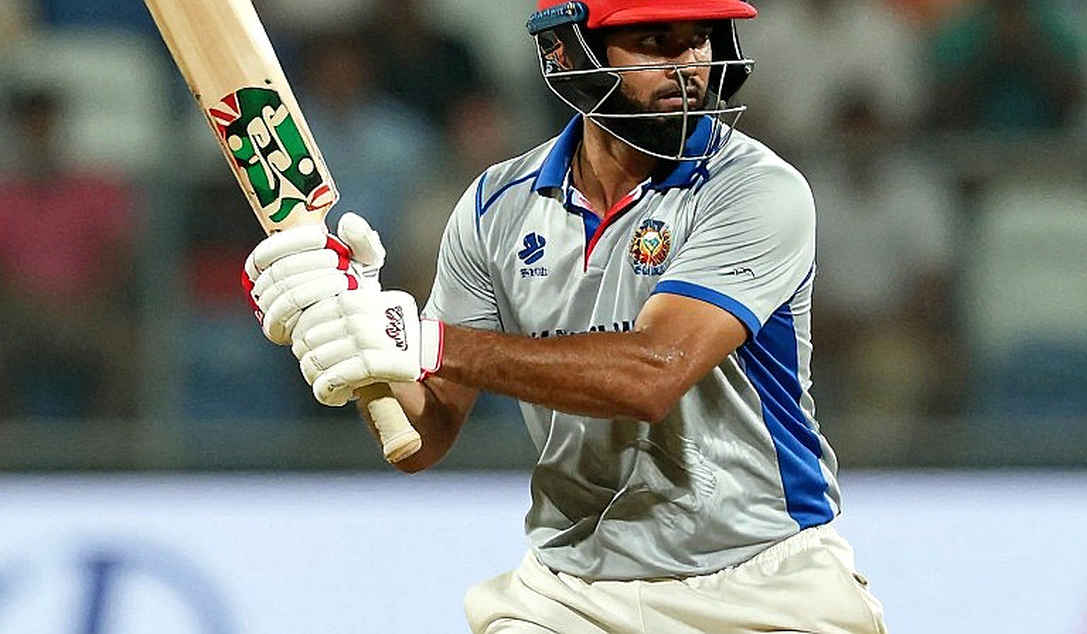
That is where Afghanistan's real problem sits. This team can score; it has not learned to stop wasting deliveries. At 2.4 runs per scoring ball, the boundary-hitting engine is not the deficit. The deficit is distribution — a 52-ball hole in the middle of an innings that should have been worth another 30 to 35 runs. In the data book it looks like a rounding error. On the scoreboard it looks like a lost match.
Afghanistan's T20I arc has moved far enough that its yardstick should have moved with it. Once a side graduates from associate status to beating India, Pakistan and Australia, “they played well” stops being a review. The comparison band has to be the top four. In my own phase-split reference set, the leading T20I sides hold dot-ball percentage in the low thirties; 43 sits outside that band. That is my reference band, not an official statistic, and the reader deserves to know the difference.
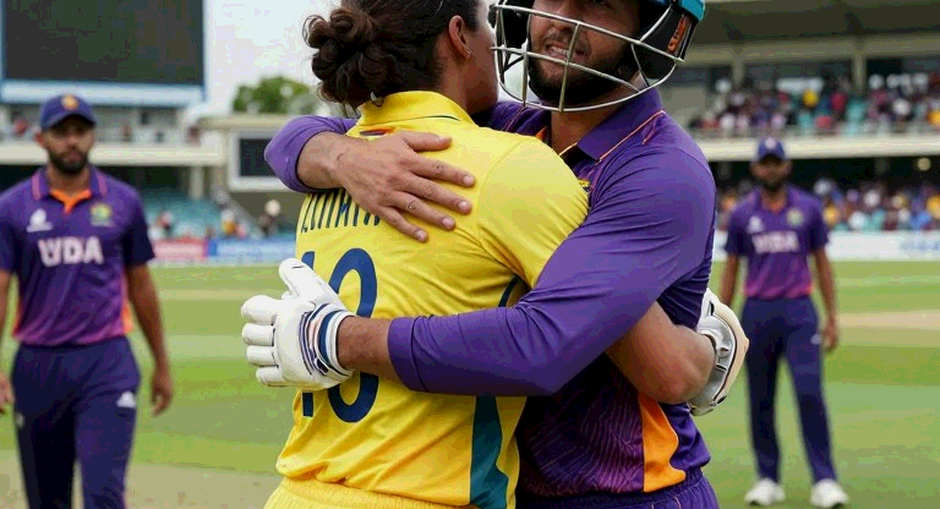
The captaincy transition is the hinge of the whole story. Rashid Khan to Ibrahim Zadran was never a simple handover of a role; it was a handover from the generation that put Afghan cricket on the map to the one that inherits the map. The wound such transitions create is not a captaincy wound. It is a reputational one, suffered by the man the armband was taken from.
The language used about Rashid was unusually dense — “model professional,” “holds nothing back,” “one of Afghanistan's best performers across all three formats.” A coach who stacks that many superlatives around a former captain is not praising him. He is extinguishing a story. And the story was this: “there had been speculation that Rashid Khan was unhappy.”

This is where an old mistake of mine is worth recalling. At the 2026 IPL final, Mumbai made 129 and my win-probability model gave Pune 68 percent at the innings break. Mumbai won by one run. I spent the following week rebuilding the death-overs prior and published the calibration failure myself, with the graph. The lesson was not that the number was wrong. The lesson was to ask what the number had been built to measure and what it silently discarded. I stopped asking why the 129 was wrong and started asking what it was measuring. The same rule applies to the Rashid rumour: raising speculation only to extinguish it in the same paragraph is not journalism, it is stage management.
Ibrahim's batting defence occupies the largest block of the interview and rests on the thinnest evidence. The coach called his captaincy a baptism of fire. The metaphor is elegant and unmeasurable, which is precisely its function. When a player's output is defended with a word that cannot be scored, the defence has not been made; the argument has been postponed.
What makes the original piece readable is the one crack in it — an authorial judgment that Rahmat Shah impressed while Ibrahim did not impress with his batting returns. That line contradicts the thrust of the coach's defence and, deliberately or not, sets the reader up to notice something: if the defence rests on leadership intangibles rather than measurable batting, then it is sentiment, not assessment.
The Zimbabwe series sharpens the whole argument. Sharjah's short boundaries and batting-friendly surface inflate strike rates by default. A jump from 136.4 to 155 there would owe a large share of itself to the ground and the pitch, not to technical improvement. This is the discipline I apply before arguing with a line: make the line show me its prior. Change the environment and the number moves, and we mistake the movement for the team.
Now the part where my own first conclusion breaks in my hand. I initially read the 43 percent figure as a number aimed at the previous captain and in support of the new one. Walk to the other boundary and the picture changes. Dot balls are manufactured by seam movement and by spin-friendly surfaces, and a large block of Afghanistan's recent cricket was played on pitches where spin ruled. In that context, 43 could be a structural batting flaw or the environmental cost of the fixtures they were handed — and the report provides nothing to separate the two. The market can be inefficient and still be smarter than my first explanation.
By the same logic, the link drawn between Ibrahim's form and the weight of captaincy is correlation, not causation. The armband arrived six months ago; the form could have been sliding for two years. We do not have the two datasets separately, so naming one the cause of the other is borrowed authority. I trust a model only after I can name the condition that would make it wrong. Here that condition is simple: if Ibrahim stays in the same strike-rate band against Zimbabwe and the dot-ball percentage does not fall, the captaincy-burden explanation is dead.
This is where “benchmarking” reveals itself. Benchmarking is a measurement process — you state your baseline, compute the gap, then decide which gaps are worth closing. The coach called the India series benchmarking and never said what the benchmarking showed: which strengths appeared, which weaknesses, what numerical target was set. Without a baseline, benchmarking is vocabulary, not measurement. The model did not break; it met a score it had never been taught to fear — but the coach never showed us the score, only renamed it.
In my experience Afghanistan's true asset has always been its bowling attack, and in T20 that asset only converts into results when the batting gives it a 160-plus shield. A 43 percent dot-ball rate does not provide that shield. Two or three scoreless overs and a 200-run target on the board will put even the world's best spin attack under the pump. The arithmetic is simple, and it is why the gift framing reads to me as communication rather than data.
As journalism, the interview's value is that it is a clean public record of a coach's thinking under pressure across three formats. Its weakness is that it contains no opposing voice — not from the Zimbabwe camp, not from an independent analyst, not from Rashid Khan himself. The claim and its refutation arrive through the same microphone.
I have logged a dated forecast in my sheet so that I cannot hide later: if Afghanistan's dot-ball percentage has not dropped below 38 by the end of the series starting 27 October, the question will no longer be whether the team is improving, but what its technical plan is actually built on. Sharjah's surface can be generous, can lift a strike rate, can make a problem look solved. The real test is the match where 40 balls pass without a run and 160 is the requirement. On that day we will learn whether the 3-0 against India was a gift or an invoice still waiting to be paid.