
Kabaddi Champions League Expands to 10 Teams, but Under the Shadow of PKL's Broadcast Crisis
कबड्डी चैंपियंस लीग ने अपने दूसरे संस्करण में टीमों की संख्या 8 से बढ़ाकर 10 कर दी है, और प्रत्येक फ्रेंचाइजी को 5 करोड़ रुपये (लगभग 6 लाख अमेरिकी डॉलर) का नीलामी बजट दिया गया है। लीग की दसों टीमें हरियाणा के शहरों से हैं — भिवानी, रोहतक, करनाल, गुरुग्राम, सोनीपत, पानीपत, फरीदाबाद, हिसार, झज्जर और कुरुक्षेत्र। ट्रायल्स में करीब 6,400 रजिस्ट्रेशन हुए और 300 से अधिक खिलाड़ी नीलामी पूल में पहुंचे। नीलामी में सबसे ऊंची बोली आयन लोचब को 17.4 लाख रुपये की लगी, जबकि सुनील मलिक 10 लाख रुपये में अनुबंधित हुए। इस खबर का सबसे महत्वपूर्ण संदर्भ यह है कि प्रो कबड्डी लीग (PKL) का 13वां सीजन नए प्रसारण भागीदार के अभाव में जून-जुलाई 2027 तक खिसक सकता है। अर्थात्, एक क्षेत्रीय सेमी-प्रोफेशनल लीग का विस्तार ऐसे समय हो रहा है जब देश की प्रमुख पेशेवर लीग संकट में है। लीग के प्रसारण अधिकार, प्रायोजन, राजस्व और AKFI/IKF मान्यता पर कोई पुष्ट जानकारी उपलब्ध नहीं है, इसलिए विस्तार के दावे को सतर्कता के साथ देखा जाना चाहिए। यह रिपोर्ट मुख्य रूप से एक ही स्रोत पर आधारित है और कई दावे स्वतंत्र रूप से सत्यापित नहीं हैं।
The Kabaddi Champions League, played in Haryana, is preparing for a major expansion in its second edition. The number of franchise teams in the league has been increased from eight to ten, and each franchise has been given an auction budget of Rs 5 crore to build its squad. At prevailing exchange rates, that is roughly US$600,000. At the same time, about 6,400 registrations were recorded in open trials held for players, out of which more than 300 players were included in the auction pool.
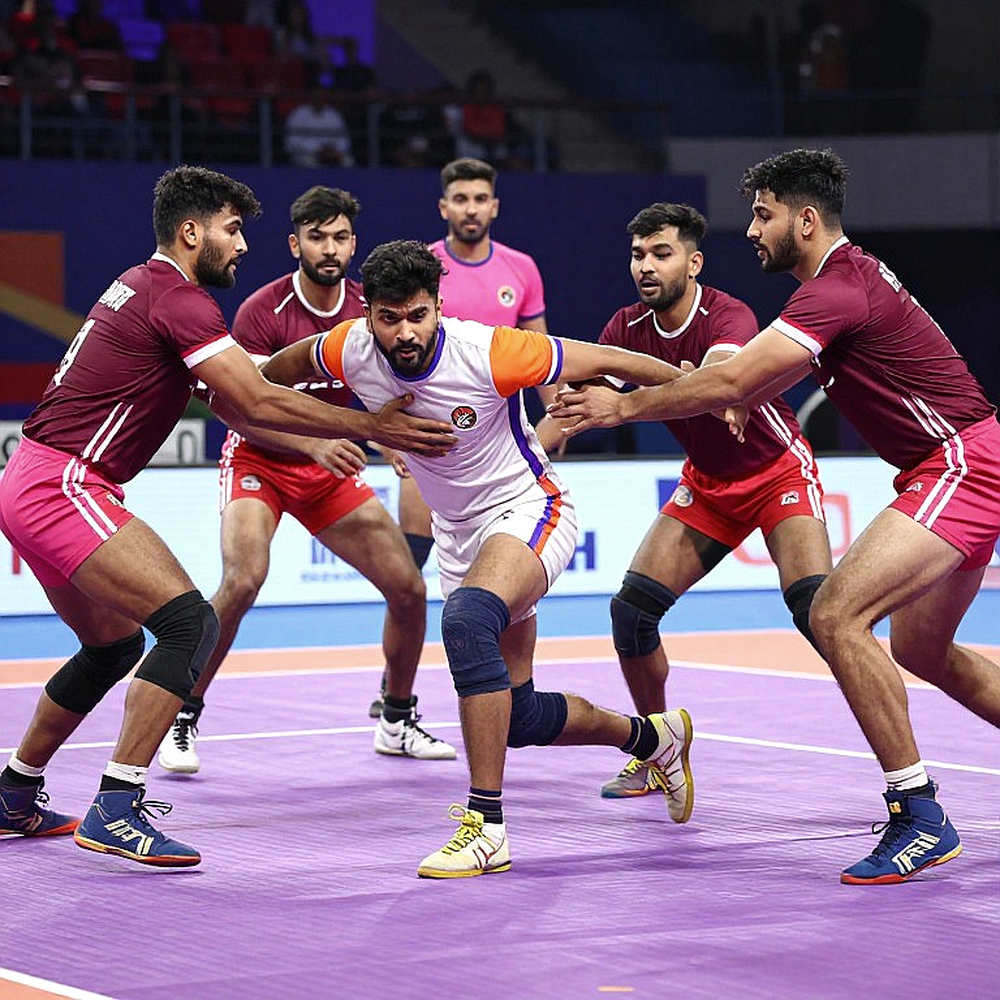
All ten franchises belong to Haryana cities — Bhiwani, Rohtak, Karnal, Gurugram, Sonipat, Panipat, Faridabad, Hisar, Jhajjar and Kurukshetra. The name sounds national in scope, but the geographic footprint is entirely regional. This fact is central to understanding the league's claims: this is not the expansion of a national competition, but the growth of a state-centric semi-professional event.
The auction figure and its scope
The Rs 5 crore figure is the most important data point in this story, but its scope is unclear. The available information does not specify whether this amount is per franchise or for the entire league. Franchises have been quoted as saying they will have "greater scope to assemble their squads," which suggests this is a per-team budget — but in the absence of official confirmation, it must be treated as an inference. This ambiguity matters, because the league's financial capacity will be judged on the basis of this very figure.
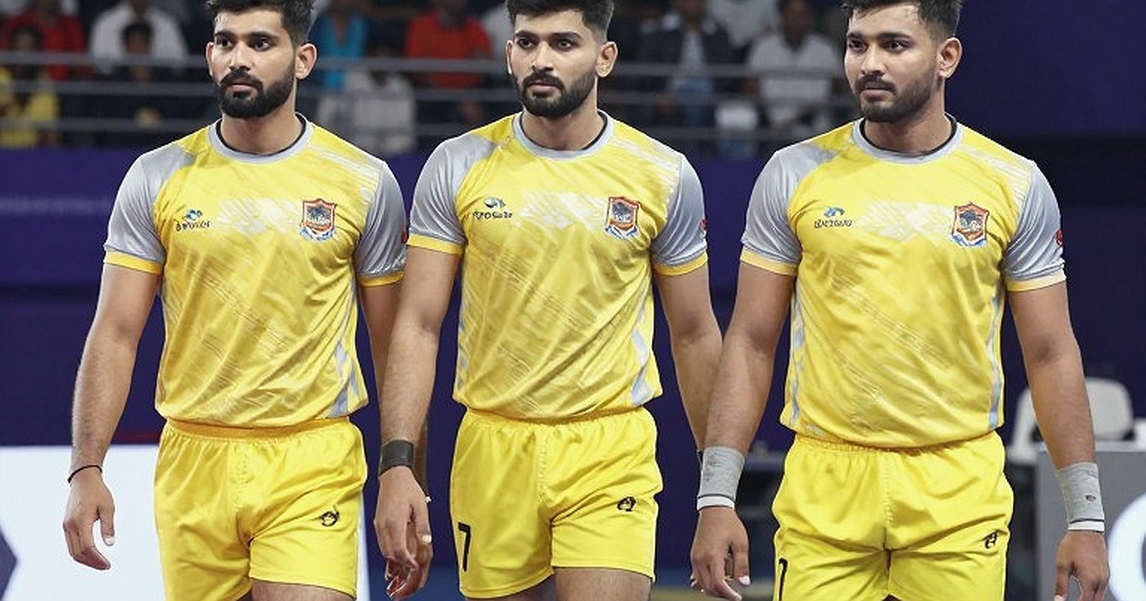
In comparative terms, Rs 5 crore is well below the historical spending of established Pro Kabaddi League (PKL) franchises. PKL teams have typically spent several multiples of this amount on players. The direct implication is that the Kabaddi Champions League is not a rival to PKL in terms of player quality, but sits at a developmental tier below it.
Prices in the auction and the player market
The highest bid in the auction was Rs 17.4 lakh, which went to Ayan Lochab. Separately, Sunil Malik was signed for Rs 10 lakh, and has been presented as "India's Asian Games captain." This claim is striking and requires independent verification. If Sunil Malik is the current national team captain, a Rs 10 lakh contract is unusually low; if the designation is stale or relates to a different format or edition, the picture changes. The available information does not clarify this point.
Similarly, no data is available on the position or performance of the most expensive player, Ayan Lochab. The report names five players, but mentions no raid points, tackle points or success rates for any of them. This means player quality cannot be assessed — only their relative market prices can be observed. By the standards of sports journalism, this is a major gap.
The price range itself also suggests the market is still at an early stage. The highest bid is Rs 17.4 lakh, roughly one-sixth the price of a top PKL raider. This allows the inference that most players will be part-time or semi-professional, relying on other employment or government jobs — the normal picture of Haryana's rural sports economy.
Haryana's kabaddi geography
The league's strongest asset is its grassroots base. More than 6,400 trial registrations and more than 300 players reaching the auction pool show that the supply of kabaddi talent in the state is deep. Haryana is traditionally regarded as India's "sports nursery," where a wrestling and kabaddi culture nurtured in the mud of akhadas has passed down through generations.
But a subtle distinction needs to be understood here. A large turnout at trials is not the best proof of a league's popularity. It actually reflects a shortage of sporting opportunity for rural youth. When options are limited, any event draws large numbers of participants. This is a supply-side signal, not a demand-side one — players exist, but spectators and revenue are not evidenced.
Caution is also needed about the league's name. The "Champions League" title appears inspired by football's European brand, signalling commercial ambition while looking larger than its actual size.
The real signal: PKL's broadcast crisis
The most important fact in this entire story is, ironically, not the expansion but a context buried in the fourth paragraph. According to recent reports, the 13th season of the Pro Kabaddi League may be pushed to June-July 2027, because the league does not have a new broadcast partner. The previous media rights agreement has expired and its replacement has not yet been settled.
This is not merely a scheduling story. Kabaddi is a broadcast-dependent sport — its popularity, sponsorship and advertising revenue rest on television and digital coverage. If the country's flagship league sits out a season, the entire professional structure will take a hit on both media exposure and revenue base. In this context, the Kabaddi Champions League's expansion signals not strength but opportunism — an attempt to fill a vacuum created in the market.
That is not inherently bad. An active regional league can give players a platform during PKL's pause and maintain talent continuity. But treating it as a substitute for PKL would be a mistake. Its regional scope and limited financial capacity make it useful as a bridge, not as a replacement.
The commercial side: a big void
Commercially, this story is unusually empty. There is no mention of any broadcast rights agreement, sponsorship detail, attendance, ticket sales or revenue. Yet both expanding the number of teams and increasing the budget are expenditure-side decisions. In any business, expansion cannot be called "progress" without evidence of income.
It is also possible that this Rs 5 crore budget comes not from league revenue but from investment by franchise owners or a promoter. This has been the pattern in many early-stage non-cricket leagues in India — capital is deployed first, revenue is awaited later.
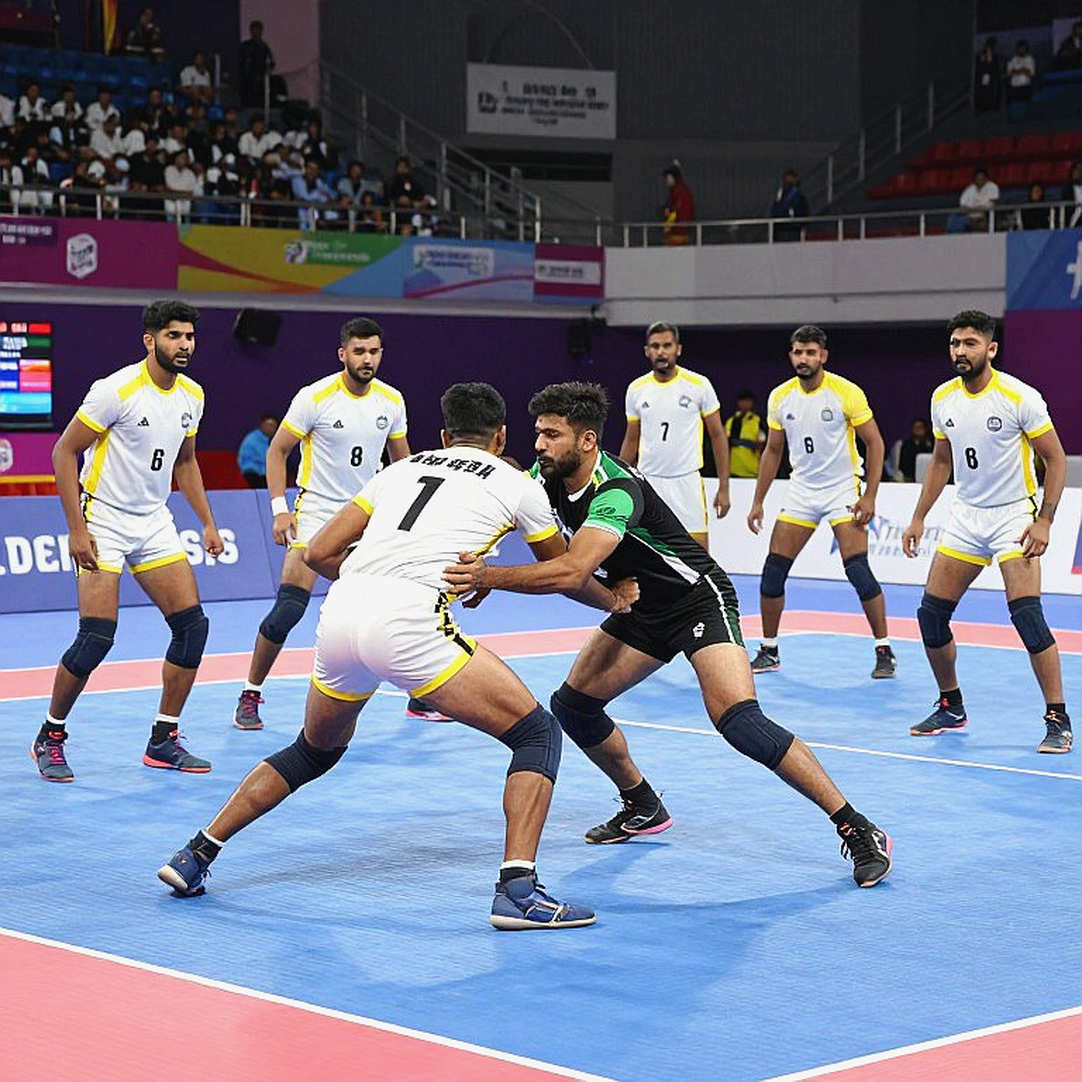
A simple calculation also raises a question. If Rs 5 crore is available per team and a squad has 15 to 20 players, the average salary works out to Rs 25-33 lakh. But the highest price in the auction was only Rs 17.4 lakh. This means either squads will be very large, or the budget is not being fully spent. This is only an inference, not a confirmation.
Unanswered governance questions
The most serious absence is institutional. It is not clear whether this league is sanctioned by the Amateur Kabaddi Federation of India (AKFI) or any recognised national or international body. No information has been given on league ownership, the identity of the organiser, standard player contracts, anti-doping arrangements or referee standards.
This is a cause for concern. If the league is unsanctioned or loosely sanctioned, players participating in it could face complications over eligibility for national team selection. For a player described as an "Asian Games captain," that risk is not small. In early-stage semi-professional leagues, contract protection and anti-doping oversight have historically been weak.
Risks and what to watch
Taken as a whole, the biggest risk in this story lies not inside the league but outside it. PKL's broadcast crisis is a warning for the entire Indian kabaddi ecosystem. If no new media rights agreement is reached by mid-2027, player development, sponsorship and the national team pipeline will all be affected. A regional league cannot fill that void.
Beyond that, three points need to be tracked. First, whether AKFI or the IKF grant recognition to this league. Second, whether the league signs any broadcast or digital rights agreement — that will be the real test of its expansion claim. Third, whether any hard figures on attendance and revenue are made public in the second season.
And one fundamental point. The 6,400 trial registrations are real, and they are proof of Haryana's sporting talent — that is an achievement and should not be understated. But the distance between the availability of talent and a sustainable professional league is bridged by revenue, broadcast and governance, not by enthusiasm alone. So far, the available information contains no solid evidence of any of the three.
Conclusion
The Kabaddi Champions League's expansion to 10 teams is real, but small and regional. The Rs 5 crore budget and the top bid of Rs 17.4 lakh are too modest to signal commercial strength. What is genuinely important in this story is not the expansion but PKL's broadcast crisis — and that comes from a single-source report without independent confirmation.
The practical advice for readers is this: read the league's expansion not as a story of excitement, but as an early-stage regional event looking for opportunity amid a larger crisis. Any conclusion about it should be drawn only after broadcast rights, sponsorship and sanctioning are confirmed.