
Kabaddi Champions League: Expansion to 10 Teams and a Rs 5 Crore Purse, But Questions Over Sanctioning and Broadcast Remain
कबड्डी चैंपियंस लीग का दूसरा सीज़न 10 टीमों के साथ खेला जाएगा — पहले 8 टीमें थीं। दसों फ्रैंचाइज़ी हरियाणा के शहरों से हैं (भिवानी, रोहतक, करनाल, गुरुग्राम, सोनीपत, पनिपत, फरीदाबाद, हिसार, झज्जर, कुरुक्षेत्र), यानी यह क्षेत्रीय सेमी-प्रोफेशनल लीग है, राष्ट्रीय प्रतियोगिता नहीं। प्रत्येक फ्रैंचाइज़ी को टीम बनाने के लिए 5 करोड़ रुपये का पर्स मिलेगा (करीब 6 लाख डॉलर), जो PKL के बजट से काफी कम है। नीलामी में सबसे ऊंची बोली आयन लोचब पर 17.4 लाख रुपये लगी; सुनील मलिक 10 लाख रुपये में बिके, जिन्हें 'भारत के एशियाई खेलों के कप्तान' बताया गया है — इस दावे की स्वतंत्र पुष्टि नहीं हुई है। ट्रायल्स में करीब 6,400 खिलाड़ियों ने पंजीकरण कराया और 300 से अधिक नीलामी पूल में पहुंचे। इस खबर का सबसे अहम हिस्सा यह है कि प्रो कबड्डी लीग का 13वां सीज़न प्रसारण अधिकारों के संकट के कारण जून-जुलाई 2027 तक खिसक सकता है और अभी कोई नया मीडिया पार्टनर घोषित नहीं हुआ। लीग ने प्रसारण, प्रायोजन, राजस्व, दर्शक संख्या, खिलाड़ी प्रदर्शन आंकड़े या AKFI/IKF मान्यता पर कोई जानकारी नहीं दी है, इसलिए विस्तार के दावों को सतर्कता से देखा जाना चाहिए।
New Delhi: India's professional kabaddi structure is passing through an unusual phase. On one side, uncertainty hangs over the scheduling of the Pro Kabaddi League (PKL) — the country's flagship kabaddi competition. On the other, the Haryana-centric Kabaddi Champions League has announced that it will expand from 8 to 10 teams in its second season and set an auction purse of Rs 5 crore per franchise.
On the surface this reads as a straightforward expansion story — two new teams, a bigger budget, more opportunities. But the context in which it must be read is buried in the fourth paragraph: the competition on which the entire sport's commercial architecture rests is currently battling a broadcast-rights crisis. Against that backdrop, the Champions League's expansion is less evidence of strength and more an attempt to fill a vacuum.
Expansion: two new teams, same geography
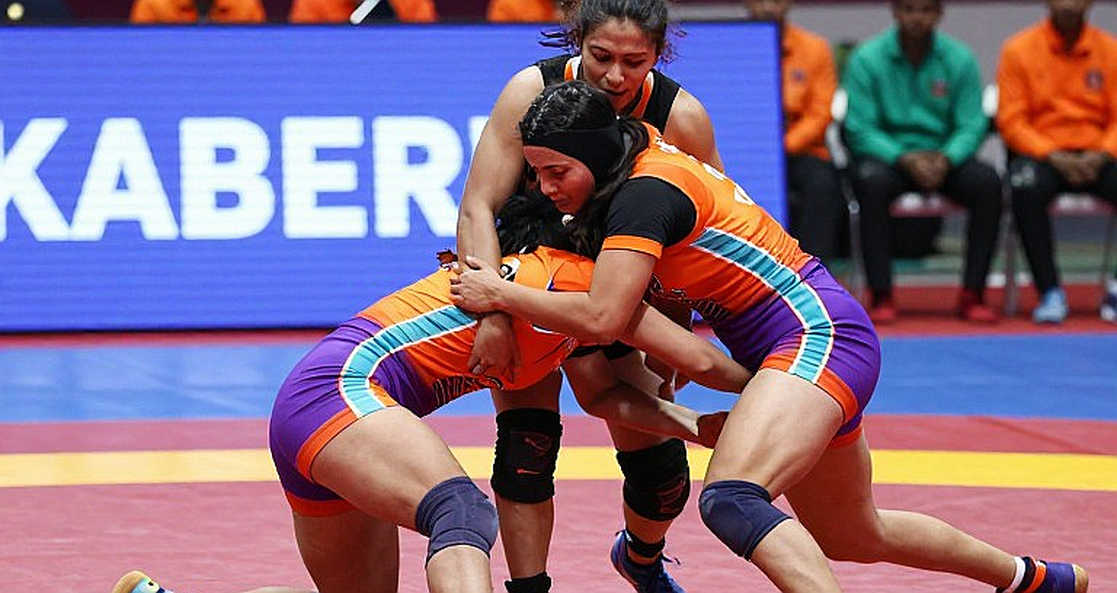
The league has added two new franchises for its second season, taking the total to 10. Tellingly, all ten are from Haryana cities and districts — Bhiwani, Rohtak, Karnal, Gurugram, Sonipat, Panipat, Faridabad, Hisar, Jhajjar and Kurukshetra. That list settles the league's identity on its own. The name carries a national-international ring in the phrase 'Champions League', but the geographical footprint is entirely confined to one state.
Haryana is often called India's sports nursery. Its akhada tradition of wrestling and kabaddi has long carried village talent to national squads. A Haryana-centric league is therefore logical — but it is equally true that it has no presence in Maharashtra, Punjab or South India. It is not, in any sense, a national competition. It is a regional semi-professional league.
The auction: large numbers, small prices
According to the league, each franchise will receive a purse of Rs 5 crore to build its squad. That sounds like a big number, but comparison is necessary. At prevailing exchange rates, Rs 5 crore is roughly US$600,000. A single PKL franchise's typical auction outlay has historically been several multiples higher. The purse does not buy PKL-level bidding power — it is a budget at a distinctly lower tier.
The highest bid at the auction went to Ayan Lochab at Rs 17.4 lakh — the league's top price. By comparison, PKL's leading raiders have commanded upwards of Rs 1 crore. Clearly, player valuations in the Champions League sit at roughly one-sixth of PKL levels.
One more figure deserves attention. If a squad of 15 to 20 players is to be built from Rs 5 crore, the average salary works out to Rs 25-33 lakh per player. Yet the most expensive player went for only Rs 17.4 lakh. That implies either unusually large squads, or that the full purse is not being spent. The league has disclosed nothing about squad sizes or spending patterns, so this is arithmetic speculation, nothing more.
It is also not clear whether the Rs 5 crore is per franchise or for the entire league. The league's statement used phrasing about 'greater scope to assemble their squads', which implies per-franchise, but this is nowhere stated explicitly. For a financial figure, that is a material ambiguity.
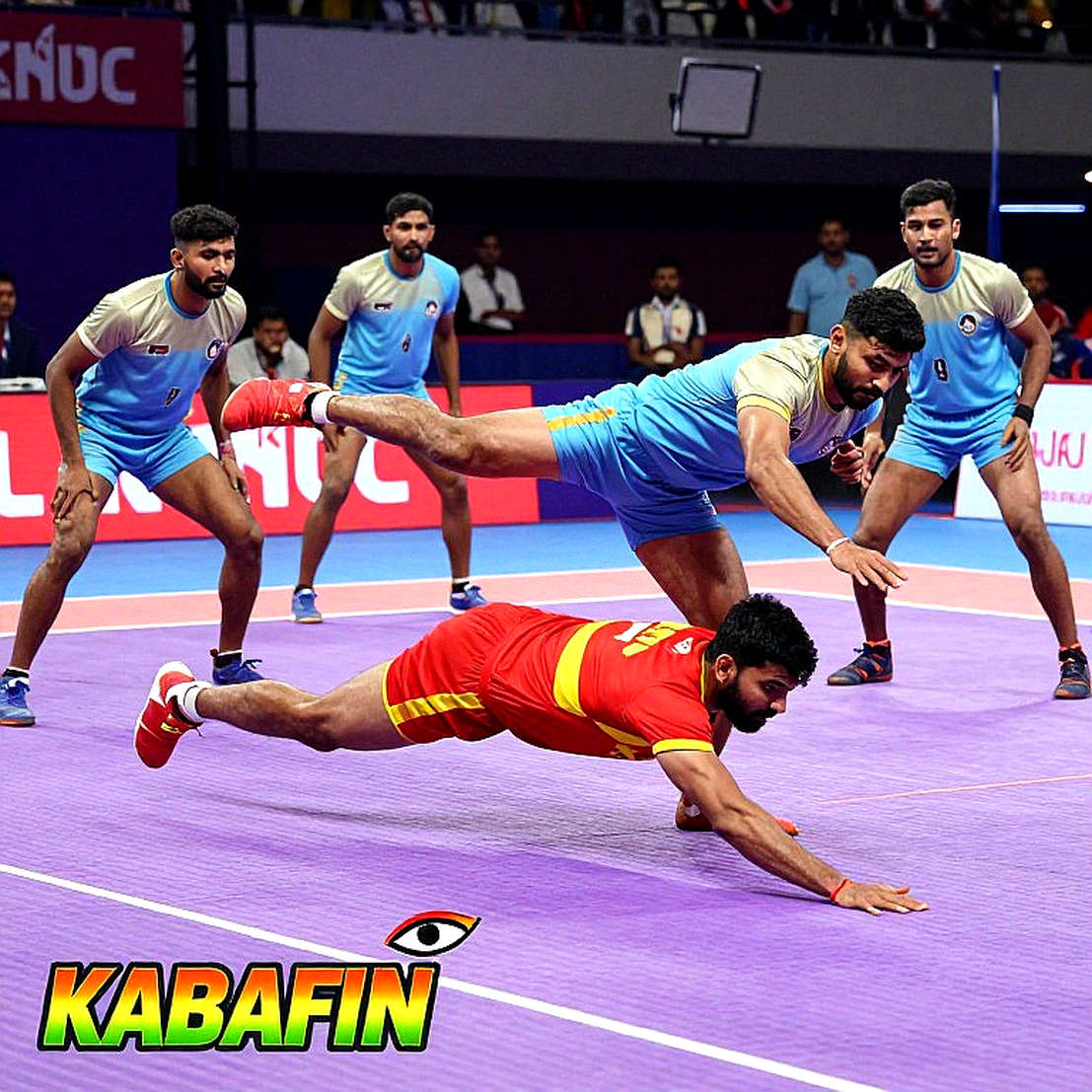
Most importantly, the league has published no performance data for any player — no raid points, no tackle points, no success rates. Player quality therefore cannot be assessed on any basis other than price.
Sunil Malik: the 'Asian Games captain' question mark
The league's biggest promotional name is Sunil Malik, presented as 'India's Asian Games captain', signed for Rs 10 lakh.
There is an obvious inconsistency here. If a player genuinely captained India at the Asian Games, a market value of Rs 10 lakh would be highly unusual — particularly when a relatively lower-profile player went for Rs 17.4 lakh. Three explanations are possible: the designation is dated or ceremonial; it relates to a different edition or a different rules variant (such as Circle Style); or the reporting is erroneous. The claim has not been independently verified and should not be accepted as fact.
The league has released the names and prices of five players, but no positions, roles or performance records. It is therefore impossible to say what standard of play the league will offer.
Grassroots: 6,400 registrations and a pool of 300
The league's most concrete data point is that around 6,400 players registered for trials, of whom more than 300 made it into the auction pool. That is a genuinely impressive number and demonstrates the depth of Haryana's rural sports ecosystem.
But there is a risk of misreading it. 6,400 registrations do not reflect the league's popularity; they reflect the scarcity of sporting opportunity. This is a crowd of young people competing for limited openings. It is a supply-side number, not a demand signal. The league has disclosed no attendance, ticketing or television viewership figures — the demand side is entirely unknown.
Nor is it clear whether these salaries will meaningfully improve players' livelihoods. In a market with a top bid of Rs 17.4 lakh and a captain at Rs 10 lakh, most players will earn well below PKL levels, which makes it likely that many will remain part-time athletes dependent on government jobs or other income — a common pattern in Haryana's sports economy.
The real story: PKL's broadcast crisis
The most important element in this entire story is not the Champions League announcement but the state of the PKL. According to the report, PKL's 13th season may slip to June-July 2027. The stated reason is a gap in broadcast rights — the league currently has no new media partner.
Kabaddi is a sport whose entire professional structure rests on television. Since PKL's launch in 2026, the sport's visibility, sponsorship and player earnings have all been built on a short-format television product. If that pillar disappears for a season, it is not merely a calendar change but a systemic shock to the whole ecosystem.
That is the context in which the Champions League expansion should be understood. When the biggest league is stalled, a regional league can give players a platform during that window — a real service, but a limited one. The Champions League cannot deliver the visibility, sponsorship and investment that PKL does. It should be seen as a stopgap, not as the sport's development.
Broadcast and sponsorship: the biggest gap
The most striking aspect of the expansion announcement is that it mentions no broadcast rights, no sponsorship, no attendance and no revenue at any level. Teams are going from 8 to 10 and the purse is rising, but there is no explanation of where the money to run these teams will come from.
Several non-cricket leagues in India have launched with expansion ambitions and been forced to retreat when broadcast and sponsorship failed to follow. The risk here is heightened by the name 'Champions League', which borrows the resonance of UEFA's football brand. That naming signals commercial ambition, but it can also mislead readers and viewers about the league's standing.
It is also possible that the Rs 5 crore purse is being funded by franchise owners or a promoter rather than league revenue. That has been the pattern for many early-stage Indian leagues. It can work in the short term, but it is not a sustainable model.
The sanctioning question: under whose authority does this league run?
The biggest question, which goes unanswered anywhere, is which body has sanctioned this league. Its relationship with the Amateur Kabaddi Federation of India (AKFI) or the International Kabaddi Federation (IKF) is not stated. Nor has the league disclosed standards for player contracts, anti-doping rules, officiating standards or which rules variant applies.
This opacity matters. If the league lacks recognition from a recognised federation, players could face eligibility complications in national team selection. That is a significant risk — especially for a player being presented as having an international pedigree. Organisers should publicly clarify sanctioning, contracts, insurance and anti-doping arrangements.
There is another potential risk. If PKL remains stalled for long while the Champions League keeps expanding, an unsanctioned or loosely sanctioned league could inadvertently become the country's de facto competition, inviting conflict with the federation.
Risks and opportunities
The Champions League's own risks are limited, because it is a small, regional enterprise. The real risk sits at the ecosystem level:
- An empty PKL channel: the biggest risk. This should be treated not as scheduling but as a commercial crisis.
- Governance opacity: sanctioning and eligibility are unclear.
- No revenue disclosure: expansion claims lack financial grounding.
- Player quality unassessable: no performance data exists.
On the other hand, there are real opportunities:
- More than 6,400 registrations demonstrate the depth of rural talent in Haryana — a substantial scouting pool for PKL and national selection.
- During the PKL hiatus, this league can serve as a bridge for players.
- If the league publishes its media and sponsorship deals, the expansion claim would gain real credibility.
What to watch next
Four signals will determine where this story goes in the coming months. First, PKL's new media-rights deal — if one is struck and Season 13 is confirmed, ecosystem uncertainty eases. Second, the Champions League's sanctioning — any clear statement from AKFI or IKF will carry great weight. Third, a broadcast deal for the league — any announced television or digital rights would give the expansion claim substance. Fourth, verification of Sunil Malik's 'Asian Games captain' claim, which should be checked against official records.
Amid all this, one thing is clear. The Kabaddi Champions League's expansion to 10 teams is a real event, but it is not proof of Indian kabaddi's growing strength. It is an attempt to fill the space left by the broadcast crisis at the top of the sport. The real contest is still to come.
(The figures in this report are based on statements issued by the league and media reports. The auction amounts, player designations and the Pro Kabaddi League schedule have not been independently verified.)