
Kabaddi Champions League Expands to 10 Teams: A Rs 5 Crore Purse, a Rs 17.4 Lakh Top Bid, and the Long Shadow of the PKL Broadcast Crisis
कबड्डी चैंपियंस लीग ने अगले सीज़न के लिए टीमों की संख्या 8 से बढ़ाकर 10 कर दी है और प्रत्येक फ्रैंचाइज़ी को नीलामी के लिए 5 करोड़ रुपये का बजट दिया है — यह प्रति टीम खिलाड़ी खरीदने का कुल बजट है, इनामी राशि नहीं। नीलामी में सबसे ऊँची बोली आयन लोचब पर 17.4 लाख रुपये लगी, जबकि भारत के एशियाई खेल कप्तान बताए गए सुनील मलिक 10 लाख रुपये में बिके। लीग की दसों फ्रैंचाइज़ियाँ हरियाणा के शहरों से हैं, यानी यह राष्ट्रीय नाम वाली क्षेत्रीय अर्ध-पेशेवर लीग है। ट्रायल में करीब 6,400 पंजीकरण हुए और 300 से अधिक खिलाड़ी नीलामी पूल में पहुँचे। सबसे अहम संदर्भ यह है कि प्रो कबड्डी लीग का 13वां सीज़न प्रसारण अधिकारों के संकट के कारण जून-जुलाई 2027 तक खिसक गया है और नया मीडिया साझेदार घोषित नहीं हुआ। लीग के प्रसारण अधिकार, स्पॉन्सरशिप और मान्यता (AKFI/IKF) पर कोई सार्वजनिक जानकारी नहीं है, इसलिए विस्तार को सिद्ध प्रगति के बजाय संभावना के रूप में देखना चाहिए।
The Kabaddi Champions League has announced an expansion for its upcoming season. The league will grow from 8 to 10 franchises, and each franchise will receive a budget of Rs 5 crore for the player auction. According to the organisers, this will give teams more room to assemble their squads and widen the professional pathway for grassroots players in the state.
The numbers released in the announcement are as follows. Ten franchises. An auction purse of Rs 5 crore per franchise. The highest bid of the auction went to Ayan Lochab at Rs 17.4 lakh. Sunil Malik, described as India's Asian Games captain, was signed for Rs 10 lakh. The league's trials drew roughly 6,400 registrations, from which more than 300 players made it into the auction pool.
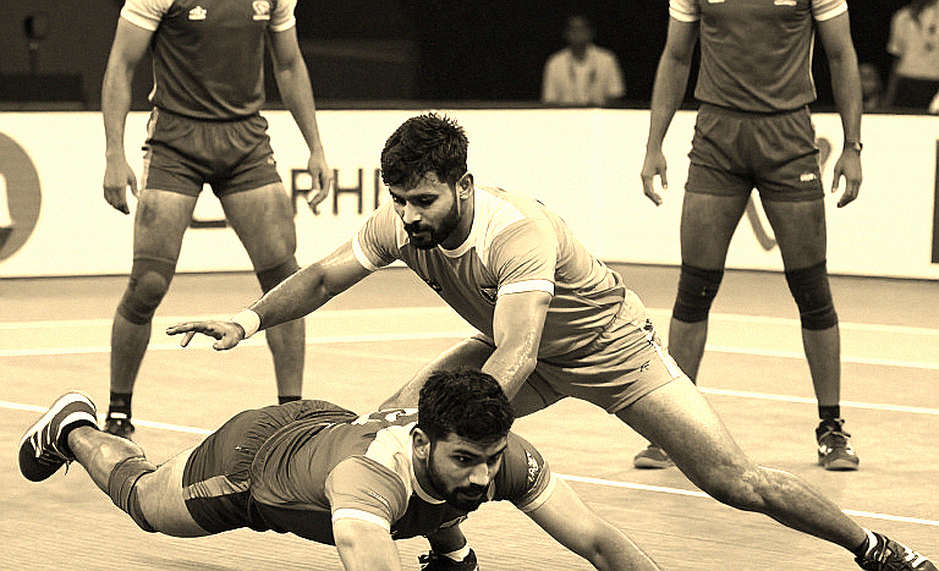
On the surface this reads as a straightforward story of growth. More teams, a bigger budget, more opportunities for players. But a closer reading throws up three points that change the direction of the story. First, the Rs 5 crore figure is the total squad-spending budget per franchise, not prize money. Second, the league's most expensive player went for Rs 17.4 lakh, roughly one-sixth of what a top Pro Kabaddi League star commands. Third, and most important, all of this expansion is happening at a time when the country's flagship kabaddi league itself has no broadcast partner.
The Rs 5 crore purse: how big, how small
The word purse needs clarification in an auction context. In cricket and football auctions, a purse is a team's total budget for buying players, and the meaning here is fundamentally the same. Rs 5 crore per franchise, out of which the entire squad must be built. It is not prize money, and it is not the league's total spend. The report does not clarify whether the Rs 5 crore is per team or league-wide, which is a material ambiguity. The phrase about teams having greater scope to assemble their squads, however, strongly suggests a per-franchise budget.
A comparison is necessary. Rs 5 crore works out to roughly US$600,000. A single PKL franchise's typical auction outlay has historically run several multiples higher. This is therefore not a PKL-tier budget but a developmental, semi-professional one. That is the real key to this story. The Kabaddi Champions League is not a PKL competitor; it sits one tier below. The report does not say this outright, but the numbers do.
A big name, a regional reality
The name Champions League evokes UEFA's competition, but the geography tells a different story. The ten franchises named are Bhiwani, Rohtak, Karnal, Gurugram, Sonipat, Panipat, Faridabad, Hisar, Jhajjar and Kurukshetra. All of them are Haryana cities.
This is not a small detail. It means the league, despite carrying a national-sounding name, is entirely regional. It has no meaningful presence in Maharashtra, Punjab, Tamil Nadu or the north-east. Reading it as India's kabaddi league would lead to the wrong conclusions. Its prestige ceiling is set by its footprint, and that footprint is one state.
The choice of Haryana is rational in itself. The state is India's traditional kabaddi and wrestling heartland, where players raised in village akhadas have reached national and international squads. For a Chinese reader, one analogy helps. Haryana's place in kabaddi resembles that of a Chinese province in wrestling or weightlifting: a region that supplies a disproportionate share of the national team relative to its population. Village, akhada, a government job, and then a professional contract. That is the social ladder a player climbs.
That ladder is why the trials drew 6,400 registrations. But caution is needed here. Such a large number is not evidence of the league's popularity. It is evidence of rural youth aspiration, of young people who see sport as a livelihood. There is no data in the report on the demand side: no attendance, no ticketing, no television ratings. The league is supply-led, not demand-led. This is the most common pattern among early-stage Indian leagues.
Sunil Malik at Rs 10 lakh, Ayan Lochab at Rs 17.4 lakh
Five players are named in the report, but not a single performance number is given for any of them. No raid points, no tackle points, no success rates. Player quality therefore cannot be assessed. The only observable thing is relative market price.
And that raises an uncomfortable question. Sunil Malik is described as India's Asian Games captain, yet he went for just Rs 10 lakh, less than Ayan Lochab's Rs 17.4 lakh. That is a remarkably low price for a claimed national-team captain. Only three explanations are possible. One, the designation is stale and he now falls in the veteran category. Two, the Asian Games captaincy refers to Circle Style or a specific edition rather than the Standard Style national side. Three, there is an error in the reporting. None of these can be independently verified.
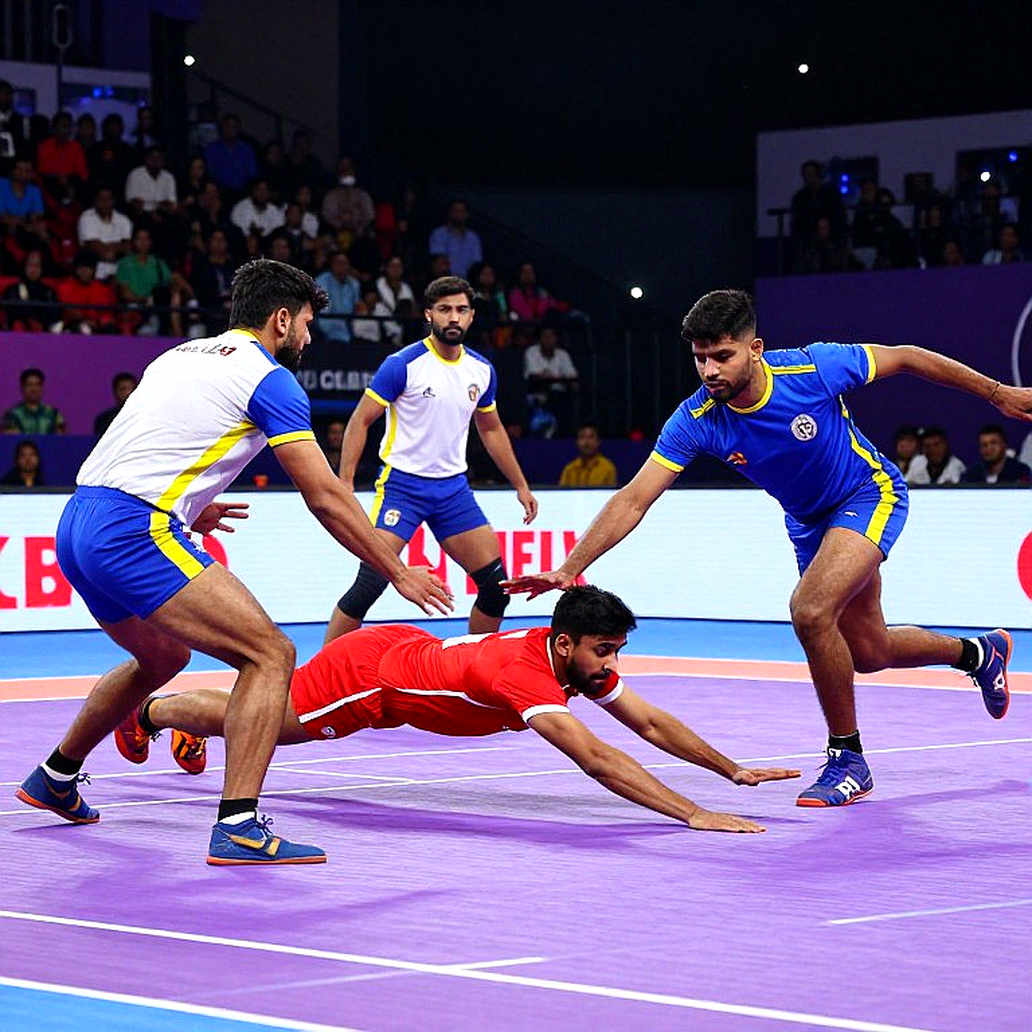
That ambiguity is part of the analysis. On one hand the market ceiling is Rs 17.4 lakh; on the other, a claimed national captain sells for Rs 10 lakh. Either international pedigree carries no market value here, or that pedigree is out of date. Both readings suggest the league's money is not yet reaching top-tier talent.
The low absolute salaries also suggest most players are part-time or semi-professional, retaining other employment. This is common in Haryana's rural sports economy, where government jobs subsidise athletes and allow sport to remain a second income.
The real story is not in the headline
The most important part of this entire story is buried in the fourth paragraph, and it has nothing to do with the Kabaddi Champions League. Pro Kabaddi League's 13th season has reportedly been pushed to June-July 2027. The cause is a broadcast rights crisis. PKL's previous media partner has exited, and no replacement has been named.
To grasp the significance, look at kabaddi's commercial architecture. Since PKL launched in 2026, the sport's entire professional layer has rested on that one league: television ratings, short-format packaging, sponsorship, player market value, and the pipeline from grassroots to the top. If the anchor itself shifts for a season, the whole chain shifts with it.
Seen through that lens, the Champions League's expansion is not momentum but opportunism. When the big league stalls, a smaller one gets first access to idle talent. That is a sensible strategic move, but it should not be read as proof of the league's strength. A regional league cannot fill the space PKL leaves behind.
The commercial truth hidden from view
The report contains none of the commercial fundamentals. No broadcast deal, no sponsorship, no attendance, no revenue. The claims about more teams and bigger budgets therefore stand without any revenue-side evidence. That gap is the single biggest weakness in the story.
It is also possible that the Rs 5 crore purse is not earned revenue but subsidy from franchise owners or a promoter. This is common in early-stage Indian leagues, where owners fund the first few seasons out of pocket and wait for a market to form. The complete absence of any mention of television or digital rights suggests the league's media rights value is currently very low or nil.
Simple arithmetic also speaks. If a Rs 5 crore squad has 15 to 20 players, the average salary works out to Rs 25-33 lakh. Yet the top price was only Rs 17.4 lakh. Either the squads are very large, or the budget is not being fully spent. Both readings suggest the budget figure should not be read as a signal of enthusiasm.
Governance and sanctioning: the biggest question
The report never states who runs this league. Is it sanctioned by the Amateur Kabaddi Federation of India, or is it a private promoter's independent venture? The question is not small. If the league is unsanctioned, players could face eligibility complications in national-team selection. That matters even for someone described as an Asian Games captain.
Likewise, there is no information on player contract protection, anti-doping systems or refereeing standards. All three are areas where semi-professional leagues routinely fall short. A fast-expanding league with no clear governance identity is what professional analysis calls a shadow-federation risk. Such a league can fragment the player market and complicate national-team eligibility.
It is also worth noting that the report claims no international dimension. References to World Cup and women's league plans belong to a separate, related story and are not developed here. Treat them as background chatter, not evidence of governance progress.
Risks and the road ahead
The list of risks is long, but the priority is clear. The first and biggest is the PKL broadcast crisis. If the league does not find a new media partner and Season 13 slips to 2027, that is not a scheduling problem but a commercial shock to the entire ecosystem. Kabaddi is a broadcast-dependent sport, and without broadcast its professional layer loses its main revenue source.
The second risk is the league's governance opacity and its uncertain sanctioning status. The third is that the expansion and budget claims have no revenue backing. Taken together, the overall risk level is high. And that high level comes not from the Champions League's own weaknesses, which are small and low-stakes, but from the context in which it stands. The small league's risk is limited; the anchor's crisis is large.
One thing should be kept in mind while averaging this out. The most valuable thing in the story is not the number of teams but the buried signal. The 6,400 trial registrations show the strength of Haryana's rural sports supply, and that is a genuine opportunity. If PKL's crisis drags on, this regional league could serve as a bridge during the gap. But if PKL resolves its rights and returns in mid-2027, the expansion may prove a one-season coincidence.
Three things are therefore worth watching. PKL's new media rights deal. The Champions League's sanctioning status. And the league's own broadcast rights, which have not been mentioned at all. Until all three are clear, it is more rational to read the expansion as possibility rather than momentum.